Expect Plenty of Walking
Most featured locations are connected by Tokyo's excellent rail network, but walking between nearby spots is part of the experience.
Experience Tokyo through the rain-soaked streets, hidden rooftops, and glowing city lights that define Weathering with You.
Unlike many anime pilgrimages that span multiple regions, Weathering with You unfolds almost entirely within Tokyo. From the bustling entertainment district of Shinjuku to quiet residential neighborhoods, riverside walkways, and rooftop viewpoints, every location contributes to the film's unique atmosphere.
Rather than focusing on famous tourist attractions alone, this pilgrimage invites you to discover the everyday Tokyo that Makoto Shinkai transformed into one of anime's most visually stunning cities.
| Anime | Weathering with You (Tenki no Ko) |
|---|---|
| Creator | Makoto Shinkai |
| Primary Region | Tokyo |
| Recommended Trip Length | 1–2 Days |
| Transportation | JR Yamanote Line · Tokyo Metro · Walking |
| Best Seasons | Spring, Early Summer & Autumn |
Whether you're recreating iconic scenes or simply exploring Tokyo through the film's perspective, this journey offers one of the most accessible anime pilgrimages in Japan.
Most anime pilgrimages focus on recognizable landmarks.
Weathering with You focuses on something less obvious, the atmosphere of a city.
Rain becomes part of the scenery. Reflections on wet pavement, cloudy skylines, railway bridges, rooftop shrines, and narrow residential streets all play an essential role in the story. Tokyo itself becomes one of the film's central characters.
Another distinctive feature is how the movie blends famous locations with places that many visitors would normally walk past without noticing. Small streets, station exits, pedestrian bridges, convenience stores, and neighborhood shrines all become emotionally significant through Makoto Shinkai's meticulous visual storytelling.
For photographers, this is one of the most rewarding anime pilgrimages in Japan. Changing weather conditions, dramatic skies, and evening city lights allow every visit to create a slightly different experience, much like the film itself.
Weathering with You is best explored at a relaxed pace. Many of its most memorable scenes take place in ordinary neighborhoods rather than major tourist attractions.
Before setting out, keep these tips in mind:
Most featured locations are connected by Tokyo's excellent rail network, but walking between nearby spots is part of the experience.
Unlike most sightseeing trips, light rain can actually enhance your visit. Reflections, cloudy skies, and soft lighting closely resemble the mood captured in the film.
Morning, sunset, and nighttime each reveal a different side of Tokyo. Some locations feel completely different after dark.
Several pilgrimage locations are located in quiet neighborhoods where people live and work. Please avoid blocking roads, making excessive noise, or photographing private property.
Wide-angle photography works particularly well for recreating the film's dramatic cityscapes, while rainy conditions create beautiful reflections similar to those seen throughout the movie.
Weathering with You (Japanese: Tenki no Ko, 2019) is a fantasy romance by Makoto Shinkai. Hodaka Morishima meets Hina Amano, a girl who can briefly clear the sky — but at a cost linked to a shrine and the city’s balance. The movie explores themes of agency, sacrifice, climate anxiety and love against a detailed Tokyo backdrop. The soundtrack is by RADWIMPS, with vivid urban imagery and rain‑soaked atmospherics.
![Weathering With You [Official Subtitled Trailer]](https://img.youtube.com/vi/Q6iK6DjV_iE/hqdefault.jpg)
Curated videos and routes — click a card to watch and plan your city walk.
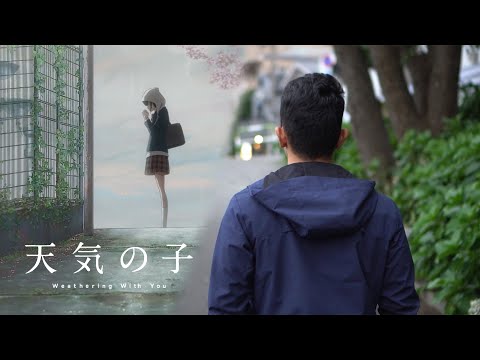
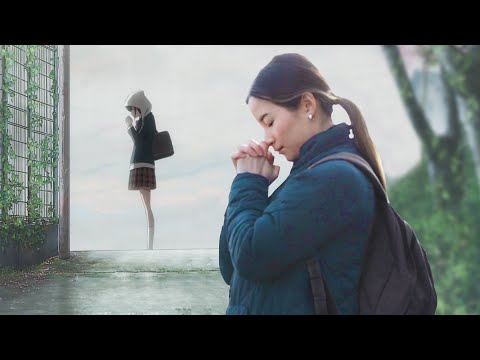

Follow the everyday streets, shrine spaces, neon intersections, and skyline viewpoints that shape Weathering with You. Each stop below is organized in the same guide format so the page feels easier to scan and compare.
Residential sloping street and station surroundings representing Hina’s home neighborhood; seen in rainy reunion and everyday moments.
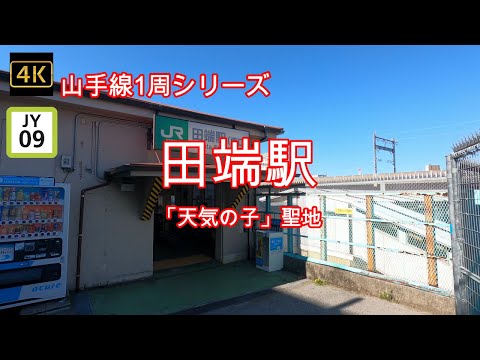
Early morning or rainy days; spring/autumn for milder weather
JR Tabata Station South Exit (Yamanote Line); 10–15 minutes from Ueno or Ikebukuro
Everyday Tokyo Through Makoto Shinkai's Eyes
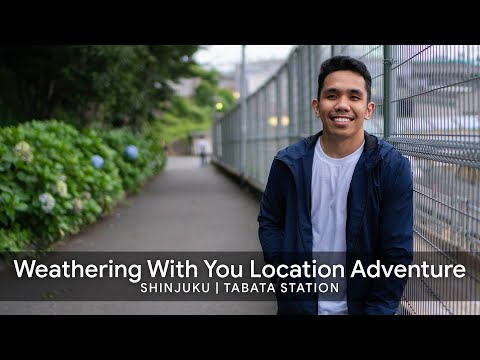
Hidden just outside JR Tabata Station, Nozomi Slope (のぞみ坂) is one of the most recognizable real-world locations featured in Weathering with You. The gently sloping residential street offers a clear view toward the railway tracks, overhead power lines, and surrounding neighborhoods, elements that Makoto Shinkai recreated with remarkable accuracy.
Unlike Tokyo's famous tourist attractions, Nozomi Slope represents the quieter side of the city. Its modest streets, pedestrian crossings, and everyday urban scenery capture the grounded atmosphere that defines much of the film.
For many fans, this location demonstrates how ordinary places can become emotionally powerful through thoughtful visual storytelling.
Nozomi Slope appears during several transition sequences that establish the rhythm of daily life in Tokyo.
Rather than serving as the backdrop for a single dramatic moment, it helps communicate the film's central themes of loneliness, connection, and coexistence within an enormous city. The uninterrupted view down the hill, framed by apartment buildings, utility poles, and passing trains, creates one of the movie's most authentic representations of Tokyo's residential landscape.
It is also an excellent example of Makoto Shinkai's attention to environmental detail. While the composition closely matches the real location, subtle adjustments in lighting, weather, and perspective enhance the emotional tone of each scene without changing the identity of the place.
Why fans recognize Nozomi Slope immediately
Unlike more famous pilgrimage stops, Nozomi Slope rewards visitors who appreciate environmental storytelling rather than dramatic landmarks. Its power comes from mood, composition, and the feeling of everyday Tokyo.
| Location | South Exit of JR Tabata Station (Nozomi Slope) |
|---|---|
| Ward | Kita City, Tokyo |
| Access | About 2–3 minutes on foot from JR Tabata Station South Exit |
| Admission | Free |
| Time Required | 15–30 minutes |
| Best Time | Early morning or late afternoon |
| Best Weather | Light rain, overcast skies, or golden hour |
Nozomi Slope is best photographed from the upper section of the hill while looking toward the railway.
Nozomi Slope is a normal residential street where people live and commute every day, so thoughtful behavior matters as much as good photography.
The station itself provides additional views of the railway environment that influenced several background shots in the film.
Best for extending the station-and-tracks atmosphere beyond the slope itself.
Just a few minutes away by train, Nippori offers traditional neighborhoods and elevated railway viewpoints that complement the atmosphere of Weathering with You.
A strong add-on for travelers who enjoy quiet Tokyo streets and rail views.
Located nearby on the Yamanote Line, Ueno combines museums, seasonal scenery, and historic landmarks, making it an easy addition to a full day of sightseeing.
Useful if you want to balance neighborhood pilgrimage with broader Tokyo sightseeing.
| Anime Connection | ⭐⭐⭐⭐⭐ |
|---|---|
| Atmosphere | ⭐⭐⭐⭐⭐ |
| Photography | ⭐⭐⭐⭐☆ |
| Accessibility | ⭐⭐⭐⭐⭐ |
| Cultural Value | ⭐⭐⭐☆☆ |
| Time Required | 15–30 Minutes |
Unlike landmark-driven pilgrimage stops, Nozomi Slope stands out because it turns an ordinary neighborhood street into one of the emotional anchors of Weathering with You. For fans who love Makoto Shinkai’s environmental storytelling, it is one of the clearest reminders that atmosphere can matter just as much as spectacle.
Real‑life model for “weather maiden” shrine elements with geta‑shaped ema for weather prayers; inspires the film’s supernatural themes.
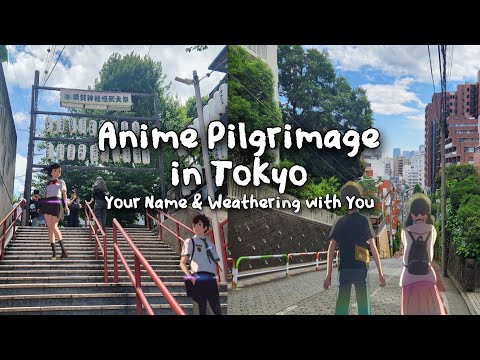
Year‑round; summer rainy season for vibe; weekdays to avoid crowds
2‑minute walk from Koenji Station (JR Chuo/Sobu Lines)
A Shrine Dedicated to Weather
Located within <strong>Hikawa Shrine</strong> in Tokyo's Koenji neighborhood, <strong>Kisho Shrine (気象神社)</strong> is the only shrine in Japan dedicated specifically to weather. Established in the 1940s, it has long been a place where visitors pray for clear skies, safe travel, and favorable weather conditions.
Although the shrine is <strong>not an officially confirmed filming location</strong> for <em>Weathering with You</em>, it has become one of the pilgrimage's most meaningful destinations because of its close connection to the film's central theme: the relationship between weather, hope, and everyday life.
For many fans, visiting Kisho Shrine is less about recreating a specific scene and more about experiencing the cultural traditions that inspired the story's emotional core.
Throughout <em>Weathering with You</em>, weather is more than a backdrop. It shapes the lives of every character.
Hina Amano's role as the "Sunshine Girl" reflects the Japanese tradition of praying for favorable weather during important events, a custom that has existed for centuries. Kisho Shrine embodies this tradition in real life, making it a natural destination for fans interested in the cultural background behind the film.
Rather than representing a direct filming location, the shrine offers insight into the beliefs and customs surrounding weather that resonate throughout Makoto Shinkai's story.
What makes Kisho Shrine especially meaningful for Weathering with You fans
Kisho Shrine is best understood as a theme-related pilgrimage destination rather than a direct filming location. Fans visit not because it was faithfully recreated on screen, but because its focus on weather reflects one of the film's central ideas: the connection between nature, human wishes, and everyday life.
| Official Name | Kisho Shrine (within Hikawa Shrine) |
|---|---|
| Japanese | 気象神社(高円寺氷川神社境内) |
| Location | Suginami City, Tokyo |
| Access | About 2 minutes on foot from JR Koenji Station North Exit |
| Admission | Free |
| Time Required | 20–40 minutes |
| Best Time | Morning or late afternoon |
| Best Season | Year-round |
The shrine is relatively small, making early morning or weekday visits ideal for photography and quiet observation.
Kisho Shrine remains an active place of worship, so the most meaningful visit comes from treating it as a living cultural site as well as an anime-related destination.
Known for vintage clothing stores, cafes, live music venues, and independent shops, Koenji is one of Tokyo's most distinctive neighborhoods.
A great way to pair the shrine visit with a quieter, more local side of Tokyo.
Just a short walk from the shrine, the station provides convenient access via the JR Chuo Line.
Useful as the starting point for combining Koenji with other west-Tokyo stops.
One stop away by train, Nakano Broadway is one of Tokyo's best destinations for anime merchandise, collectibles, and retro gaming.
Ideal for visitors who want to add pop culture shopping after the shrine.
| Theme Connection | ⭐⭐⭐⭐⭐ |
|---|---|
| Cultural Value | ⭐⭐⭐⭐⭐ |
| Photography | ⭐⭐⭐⭐☆ |
| Accessibility | ⭐⭐⭐⭐⭐ |
| Scene Accuracy | ⭐⭐⭐☆☆ |
| Time Required | 20–40 Minutes |
Kisho Shrine adds something different to the Weathering with You pilgrimage. Instead of offering a frame-for-frame city scene, it deepens the journey by connecting the film's emotional treatment of weather with real Japanese customs, prayers, and everyday beliefs.
Spot where Hina works and meets Hodaka; early pivotal scene symbolizing kindness amid Tokyo’s chaos.
Weekday mornings; rainy evenings to recreate mood
Outside Seibu Shinjuku Station or 5‑minute walk from JR Shinjuku East Exit
One of Tokyo's Most Recognizable Everyday Anime Locations
Located just steps from <strong>Seibu Shinjuku Station</strong> in the heart of Kabukicho, the McDonald's restaurant featured in <em>Weathering with You</em> is one of the film's most recognizable real-world locations. Surrounded by neon signs, busy intersections, and constant pedestrian traffic, it captures the energy of central Tokyo that defines much of Hodaka's early life in the city.
Unlike dramatic landmarks or scenic viewpoints, this location represents something much more ordinary: a familiar fast-food restaurant that becomes part of the characters' everyday routine. Makoto Shinkai's decision to include such an everyday place reflects one of the film's defining strengths, transforming ordinary urban spaces into emotionally meaningful settings.
After arriving in Tokyo, Hodaka struggles to find stability in an unfamiliar city. Everyday places like convenience stores, train stations, and restaurants become important parts of his new life, grounding the story in a version of Tokyo that feels authentic and lived-in.
The McDonald's near Seibu Shinjuku Station is one of those locations. Rather than serving as the backdrop for a major action sequence, it represents the ordinary moments that make the relationships between the characters feel believable.
Its appearance also highlights Makoto Shinkai's attention to the details of modern Tokyo, where recognizable chain stores coexist with the vibrant streets of Kabukicho.
What fans usually notice first around the location
While the interior has changed over time through renovations, the surrounding streetscape remains instantly recognizable to many viewers. The restaurant itself matters, but the larger Kabukicho environment is what gives the stop its strongest Weathering with You feeling.
| Official Name | McDonald's Seibu Shinjuku Ekimae |
|---|---|
| Location | Kabukicho, Shinjuku City, Tokyo |
| Access | About 1 minute on foot from Seibu Shinjuku Station; approximately 5 minutes from JR Shinjuku Station East Exit |
| Admission | Restaurant (purchase required for dining) |
| Time Required | 10–20 minutes |
| Best Time | Late afternoon or evening |
| Best Season | Year-round |
The best photographs are usually taken from the surrounding sidewalks rather than directly in front of the restaurant.
This McDonald's is an active restaurant serving local residents, commuters, and visitors throughout the day, so it helps to treat it as a working business first and an anime stop second.
Only a short walk away, this famous railway overpass appears in several memorable cityscape scenes and is another essential stop for Weathering with You fans.
A natural next stop if you want stronger skyline and rail imagery.
Explore the entertainment district that provides the backdrop for many of Hodaka's earliest experiences in Tokyo.
Best for soaking in the neon, crowd flow, and nighttime city energy of the film.
One of the busiest railway stations in the world, Shinjuku Station and its surrounding streets inspired numerous background scenes throughout the film.
Ideal for extending the route into a broader central Tokyo walk.
The famous Godzilla statue atop the Hotel Gracery Shinjuku has become one of Kabukicho's best-known landmarks and is located just a few minutes from the restaurant.
A useful landmark stop if you are exploring the district on foot.
| Anime Connection | ⭐⭐⭐⭐☆ |
|---|---|
| Atmosphere | ⭐⭐⭐⭐⭐ |
| Photography | ⭐⭐⭐⭐☆ |
| Accessibility | ⭐⭐⭐⭐⭐ |
| Cultural Value | ⭐⭐⭐☆☆ |
| Time Required | 10–20 Minutes |
Unlike Tokyo's famous landmarks, the Seibu Shinjuku Station McDonald's reminds visitors that <em>Weathering with You</em> is as much about ordinary life as it is about extraordinary events. Standing here offers a chance to experience the familiar streets, restaurants, and city rhythms that shaped Hodaka and Hina's journey, making it one of the pilgrimage's most relatable and accessible locations.
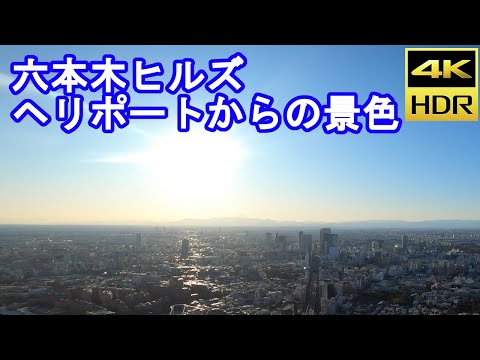
Rooftop observation deck where Hina prays to clear the sky; panoramic views match climax sequences.
Sunset or clear evenings; avoid peak hours
Roppongi Station (Hibiya/Oedo); elevator to 52F then rooftop (fee applies)
Experience Tokyo's Skyline Above the Clouds
Perched atop <strong>Roppongi Hills Mori Tower</strong>, the <strong>Tokyo City View Sky Deck</strong> offers one of the most spectacular panoramic views of Tokyo. While it is <strong>not an officially confirmed filming location</strong> for <em>Weathering with You</em>, many fans include it in their pilgrimage because it captures the sweeping cityscape and dramatic skies that define Makoto Shinkai's visual storytelling.
From this open-air observation deck, visitors can appreciate the scale of Tokyo, from dense urban neighborhoods to distant mountain ranges on clear days. It is an ideal place to reflect on how the city itself becomes one of the film's central characters.
Few anime portray Tokyo's relationship with the sky as vividly as <em>Weathering with You</em>.
Throughout the film, changing weather transforms the city from bright sunshine to heavy rain, from glowing sunsets to dramatic cloud formations. The skyline is never simply a background, it reflects the emotions of the story and the choices made by its characters.
Although the Sky Deck does not appear directly in the film, it provides one of the best real-world perspectives for understanding this connection between the city and the ever-changing sky.
What makes Tokyo City View especially valuable for Weathering with You fans
Tokyo City View is best treated as a visual-language stop rather than a direct filming location. It helps fans understand how Makoto Shinkai frames Tokyo as a city shaped as much by the sky above it as by the streets below it.
| Official Name | Tokyo City View Sky Deck |
|---|---|
| Location | Roppongi Hills Mori Tower, Minato City, Tokyo |
| Access | About 3 minutes on foot from Roppongi Station (Tokyo Metro Hibiya Line / Toei Oedo Line) |
| Admission | Separate ticket required (Sky Deck access is subject to weather conditions) |
| Time Required | 60–90 minutes |
| Best Time | Late afternoon through sunset |
| Best Season | Autumn and Winter for the clearest views |
The Sky Deck is one of Tokyo's best locations for wide panoramic photography, especially when the sky itself becomes part of the composition.
Because the Sky Deck is an outdoor facility, planning ahead matters more here than at most city stops on the pilgrimage.
Located within the same building, the museum regularly hosts contemporary art exhibitions and offers another strong reason to visit Roppongi Hills.
An easy add-on if you want to combine the skyline stop with indoor culture.
One of Tokyo's most recognizable landmarks, visible from the observation deck and easily reached by public transportation.
Great for pairing aerial views with a classic ground-level Tokyo icon.
A historic neighborhood combining traditional shopping streets with modern cafes and restaurants, just a short walk away.
Ideal if you want a calmer contrast after the high-rise skyline experience.
Known for its museums, nightlife, and international atmosphere, Roppongi offers a different side of Tokyo from the quieter neighborhoods featured elsewhere in the pilgrimage.
Useful for extending the route into an evening city exploration.
| Theme Connection | ⭐⭐⭐⭐⭐ |
|---|---|
| Atmosphere | ⭐⭐⭐⭐⭐ |
| Photography | ⭐⭐⭐⭐⭐ |
| Accessibility | ⭐⭐⭐⭐☆ |
| Scene Accuracy | ⭐⭐⭐☆☆ |
| Time Required | 60–90 Minutes |
While <em>Weathering with You</em> is celebrated for its detailed recreation of Tokyo's streets, it is equally remembered for its breathtaking skies. Tokyo City View Sky Deck offers one of the few places where visitors can truly appreciate both at once, looking across the vast city beneath an ever-changing sky and experiencing the same sense of scale, atmosphere, and wonder that defines the film.
Unlike a traditional sightseeing route, this pilgrimage follows the emotional rhythm of the story rather than simply connecting famous landmarks.
Each route highlights a different aspect of the film, from Hodaka's arrival in Tokyo to Hina's miraculous weather powers and the city's unforgettable rainy atmosphere.
Experience the city through Hodaka's eyes as he searches for a place to belong.
The energetic entertainment district where Hodaka first experiences the overwhelming scale of Tokyo.
Why Visit
Story Connection
Represents Hodaka's first encounter with the overwhelming scale of Tokyo.
One of the film's most recognizable everyday locations.
Why Visit
Story Connection
A simple act of kindness changes the course of Hodaka's journey forever.
An iconic urban viewpoint where trains, highways, and skyscrapers combine into a distinctly Shinkai-style cityscape.
Why Visit
Story Connection
Captures the layered urban atmosphere that defines Hodaka's first days in Tokyo.
Follow Hina's journey through the locations connected to sunshine, hope, and the film's supernatural themes.
The real-world location most closely associated with the film's weather mythology.
Why Visit
Story Connection
Reflects the spiritual foundation behind Hina's ability to bring sunlight to Tokyo.
Several locations throughout Tokyo are believed to have inspired the hidden rooftop shrine.
Why Visit
Story Connection
The rooftop becomes the gateway between the everyday world and the sky.
The closest experience to standing above the clouds in Tokyo.
Why Visit
Story Connection
Captures the feeling of reaching the skies that defines Hina's journey.
Explore the locations that define the movie's unforgettable rainy atmosphere.
| Location | Theme |
|---|---|
| Tabata Station South Exit | Everyday Life |
| O-Guard Bridge | Urban Rain |
| Kabukicho Streets | Neon Reflections |
| Sumida Riverside | Water & Sky |
| Odaiba Waterfront | Flooded Tokyo Imagery |
Unlike most anime pilgrimages, Weathering With You is not only about places. It is about atmosphere.
Rain-covered streets, reflections on pavement, cloudy skylines, and hidden corners of Tokyo become part of the storytelling itself.
Many fans intentionally visit during rainy days to recreate the exact mood seen in the movie.
Focus on elevated viewpoints and dramatic city panoramas that capture the scale of Tokyo in Weathering with You.
One of the strongest real-world matches for the film's panoramic skyline imagery.
Compare changing light, rain clouds, and wide city views from different heights.
Explore the elevated viewpoints that inspired some of the movie's most magical scenes.
Retrace the final chapters of Hodaka and Hina's story.
| Route | Locations | Time Needed | Best For |
|---|---|---|---|
| Hodaka's Arrival Route | 5+ | Half Day | Story Experience |
| Sunshine Girl Route | 4+ | Half Day | Spiritual Themes |
| Tokyo Under the Rain | 6+ | Full Day | Photography |
| Reunion Route | 5 | 1 Day | Iconic Scenes |
| Skyline Route | 3 | 3–4 Hours | City Views |
Trace rain‑soaked walkways and urban viewpoints: Shinjuku O‑Guard Bridge and Kabukicho areas, then Koenji’s Kishō Shrine with its weather ema. Finish at an observation deck for skyline overlaps.
JR/Metro day pass; short walks between sites; paid deck entry may apply.
Follow riverbanks and waterfront paths for dramatic skies and reflections. End at a high deck for sunset panoramas mirroring key scenes.
Metro + waterfront bus/monorail; comfortable shoes; rain gear recommended.
Access to rooftops may require tickets or permits. Follow staff instructions, keep tripods compact, and never climb barriers.
Carry a compact umbrella and microfiber cloth for lens care. Use rain covers and avoid blocking pedestrian flows under awnings.
At Kishō Shrine, speak softly, avoid flash, and don’t touch offerings. Purchase ema at designated counters only.
Tokyo walkways are busy: keep to the left, don’t block stair landings, and ask cafés before filming from windows.
Spread the word to your friends and community.