Choose a region if time is limited.
Since the locations span several parts of Japan, many visitors focus on Tokyo, Kansai, or Kyushu instead of attempting the full route.
Suzume (Suzume no Tojimari) is Makoto Shinkai's 2022 masterpiece, following 17-year-old Suzume Iwato on a journey across Japan to close mysterious "doors" that release disasters. From the quiet ruins of Kyushu to the bustling streets of Kobe and Tokyo, the film features stunningly realistic backgrounds. Visiting these locations—like the Bungomori Roundhouse or Hijiri Bridge—offers a profound connection to the film's themes of memory, loss, and resilience.

A cross-country pilgrimage inspired by Makoto Shinkai's most ambitious road journey.
Unlike many anime pilgrimages centered around a single city, Suzume takes visitors across multiple regions of Japan, from the quiet towns of Kyushu and the ferry ports of Shikoku to the streets of Kobe, Tokyo, and the landscapes of Tohoku. Each destination represents a different chapter of Suzume's emotional journey and introduces travelers to diverse scenery, local culture, and transportation experiences.
| Anime | Suzume (Suzume no Tojimari) |
|---|---|
| Creator | Makoto Shinkai |
| Primary Regions | Kyushu · Shikoku · Kansai · Tokyo · Tohoku |
| Recommended Trip Length | 5–7 days for the full route, or 1–2 days for regional visits |
| Transportation | JR trains · Local railways · Ferries · City transit |
| Best Seasons | Spring (March–May) and Autumn (October–November) |
Whether you plan to visit just one iconic location or follow Suzume's entire route across Japan, the journey offers a memorable combination of anime exploration and real-world travel.
Most anime pilgrimages focus on recreating scenes within a single town or neighborhood. Suzume is different.
The film follows a journey that stretches across much of Japan, making the pilgrimage feel more like a real travel adventure than a sightseeing tour. Along the way, you'll encounter abandoned railway facilities, ferry terminals, mountain viewpoints, lively city districts, and places connected to Japan's modern history.
Another distinctive feature is the film's use of ordinary locations. Rather than relying solely on famous landmarks, many scenes are inspired by everyday stations, roads, bridges, and neighborhoods. Visiting these places offers a chance to experience the atmosphere that shaped the film while discovering destinations that many international travelers might otherwise overlook.
For fans of Makoto Shinkai, this pilgrimage also showcases his signature attention to realistic lighting, detailed cityscapes, and carefully observed landscapes, making it especially rewarding for photography enthusiasts.
A little preparation will make your pilgrimage smoother and more enjoyable.
Since the locations span several parts of Japan, many visitors focus on Tokyo, Kansai, or Kyushu instead of attempting the full route.
Some locations require local trains or ferries with limited schedules, so checking departure times before your trip is recommended.
Weather, seasonal ferry operations, and railway schedules may affect travel times between destinations.
Many filming locations are residential areas or working transport facilities. Be mindful of noise, avoid blocking pathways, and follow local rules when taking photographs.
Several locations are best explored on foot, with gentle walks between stations, viewpoints, and nearby attractions.
With thoughtful planning, the Suzume pilgrimage becomes more than a search for filming locations. It is an opportunity to experience the diverse landscapes and communities that inspired one of Japan's most celebrated animated films.
Curated videos and routes — click a card to watch and plan your trip.
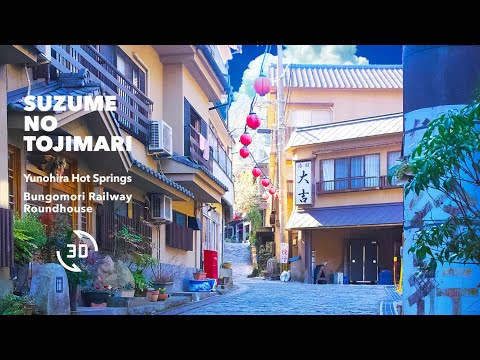

Historic brick railway roundhouse in Oita Prefecture, widely recognized as one of the strongest real-world inspirations behind Suzume’s mysterious opening ruins.
Trip Facts
Visit Time
Allow around 60–90 minutes to explore the site, read the railway heritage displays, and photograph the roundhouse from multiple angles.
Difficulty
Easy. The area is generally straightforward to explore on foot, though comfortable walking shoes are recommended.
Admission
The outdoor site is generally free to visit. Some exhibits or special heritage programming may vary seasonally.
Travel Snapshot
Key planning details for this stop, organized like a quick on-the-go pilgrimage guide.
Where
Kusu Town, Kusu District, Oita Prefecture, Japan
Getting There
Bungomori Station (JR Kyudai Main Line), then approximately 15 minutes on foot. Around 90 minutes from Oita by train, or about 2.5–3 hours from Hakata/Fukuoka depending on connections.
Season
Spring and autumn are especially rewarding, when soft light and seasonal scenery bring out the texture of the brick structure and surrounding landscape.
For Photographers
The roundhouse is especially photogenic during the early morning and late afternoon, when softer sunlight highlights the texture of the aged brick walls and the overgrown railway tracks.
One of the most atmospheric and emotionally resonant Suzume pilgrimage destinations in Japan.
Nestled in the quiet inland scenery of Oita Prefecture, the Former Bungomori Roundhouse is one of the most memorable real-world inspirations associated with <em>Suzume</em>. Originally built in 1934 as a steam locomotive maintenance facility, the brick roundhouse remains a striking piece of Japan's railway heritage long after its active service ended.
For anime fans, the site represents something far more mysterious. Its weathered brick walls, abandoned railway tracks, and silent atmosphere closely resemble the forgotten ruins where Suzume first encounters the mysterious door and meets Souta. While the film does not reproduce the location exactly, Makoto Shinkai clearly draws on the roundhouse's distinctive architecture and nostalgic surroundings.
Today, the site attracts railway enthusiasts, photographers, and anime fans alike, all drawn by the unique blend of industrial history and cinematic imagination that defines the opening chapter of the film.
Many fans consider this the symbolic starting point of the entire Suzume pilgrimage. It is one of the clearest examples of Makoto Shinkai transforming an ordinary, fading piece of real infrastructure into a location filled with mystery, memory, and emotional weight.
Beyond its anime connection, the roundhouse is also rewarding as a heritage destination. Visitors can appreciate the craftsmanship of early twentieth-century railway engineering while experiencing the peaceful rural atmosphere that makes the site feel so cinematic.
Unlike crowded urban anime spots, Bungomori offers a slower pace and a reflective mood that closely matches the emotional tone of the film.
Why fans strongly associate the Former Bungomori Roundhouse with Suzume
Suzume does not reproduce the site as a literal one-to-one filming location. The connection is strongest in the architecture, mood, and visual language of the scene rather than exact geographic duplication.
The roundhouse is especially photogenic during the early morning and late afternoon, when softer sunlight highlights the texture of the aged brick walls and the overgrown railway tracks.
A little planning helps make this stop more rewarding, especially because local train frequencies in rural Oita can be limited.
One of Japan's highest pedestrian suspension bridges, known for panoramic views over forests, valleys, and waterfalls.
Great add-on for scenery and landscape photography.
A celebrated hot spring town with boutique shops, cafes, museums, and mountain views.
Ideal for combining anime pilgrimage with an overnight onsen stay.
A dramatic volcanic landscape that pairs well with a broader Kyushu itinerary if you have additional travel time.
Best suited for travelers exploring central Kyushu by car.
| Anime Connection | ⭐⭐⭐⭐⭐ |
|---|---|
| Photography | ⭐⭐⭐⭐⭐ |
| Cultural Value | ⭐⭐⭐⭐⭐ |
| Scenic Atmosphere | ⭐⭐⭐⭐☆ |
| Accessibility | ⭐⭐⭐⭐☆ |
| Time Required | 1–1.5 Hours |
For many fans, the Former Bungomori Roundhouse is more than just an anime location. It marks the beginning of Suzume's extraordinary journey and offers a rare opportunity to stand in a place where Japan's railway history and contemporary animation intersect.
Active regional ferry terminal in Ehime Prefecture, widely recognized for inspiring Suzume’s memorable inter-island travel scenes between Kyushu and Shikoku.

Trip Facts
Visit Time
Allow around 45–90 minutes for harbor photography, exploring the terminal area, or longer if you are boarding a ferry.
Difficulty
Easy. The port is straightforward to access, though travelers should allow extra time if coordinating train and ferry connections.
Admission
Visiting the terminal and public harbor area is generally free. Ferry boarding requires a valid ticket.
Travel Snapshot
Key planning details for this stop, organized like a quick on-the-go pilgrimage guide.
Where
Yawatahama Port, Yawatahama, Ehime Prefecture, Japan
Getting There
Yawatahama Station (JR Yosan Line), then approximately 5–10 minutes by taxi or local bus, or about 30 minutes on foot. Regular ferries also connect Oita Prefecture with Yawatahama.
Season
Morning and late afternoon are usually best for photography, with calmer harbor conditions and softer coastal light.
For Photographers
Morning and late afternoon generally provide the best lighting around the harbor, especially when ferries are arriving or departing and reflections begin to appear on the water.
A real working port that captures the feeling of movement, transition, and anticipation at the heart of Suzume’s journey.
Located on the western coast of Ehime Prefecture, <strong>Yawatahama Port</strong> is one of Shikoku's busiest ferry terminals and an important gateway between Shikoku and Kyushu. Every day, ferries connect the port with Beppu and Usuki in Oita Prefecture, carrying passengers, vehicles, and freight across the calm waters of the Bungo Channel.
In <em>Suzume</em>, Yawatahama Port represents more than just a transportation hub. It marks another stage of Suzume's cross-country journey as she continues chasing Souta across Japan. The scenes inspired by the port capture the feeling of constant movement, departures, arrivals, and the anticipation of what lies ahead.
Although the film adapts the real location with artistic adjustments, visitors can still recognize familiar elements including the terminal atmosphere, boarding areas, surrounding roads, and views across the harbor. For fans following Suzume's route, this is one of the few places where they can experience the same kind of ferry journey featured in the story.
Yawatahama Port appeals to fans because it lets them experience one of the real transport links that inspired Suzume’s west-Japan travel scenes. Rather than visiting a static anime backdrop, travelers can step into a living port where ferries still define the rhythm of everyday movement.
The harbor atmosphere also offers a very different mood from the mysterious abandoned ruins earlier in the story. Here, the film shifts into a setting shaped by schedules, departures, waiting rooms, loading ramps, and the subtle tension of crossing from one region to another.
For visitors combining multiple Suzume locations, Yawatahama works especially well as part of a broader Kyushu-Shikoku pilgrimage route.
Why fans connect Yawatahama Port with Suzume
The film does not rely on one single landmark at Yawatahama Port. Instead, the connection is strongest in the atmosphere of the terminal, the harbor views, and the experience of moving between Kyushu and Shikoku by ferry.
Morning and late afternoon generally provide the best lighting around the harbor, especially when ferries are arriving or departing and reflections begin to appear on the water.
Because this is an active transportation hub, a little trip planning can make the stop much easier and more rewarding.
A great place to sample fresh seafood and experience the local fishing culture of coastal Ehime.
Best for food-focused travelers looking for a local add-on.
Traditional shopping streets with cafes, bakeries, and small businesses that showcase everyday life in Yawatahama.
A good complement to the port’s working-travel atmosphere.
About an hour away by train, Matsuyama offers Dogo Onsen, Matsuyama Castle, and lively commercial streets.
Ideal as the next stop for a broader Ehime itinerary.
Known for scenic coastal drives, hiking trails, and dramatic ocean viewpoints on Japan’s narrowest peninsula.
Best suited for travelers exploring western Ehime more deeply.
| Anime Connection | ⭐⭐⭐⭐☆ |
|---|---|
| Travel Experience | ⭐⭐⭐⭐⭐ |
| Photography | ⭐⭐⭐⭐☆ |
| Scenic Atmosphere | ⭐⭐⭐⭐☆ |
| Accessibility | ⭐⭐⭐⭐☆ |
| Time Required | 45–90 Minutes |
For many visitors, Yawatahama Port is more than simply a stop between destinations. It represents the spirit of movement that defines <em>Suzume</em>, a journey that crosses regions, connects communities, and gradually reveals the diverse landscapes of Japan.
One of Tokyo’s most iconic railway viewpoints, widely recognized by Suzume fans for its layered cityscape of trains, river, bridges, and dense urban architecture.
Trip Facts
Visit Time
Allow 30–60 minutes for photography, longer if you plan to wait for different train combinations or explore nearby attractions on foot.
Difficulty
Easy. This is one of the most accessible Suzume locations in Tokyo and fits naturally into a one-day city pilgrimage.
Admission
Free to visit and open 24 hours, though weekday commuting periods can be especially busy.
Travel Snapshot
Key planning details for this stop, organized like a quick on-the-go pilgrimage guide.
Where
Hijiri Bridge, Ochanomizu, Chiyoda City, Tokyo, Japan
Getting There
Ochanomizu Station (JR Chuo Line / JR Chuo-Sobu Line), then approximately 2 minutes on foot. Around 10 minutes from Tokyo Station or Shinjuku Station by JR Chuo Line.
Season
Golden hour before sunset and after dark, when the river, railways, and illuminated cityscape create the most cinematic atmosphere.
For Photographers
Hijiri Bridge is rewarding throughout the day, but the strongest lighting usually arrives during the golden hour before sunset and again after dark when Tokyo’s city lights begin to glow.
A classic Shinkai-style Tokyo viewpoint where railways, river, and skyline come together in one unforgettable urban composition.
Situated in the heart of Tokyo, <strong>Hijiri Bridge (Hijiribashi)</strong> spans the Kanda River between Ochanomizu and Yushima. Completed in 1927, the bridge is famous for its panoramic view of multiple railway lines converging below, framed by the surrounding cityscape. For decades, it has been one of Tokyo's most recognizable railway viewpoints and a favorite location for photographers.
For fans of <em>Suzume</em>, Hijiri Bridge is one of the film's most iconic urban locations. Makoto Shinkai has long been known for transforming ordinary city scenes into visually stunning cinematic moments, and this bridge perfectly reflects that approach. The combination of intersecting train tracks, layered architecture, and constantly changing light creates a scene that feels unmistakably "Shinkai" while remaining a functioning part of everyday Tokyo.
Unlike many anime pilgrimage sites hidden in quiet neighborhoods, Hijiri Bridge sits in one of the busiest transportation districts in the city. Visitors can easily recreate scenes from the film while also experiencing the energy of modern Tokyo.
Hijiri Bridge has become one of the most photographed Suzume pilgrimage locations in Tokyo because it captures exactly what Makoto Shinkai does best: turning ordinary urban infrastructure into a place filled with beauty, rhythm, and atmosphere.
The bridge is also rewarding beyond its anime connection. Even travelers unfamiliar with the film will find one of the city's best railway observation points here, with constant train movement, layered architecture, and dramatic urban perspectives in every direction.
Because it sits close to Akihabara, Kanda Myojin, and other central Tokyo destinations, Hijiri Bridge is easy to combine with a broader anime or city-sightseeing itinerary.
Why fans strongly associate Hijiri Bridge with Suzume
Hijiri Bridge is best understood as an atmospheric reference point rather than a perfect frame-by-frame reproduction. Its power lies in how clearly it expresses the urban feeling of Suzume’s Tokyo chapter.
Hijiri Bridge is rewarding throughout the day, but the strongest lighting usually arrives during the golden hour before sunset and again after dark when Tokyo’s city lights begin to glow.
Because the bridge is part of a busy everyday commuter area, a few simple travel habits make the stop easier and more enjoyable.
One of Tokyo's oldest shrines and a familiar destination for anime fans thanks to collaborations with multiple franchises.
A classic nearby stop for anime-focused visitors.
Roughly 15 minutes away on foot, Akihabara offers anime, manga, gaming, figure, and electronics stores on a huge scale.
Perfect for pairing pilgrimage with shopping and pop culture browsing.
A historic Confucian temple that offers a quiet, contemplative contrast to the busy urban landscape around Ochanomizu.
Best for travelers who enjoy mixing city scenery with history.
A striking Orthodox cathedral overlooking the neighborhood, adding another memorable architectural landmark to the area.
Useful as both a sightseeing stop and a photographic contrast to the rail corridor below.
| Anime Connection | ⭐⭐⭐⭐⭐ |
|---|---|
| Photography | ⭐⭐⭐⭐⭐ |
| Accessibility | ⭐⭐⭐⭐⭐ |
| Urban Atmosphere | ⭐⭐⭐⭐⭐ |
| Railway Interest | ⭐⭐⭐⭐⭐ |
| Time Required | 30–60 Minutes |
Hijiri Bridge demonstrates how <em>Suzume</em> transforms an ordinary piece of urban infrastructure into an unforgettable cinematic setting. Standing above the intersecting railway lines, it becomes easy to understand why Makoto Shinkai chose this area to capture the movement, energy, and beauty of Tokyo.
Scenic hillside garden and ropeway destination above Kobe, widely associated with Suzume’s quieter western Japan moments of nature, travel, and reflection.
Trip Facts
Visit Time
Allow at least 2–3 hours to enjoy the ropeway, walking paths, terraces, and seasonal garden areas at a comfortable pace.
Difficulty
Easy to Moderate. The site is visitor-friendly, but there are gentle slopes, paths, and multiple garden sections to explore on foot.
Admission
Admission is ticketed, with separate or combined options for the herb gardens and the ropeway depending on current operations.
Travel Snapshot
Key planning details for this stop, organized like a quick on-the-go pilgrimage guide.
Where
Kobe Nunobiki Herb Gardens, Kobe, Hyogo Prefecture, Japan
Getting There
Shin-Kobe Station (Sanyo Shinkansen / Kobe Municipal Subway), then approximately 5 minutes on foot to the lower Nunobiki Ropeway station. Around 30 minutes from Osaka via Sannomiya, or about 1 hour from Kyoto by JR services.
Season
Spring and autumn are especially popular for flowers, foliage, and pleasant temperatures, though the gardens remain attractive throughout the year.
For Photographers
The gardens offer strong photography opportunities from morning to sunset, with different compositions available depending on season, weather, and flowering conditions.
A peaceful mountainside setting where city, sea, ropeway, and seasonal flowers come together in one of Suzume’s most scenic western Japan inspirations.
Perched on the forested slopes of Mount Rokko, <strong>Kobe Nunobiki Herb Gardens</strong> is one of Japan's largest herb gardens and one of Kobe's most scenic attractions. Reached by the <strong>Nunobiki Ropeway</strong>, the gardens overlook Kobe's waterfront, the Seto Inland Sea, and the surrounding mountains, creating a landscape that changes beautifully with every season.
In <em>Suzume</em>, this peaceful hillside setting inspired part of Suzume's journey through western Japan. While the film adapts the location artistically rather than reproducing it scene for scene, fans can recognize the lush greenery, winding pathways, panoramic city views, and the distinctive ropeway climbing above Kobe.
Unlike the dramatic urban scenes later in the movie, Kobe Nunobiki Herb Gardens provide a quiet moment in the story, a place where nature, travel, and reflection come together. It is also one of the easiest Suzume pilgrimage locations to combine with a broader visit to Kobe.
Kobe Nunobiki Herb Gardens offer a very different experience from most anime pilgrimage locations. Instead of focusing on a station, a street, or a specific urban landmark, this stop invites visitors to enjoy a broad scenic environment where travel, landscape, and quiet reflection all play a role.
For Suzume fans, the ropeway journey and panoramic views create one of the clearest examples of Makoto Shinkai’s ability to transform real places into emotionally resonant spaces without needing literal one-to-one architectural reproduction.
It is also one of the easiest spots on the route to enjoy as both a film-inspired location and a high-quality Kobe sightseeing destination in its own right.
Why fans connect Kobe Nunobiki Herb Gardens with Suzume
The connection here is atmospheric rather than strictly architectural. The gardens, ropeway, and mountain-to-city views together create the feeling that fans associate with Suzume’s western Japan sequence.
The gardens offer strong photography opportunities from morning to sunset, with different compositions available depending on season, weather, and flowering conditions.
Because this is a major Kobe attraction rather than a quiet hidden location, practical planning helps you enjoy it more comfortably.
One of Japan's "100 Selected Waterfalls," accessible by a scenic hiking trail below the ropeway.
A great add-on for travelers who want more natural scenery close to Shin-Kobe.
Historic Western-style houses from Kobe's international trading era are within walking distance of Shin-Kobe Station.
Ideal for combining pilgrimage with Kobe’s architectural history.
A lively waterfront district with shopping, dining, and evening views of Kobe Port Tower.
Best for extending the day into a more modern Kobe city experience.
One of Kobe's signature public spaces, home to the Kobe Maritime Museum and the famous BE KOBE monument.
A popular scenic stop for first-time Kobe visitors.
| Anime Connection | ⭐⭐⭐⭐☆ |
|---|---|
| Scenic Beauty | ⭐⭐⭐⭐⭐ |
| Photography | ⭐⭐⭐⭐⭐ |
| Travel Experience | ⭐⭐⭐⭐⭐ |
| Accessibility | ⭐⭐⭐⭐☆ |
| Time Required | 2–3 Hours |
Kobe Nunobiki Herb Gardens showcase another side of <em>Suzume</em>, one where breathtaking scenery and quiet moments are just as important as dramatic action. Whether you are following the film's journey or simply enjoying one of Kobe's finest viewpoints, this location beautifully captures the harmony between nature and city that defines much of Makoto Shinkai's work.
World-famous Tokyo intersection and one of the clearest urban reference points for Suzume’s energetic, densely layered Shibuya scenes.
Trip Facts
Visit Time
Allow 30–60 minutes for the crossing itself, or longer if you plan to visit nearby observation decks, shopping streets, and surrounding Shibuya attractions.
Difficulty
Easy. This is one of the most accessible Suzume-related locations in Tokyo and can be combined with many other central-city stops.
Admission
Free to visit. Observation decks or nearby rooftop viewpoints such as Shibuya Sky require separate tickets.
Travel Snapshot
Key planning details for this stop, organized like a quick on-the-go pilgrimage guide.
Where
Shibuya Scramble Crossing, directly outside Shibuya Station, Tokyo, Japan
Getting There
Shibuya Station via JR Yamanote Line, JR Saikyo Line, Tokyo Metro, Tokyu, or Keio Inokashira Line. The crossing is immediately outside the station’s Hachiko Exit. Around 25 minutes from Tokyo Station or about 7 minutes from Shinjuku Station by JR.
Season
The crossing is photogenic throughout the day, but nighttime offers the strongest atmosphere thanks to illuminated billboards, glowing shopfronts, and heavy pedestrian flow.
For Photographers
Shibuya offers strong photography opportunities throughout the day, but its mood shifts dramatically after sunset when illuminated billboards, reflections, and pedestrian movement create the most cinematic effect.
A modern Tokyo icon where movement, light, and human energy come together in one of Suzume’s most recognizable city settings.
Few places represent modern Tokyo as vividly as <strong>Shibuya Scramble Crossing</strong>. Located directly outside Shibuya Station, this world-famous intersection sees thousands of pedestrians cross from every direction each time the traffic lights change. Surrounded by towering digital billboards, department stores, cafes, and constant streams of people, it has become one of Japan's most recognizable urban landmarks.
In <em>Suzume</em>, Shibuya serves as one of the key settings during the Tokyo chapter of the story. While the film does not recreate every storefront or advertisement, it faithfully captures the energy, movement, and density of one of the world's busiest city centers. As Suzume continues her pursuit of Souta, the familiar sights and sounds of Shibuya contrast sharply with the quiet rural landscapes that opened the film, highlighting just how far her journey has taken her.
For anime fans, Shibuya Scramble Crossing is more than a famous tourist attraction. It is a location where Makoto Shinkai transforms the everyday rhythm of city life into an emotionally charged cinematic experience.
Shibuya Scramble Crossing is one of the easiest Suzume pilgrimage locations to include in a Tokyo itinerary because it combines immediate recognizability with excellent transport connections and a powerful sense of place.
Fans visit not only to recreate scenes from the movie, but also to experience the pulse of central Tokyo that Makoto Shinkai captures so well: motion, density, light, and the feeling of thousands of lives intersecting for only a moment.
Because Shibuya is also a major transportation and entertainment district, it works perfectly as both an anime stop and a practical starting point for exploring other Tokyo locations.
Why fans strongly associate Shibuya Scramble Crossing with Suzume
The film does not reproduce every storefront or advertisement literally. Instead, it recreates the feeling of navigating through one of Tokyo’s busiest urban centers with remarkable atmospheric accuracy.
Shibuya offers strong photography opportunities throughout the day, but its mood shifts dramatically after sunset when illuminated billboards, reflections, and pedestrian movement create the most cinematic effect.
Shibuya is a busy, fully active city center, so timing and movement matter more here than at quieter pilgrimage sites.
A 229-meter-high observation deck offering spectacular 360-degree views over Tokyo and one of the best elevated perspectives on the crossing itself.
Best for panoramic photography and skyline views.
A modern urban complex with rooftop green space, cafes, restaurants, and retail stores in central Shibuya.
Good for extending a Shibuya visit beyond the crossing.
Just one stop away or about a 20-minute walk, Harajuku is known for youth fashion, pop culture, and themed cafes.
Ideal for combining Suzume-inspired city sightseeing with Tokyo pop culture exploration.
One of Tokyo’s most important Shinto shrines, located in a peaceful forest north of Harajuku.
A strong contrast to Shibuya’s fast-paced urban atmosphere.
Tokyo’s stylish boulevard lined with luxury boutiques, contemporary architecture, and fashionable cafes.
Great for architecture and city-walk enthusiasts.
| Anime Connection | ⭐⭐⭐⭐⭐ |
|---|---|
| Urban Atmosphere | ⭐⭐⭐⭐⭐ |
| Photography | ⭐⭐⭐⭐⭐ |
| Accessibility | ⭐⭐⭐⭐⭐ |
| Travel Experience | ⭐⭐⭐⭐⭐ |
| Time Required | 30–60 Minutes |
Shibuya Scramble Crossing perfectly captures the modern side of <em>Suzume</em>. Amid the endless flow of commuters, flashing advertisements, and towering buildings, visitors can experience the same sense of movement and possibility that defines Suzume's journey through Tokyo.
Anime vs Real Life
One of Suzume's Most Recognizable Real-World Locations
The Ochanomizu district is one of the most faithfully recreated locations in Suzume. From the station entrance and railway bridges to the Kanda River and surrounding cityscape, many scenes were inspired directly by real places that can still be visited today. Fans can easily recreate the movie's iconic viewpoints within a short walking distance, making Ochanomizu one of Tokyo's best anime pilgrimage destinations.
The entrance of JR Ochanomizu Station serves as one of Suzume’s arrival points in Tokyo. The station sign, ticket gates, and surrounding plaza remain instantly recognizable today.
Multiple bridges crossing the Kanda River provide panoramic views of the railway tracks. These locations appear repeatedly throughout Suzume’s Tokyo sequence.
Traffic lights, road signs, pedestrian walkways, and nearby buildings were recreated with remarkable accuracy, allowing fans to compare even the smallest architectural details.
Modern office towers surrounding Ochanomizu create the distinctive Tokyo skyline featured in the film, blending everyday city life with Makoto Shinkai’s cinematic atmosphere.
Scene Focus
Unlike many anime that use only general city inspiration, Suzume closely reproduces the streets, railway bridges, and station surroundings of Ochanomizu. The district remains one of the easiest places for visitors to identify and photograph exactly as it appears in the movie.
Location Facts
| Real Location | JR Ochanomizu Station |
|---|---|
| City | Chiyoda, Tokyo |
| Featured In | Suzume (2022) |
| Comparison Scenes | 6 |
| Walking Route | Approximately 15 minutes |
| Best Visiting Time | Morning or Late Afternoon |
| Nearest Station | JR Ochanomizu Station |
Photography Tips
For the most accurate comparisons, begin at the station entrance before walking toward the Kanda River bridges. Many of the film's viewpoints are located within a few minutes of each other, making it easy to recreate multiple scenes during a single visit.
Recommended Time
Morning or late afternoon for softer lighting.
Suggested Lens
24–35 mm equivalent for matching the original framing.
What to Compare
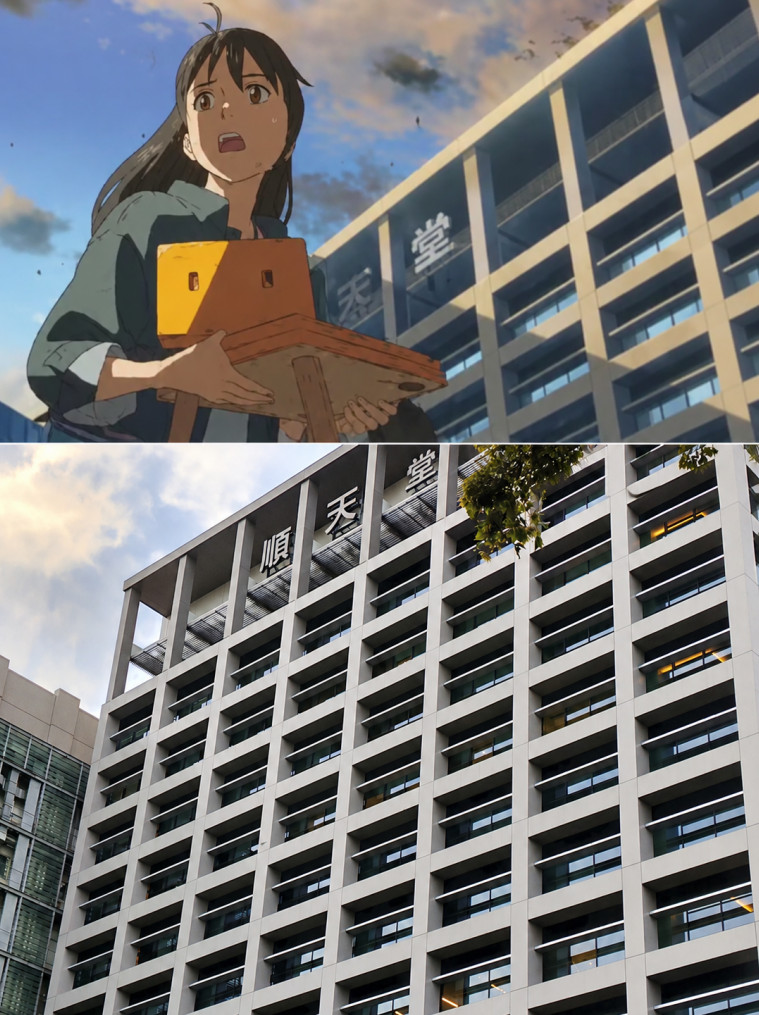
Surrounding cityscape
Buildings around Ochanomizu help create the everyday Tokyo atmosphere faithfully reflected in Suzume.
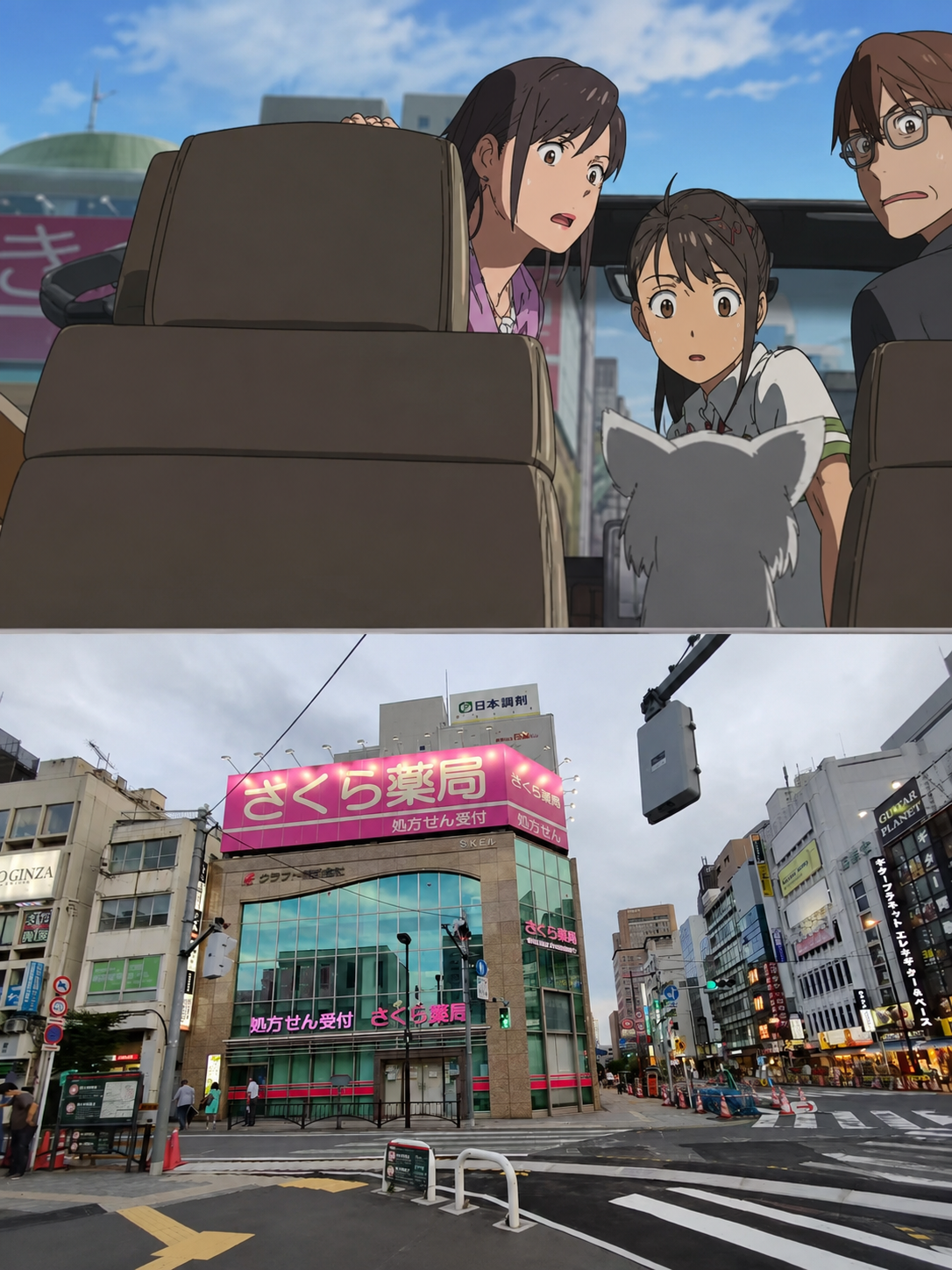
Seasonal atmosphere
Cherry blossoms around Ochanomizu add another layer of atmosphere to the district’s real-life cinematic appeal.
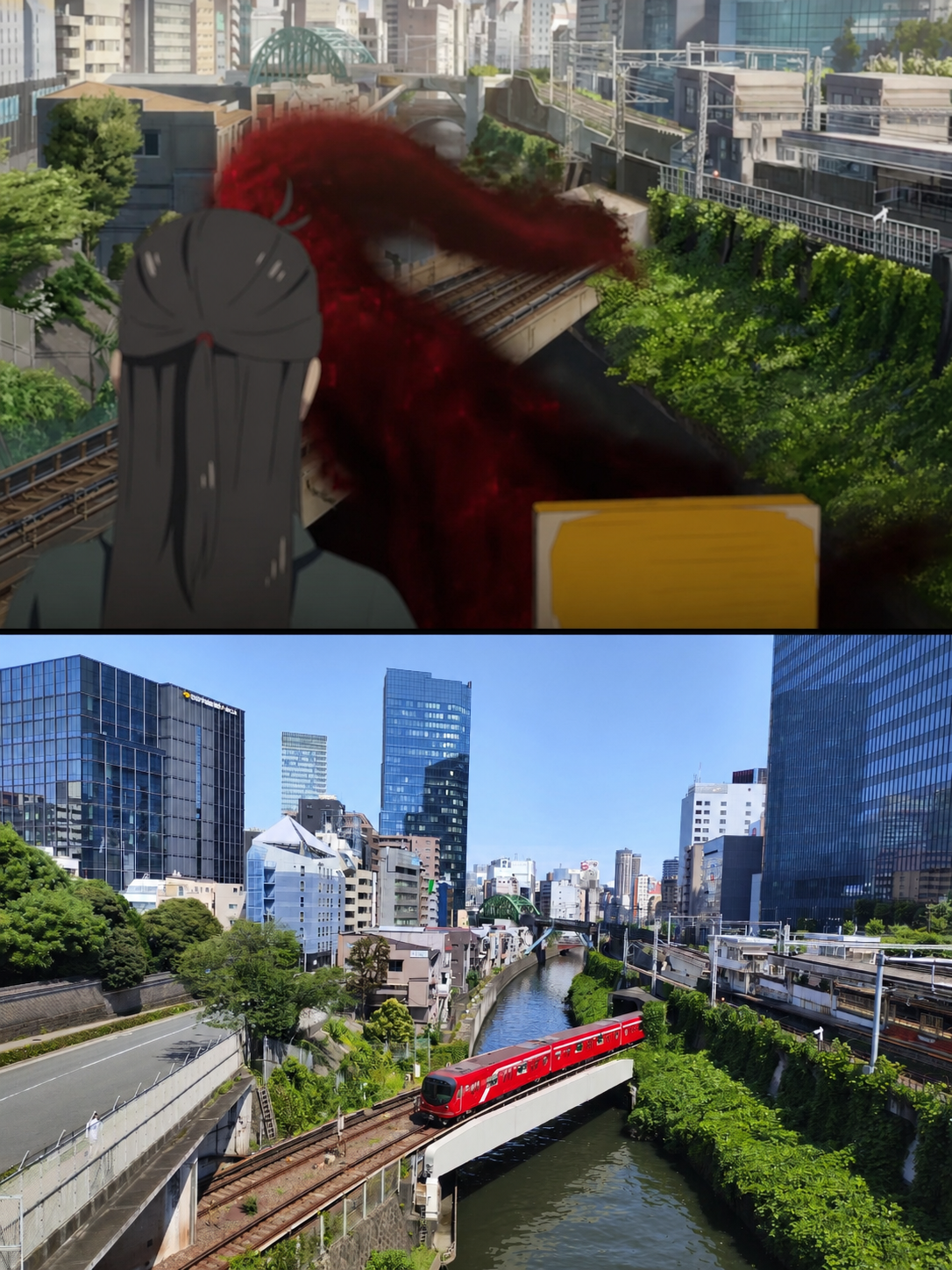
Bridge overlook
Elevated views over the Kanda River and rail lines capture the layered Tokyo atmosphere seen in the film.
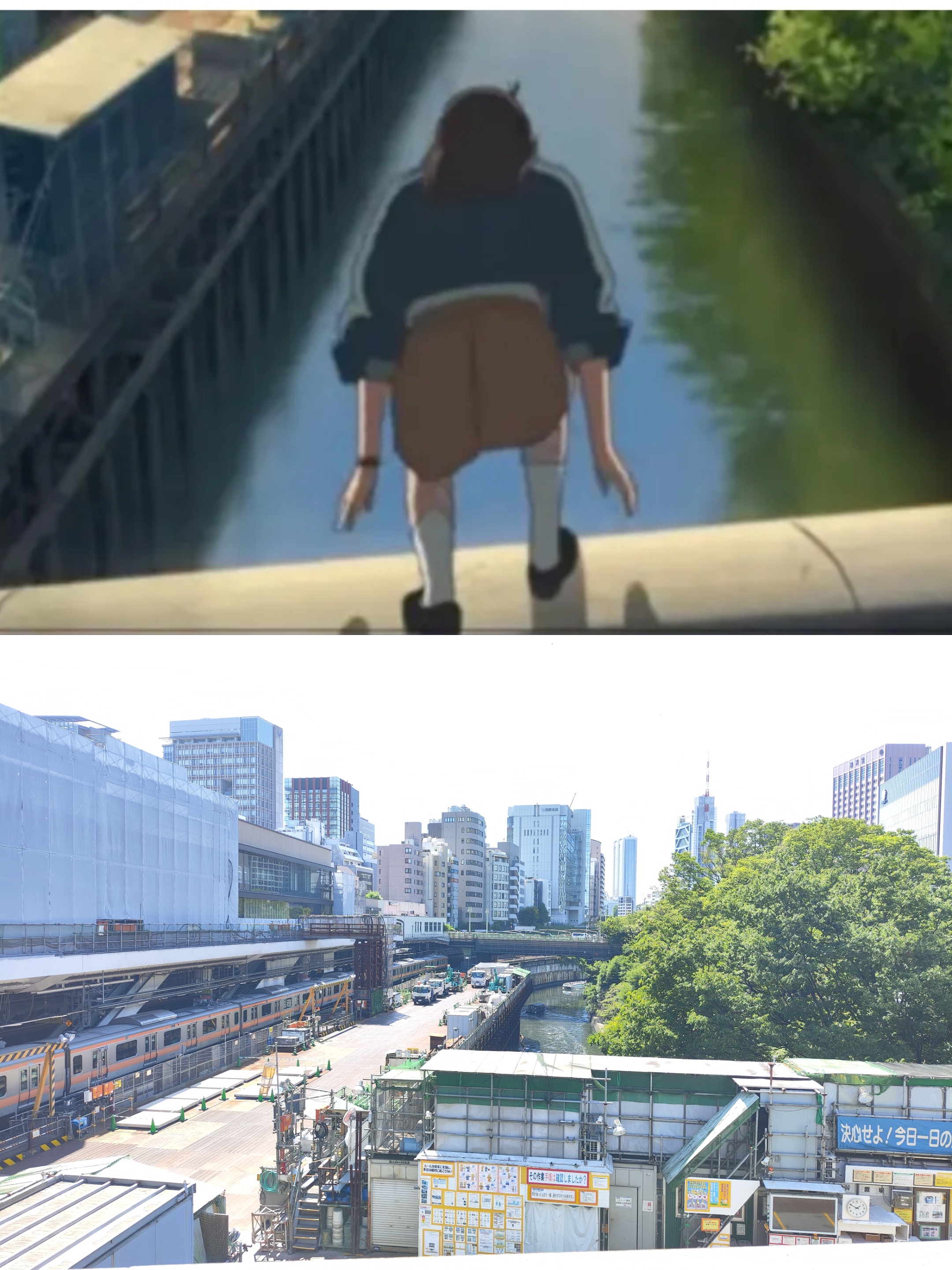
Passing trains
Tracks, trains, and bridge structure combine into one of Suzume’s most faithful urban recreations.
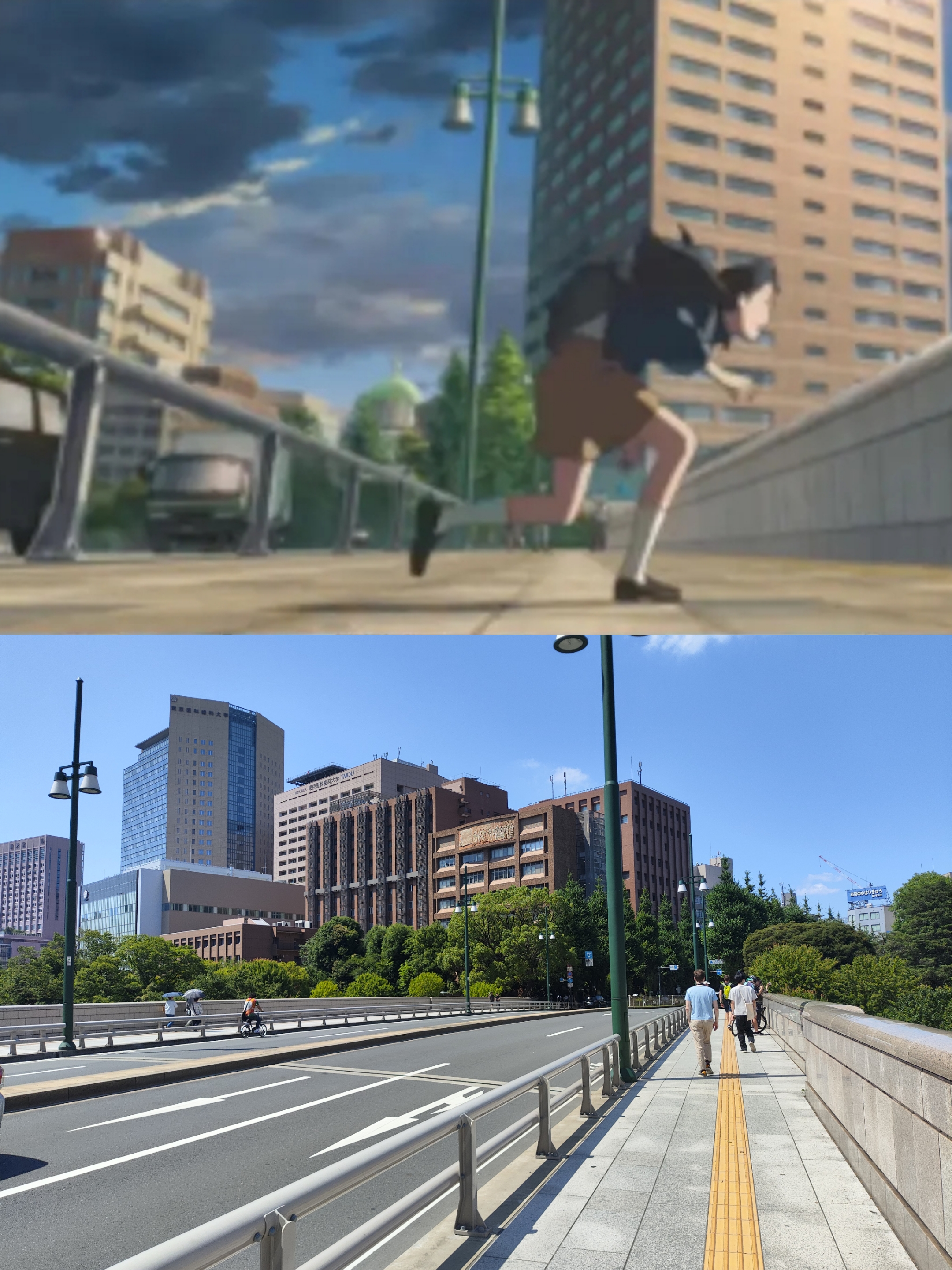
Walkway framing
Bridge railings and river-facing pedestrian routes closely match the film’s visual composition.
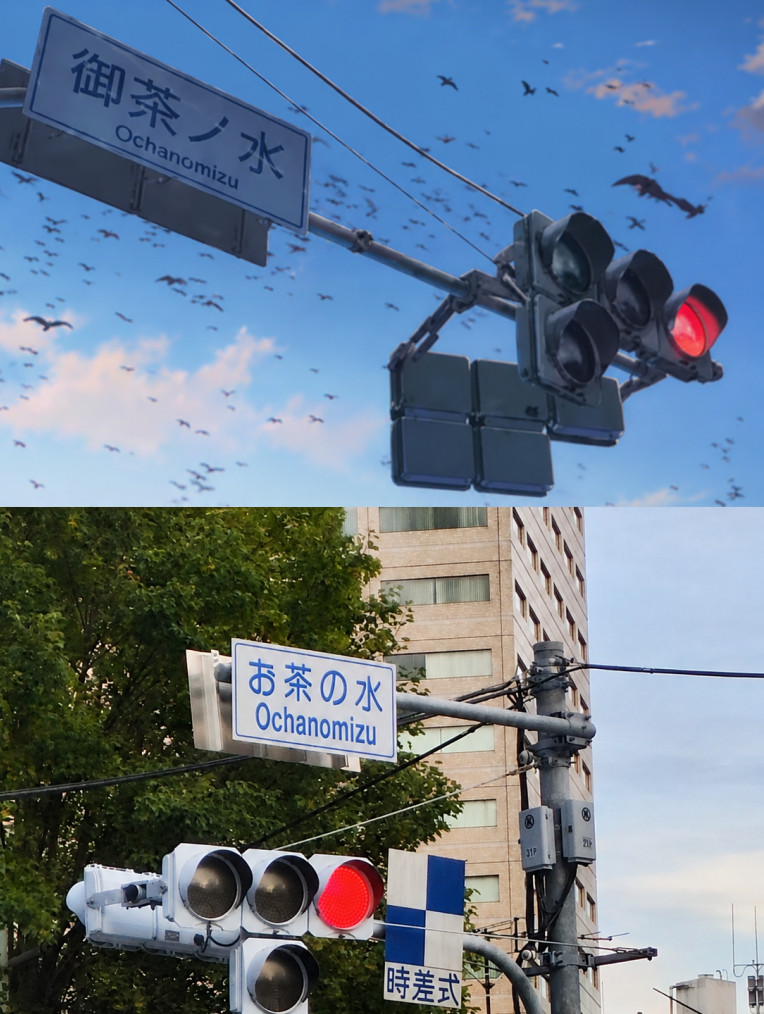
Street accuracy
Traffic lights, road signs, and surrounding buildings show Makoto Shinkai’s extraordinary attention to detail.
Why Visit Ochanomizu?
Ochanomizu is one of the most accessible anime pilgrimage locations in Tokyo. Nearly every major scene featured in Suzume's Tokyo chapter can be reached on foot, allowing visitors to experience the film's atmosphere while exploring one of the city's historic railway districts. Whether you're interested in photography, anime, or Tokyo's urban landscapes, Ochanomizu offers one of the closest real-world matches to Makoto Shinkai's animation.
Travel through the real-life locations that inspired Suzume. From abandoned ruins in Kyushu to the heart of Tokyo and the emotional final destination in Tohoku, this route allows fans to experience the story exactly as Suzume did.
Each stop represents a chapter of her journey, revealing how memory, loss, and hope connect people across Japan.
Follow the path Suzume takes while chasing mysterious doors across the country.
The abandoned railway roundhouse that inspired the film's unforgettable opening ruins.
Why Visit
Story Connection
This is where Suzume first encounters one of the mysterious doors that trigger her journey.
The coastal ferry terminal featured during Suzume's pursuit of Daijin.
Why Visit
Story Connection
A major transition point as Suzume leaves Kyushu and continues her search across Japan.
A peaceful mountain location overlooking Kobe.
Why Visit
Story Connection
Represents one of the film's quieter emotional moments during the journey.
One of the most recognizable urban locations in Suzume.
Why Visit
Story Connection
The dramatic Tokyo chapter unfolds around this area as the scale of the disaster becomes clear.
Discover the locations connected to Souta's mission as a Closer and protector of the mysterious doors.
The first major door location seen in the film.
What Makes It Special
This location introduces the ancient responsibility carried by Souta's family.
The transportation hub that connects many chapters of the story.
What Makes It Special
A symbolic crossroads between the past, present, and future.
One of the most visually memorable sections of the film.
What Makes It Special
The urban setting contrasts sharply with the forgotten ruins that define the doors.
Experience the film through its most important locations: the places where forgotten memories and abandoned spaces become gateways to another world.
| Location | Region | Story Role |
|---|---|---|
| Bungomori Roundhouse | Oita | First Door |
| Coastal Ruins | Ehime | Journey Arc |
| Kobe Locations | Hyogo | Western Japan Arc |
| Tokyo Locations | Tokyo | Climax Arc |
| Tohoku Ruins | Iwate / Miyagi Inspiration | Final Door |
Unlike traditional anime pilgrimages focused on a single city, Suzume transforms the entire country into part of the story.
Travelers experience:
All within a single narrative journey.
Visit the locations connected to the film's emotional ending and its themes of memory, loss, and healing.
The final section of the story draws heavily from areas affected by the 2011 Great East Japan Earthquake and Tsunami.
Why Visit
Story Connection
This is where Suzume confronts her past and discovers the truth behind the mysterious door she saw as a child.
Start in Oita for the Roundhouse ruins → Ferry from Usuki/Beppu → Onsen stay.
JR trains + Ferry + Local bus/taxi
Moderate
Ochanomizu bridge views → Shinjuku city vibes → Imperial Palace/Tokyo Station area.
JR Yamanote & Chuo Lines
Low
Golden hour for cinematic lighting; early morning for empty ruins.
Do not trespass in abandoned buildings (Roundhouse interior is off-limits). Be quiet in residential areas.
JR Pass works for most train travel; Ferries require separate tickets.
Cherry blossoms in spring frame the Roundhouse beautifully.
Spread the word to your friends and community.