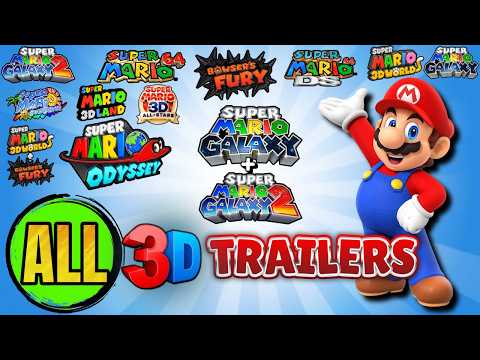
Super Mario

Super Mario

Nintendo's flagship platformer franchise starring Mario in adventures across the Mushroom Kingdom.

IP Overview & Key Facts

IP Key Facts

Essential information and quick stats.
Full Name
Super Mario Bros.
Also Known As
Super Mario, Mario Bros., Super Mario Series
Format
Video Game Franchise
Release Year
1985
Current Status
Active
Region
Japan
Creator
Shigeru Miyamoto
Publisher
Nintendo
Original Work
Super Mario Bros. (1985)
Genre
Platformer, Adventure, Action

Where to Start & Recommended Order

A beginner-friendly guide for starting Super Mario Bros. without spoilers.
Best starting point
Best starting point: start with a modern, beginner-friendly mainline title that matches your taste:
Prefer 3D exploration? Try Super Mario Odyssey (2017).
Prefer classic 2D platforming? Try Super Mario Bros. Wonder (2023).

If you want to see the “classic foundation,” Super Mario Bros. (1985) or Super Mario World (1990) are common historical entry points, but modern games are usually easier to pick up.
Recommended order
Recommended order (spoiler-safe):
For mainline Mario platformers, there is no strict story order. Most games are designed to be standalone, so you can jump in almost anywhere.

A practical path for most beginners:
1.Pick one modern mainline game (2D or 3D)
2.If you want multiplayer, add a spin-off like Mario Kart or a party/sports title
3.If you enjoy the “feel,” explore older classics for history and extra challenge
Fast-track option
If you want to catch up faster:
Skip the backlog and play one modern mainline game first; that gives you the core Mario experience immediately.
For classic-era sampling, use Nintendo Switch Online (or official collections when available) to try a few early worlds/levels.
Do not worry about completion: optional post-game challenges can be tough, and the franchise is not built around “finishing everything in order.”

Story, World & Core Themes

Explore the narrative, setting, and ideas that shape Super Mario.
Story
High-level synopsis and narrative focus.
A bright, bite-sized adventure series built around movement, creativity, and pure fun.

Super Mario is Nintendo’s flagship platforming franchise, best known for fast, readable action and worlds that feel like playful toyboxes. The “core premise” is famously simple—Mario goes on an adventure, often to stop Bowser and help Princess Peach—but the appeal is less about ongoing plot and more about the moment-to-moment rhythm of play: running, jumping, exploring, and discovering new mechanics.

The series has multiple mainline styles. Classic 2D entries focus on tight level design, timing, and momentum, while 3D entries emphasize exploration, collectibles, and experimentation in larger spaces. Because each main game introduces a new hook—power-ups, movement systems, world rules—you can usually start with a modern title without needing story context.

Super Mario is also a broad universe, not only one type of game. Spin-offs like kart racing, party games, sports titles, and RPG-style adventures use the same cast and iconography, but they play very differently. That variety is part of why the franchise stays culturally dominant: it can be a relaxed family co-op experience, a competitive multiplayer night, or a skill-based single-player challenge.

Historically, Mario’s popularity traces back to early Nintendo arcade and console success—Shigeru Miyamoto’s work in the 1980s helped define how modern platform games feel. The franchise’s mainline identity grew through landmark releases like Super Mario Bros. (1985) and continued evolving across generations with new movement ideas and world styles.

For newcomers, the best way to approach Super Mario is to treat it like a menu of “play styles,” not a serialized saga. Pick one mainline game that matches what you enjoy (2D precision or 3D exploration), then branch out into spin-offs if you want multiplayer or a different pace. It is one of the easiest major franchises to jump into because fun and clarity come first.
World
Setting, cultures, and distinctive elements.
The Mushroom Kingdom and beyond: a playful world where rules change to serve the fun.

Super Mario’s setting is built around iconic, instantly readable elements: the Mushroom Kingdom, warp pipes, power-up blocks, and a cast of characters that feels like living game-language. Instead of one rigid “world bible,” the franchise uses consistent motifs and then remixes them—grasslands, deserts, haunted houses, underwater stages, sky kingdoms—so each game can feel fresh while still being recognizably Mario.

Worldbuilding in Mario is mechanical as much as narrative. The environment teaches you how to move: enemies communicate timing, platforms communicate momentum, and power-ups communicate new possibilities. That is why the world feels approachable for beginners: the setting is designed to instruct without long explanations.

Power-ups are the franchise’s signature world rule. A Fire Flower, a Super Star, or a new transformation is not just a “buff”—it changes how you interpret obstacles and what kinds of routes become possible. In 3D entries, movement systems and physics-like interactions play a similar role, turning worlds into playgrounds where curiosity is rewarded.

The franchise also supports very different “sub-worlds” through spin-offs. Mario Kart turns the universe into a racing theme park of recognizable tracks and items. Party and sports games turn the cast into a social experience. RPG-style titles use the same setting elements but lean into dialogue, quests, and character comedy.

The result is a world that feels flexible but coherent: you always know you are in Mario because the visual language, characters, and core mechanics are consistent, even when genres change. For newcomers, that flexibility is a feature—choose the game style you want, and the world will still feel familiar within minutes.
Themes
Core ideas and recurring motifs.
Joy, perseverance, and the simple satisfaction of making progress.

Playfulness and optimism
Mario’s tone is intentionally bright. The franchise treats joy as part of the experience, using music, color, and comedic character designs to keep the world inviting even when levels get difficult.

Perseverance through repetition
Many Mario games are built on a gentle loop: try, fail, learn, and try again. The challenge is usually fair and readable, which makes improvement feel earned rather than random.

Creativity and experimentation
Power-ups and movement mechanics are designed to encourage “what if?” thinking. The series rewards players who test boundaries, explore hidden routes, and use tools in unexpected ways.

Accessibility without being shallow
Mario is approachable for beginners, but many entries also hide optional challenges for advanced players. This balance is part of the franchise’s longevity: it can be a first game for kids and still be satisfying for experts.

Friendship and lighthearted rivalry
Across the wider Mario ecosystem, the cast supports multiplayer fun: co-op adventures, party chaos, kart rivalries, and friendly competition. The “story” often stays simple so the social and gameplay moments can take the spotlight.

Iconography and cultural memory
Mario’s themes are also tied to recognition: sound effects, level motifs, and character silhouettes are designed to be instantly memorable. That shared vocabulary is why the franchise travels so well across generations—people can jump in and feel “at home” quickly.

Cultural Impact Timeline

High-level milestones showing Super Mario's global influence.
Creation Background
Created by Shigeru Miyamoto at Nintendo during the rise of home consoles
Cultural Impact
Defined platformer genre; iconic characters and music permeate global culture
Legacy
Benchmark for game design and family entertainment for decades
Major Milestones
1985: Super Mario Bros. launches on Famicom/NES,1990: Super Mario World introduces Yoshi on SNES,1996: Super Mario 64 pioneers 3D platforming,2007: Super Mario Galaxy reimagines platforming with gravity,2017: Super Mario Odyssey delivers sandbox exploration
Awards
Multiple Game of the Year awards across entries,BAFTA and The Game Awards nominations

Key Characters

Meet representative characters from Super Mario.
Mario
It's-a me, Mario!
The heroic plumber of the Mushroom Kingdom known for jumping, power-ups, and saving Princess Peach.View Profile
Luigi
I'm-a Luigi, number one!
Mario’s taller brother, a kind-hearted hero who bravely explores haunted mansions and adventures alongside Mario.View Profile
Princess Peach
Thank you, Mario! The quest is over.
The benevolent ruler of the Mushroom Kingdom, often targeted by Bowser and rescued by Mario and friends.View Profile
Bowser
Bwahaha! All hail the King of the Koopas!
King of the Koopas and Mario’s arch-nemesis who frequently kidnaps Princess Peach.View Profile

Should You Watch Super Mario?

A practical, spoiler-safe snapshot of what many viewers love (and what some do not).
Top reasons fans love it
Instant “pick-up-and-play” fun: Mario games are designed to be readable and satisfying within minutes.
World-class level design: Many entries are built around clean rules and smart escalation, making progress feel earned.
Creativity through mechanics: Power-ups and movement systems encourage experimentation and playful problem-solving.
Something for every mood: Mainline platforming, kart racing, party games, and more—Mario is a whole ecosystem.
A cultural icon: If you like game history, Mario is one of the clearest “source codes” of modern game design.
Reasons some viewers bounce
Story is minimal by design: If you want deep narrative continuity, Mario is not primarily that kind of franchise.
Difficulty spikes exist: Some post-game or optional challenges can be surprisingly tough.
Genre variety can confuse beginners: “Mario” includes very different experiences (platformer vs kart vs party).
Platform availability matters: Many entries are tied to Nintendo hardware and specific consoles.
Some older games feel dated: Early-era controls and presentation can take an adjustment period if you start with classics.
If you are unsure, start here
Pick your play style: try a modern 2D entry if you want precision platforming, or a modern 3D entry if you want exploration and movement freedom.
For a quick taste, play the opening world/levels and see if the movement feels satisfying—Mario lives or dies on “feel.”
If you want multiplayer, start with a party or kart title for instant group fun, then try a mainline platformer later.

Frequently Asked Questions

Who created Super Mario?
Super Mario was created by legendary game designer Shigeru Miyamoto and produced by Nintendo. The character first appeared as 'Jumpman' in Donkey Kong (1981) before starring in Super Mario Bros. (1985).
When was the first Super Mario game released?
The original Super Mario Bros. was released in Japan on September 13, 1985, for the Famicom (NES). It revolutionized the platforming genre and saved the video game industry from the 1983 crash.
Who are the main characters in the Super Mario franchise?
The primary characters are Mario (the hero), Luigi (his brother), Princess Peach (ruler of the Mushroom Kingdom), and Bowser (the main antagonist). Other key characters include Toad, Yoshi, Wario, and Donkey Kong.
What is the Mushroom Kingdom?
The Mushroom Kingdom is the primary setting for most Super Mario games. It is a fantasy world ruled by Princess Peach and inhabited by Toads, Goombas, Koopas, and other unique creatures.
What is the difference between Mario and Luigi?
Mario is the older, shorter brother who wears red and is generally the main hero. Luigi is the younger, taller brother who wears green. Luigi is often portrayed as more timid but equally brave when it counts, having his own spooky series, Luigi's Mansion.
How many Super Mario games are there?
There are over 200 games featuring Mario, including the main Super Mario platformers and various spin-off series like Mario Kart, Mario Party, Mario Tennis, and Paper Mario.
Who is Mario's main enemy?
Mario's arch-nemesis is Bowser (King Koopa). Bowser repeatedly kidnaps Princess Peach and attempts to conquer the Mushroom Kingdom, usually breathing fire and leading an army of minions.
Is Super Mario suitable for children?
Yes, the Super Mario series is renowned for being family-friendly and suitable for all ages. Most games are rated 'E for Everyone' (or regional equivalent) with mild cartoon violence.
What are Mario's most famous power-ups?
Iconic power-ups include the Super Mushroom (makes Mario grow), Fire Flower (allows throwing fireballs), Super Star (invincibility), and the Super Leaf/Cape Feather (flight). Newer games introduce items like the Cappy capture ability.
Where can I play Super Mario games?
Super Mario games are exclusive to Nintendo consoles. You can play the latest titles on the Nintendo Switch, while many classic titles are available via the Nintendo Switch Online service.

Share the Joy and Fun!

Spread the word to your friends and community.