Story, World & Core Themes
Explore the narrative, setting, and ideas that shape Transformers.
Story
High-level synopsis and narrative focus.
A sci-fi action franchise about living machines, identity, and a war that keeps reshaping its own mythology.
Transformers is best known for its central hook: alien robots from Cybertron can transform into vehicles, weapons, and everyday machines, turning battles into fast, kinetic set pieces. But the franchise’s long-term appeal is not only the gimmick—it is how that idea supports very different kinds of stories, from kid-friendly adventure to war drama to character-centered redemption arcs.
The core conflict usually revolves around the Autobots and Decepticons, two factions whose war spills onto Earth and other worlds. Some versions frame the Decepticons as conquest-driven tyrants and the Autobots as protectors; other versions push into gray areas, asking what “freedom,” “order,” and “survival” look like after a civilization collapses.
A helpful thing for newcomers to know is that Transformers is not a single linear saga. It is a franchise with multiple continuities across cartoons, films, comics, games, and toy lines. You can treat many entries as their own starting points, because they often reintroduce the premise, re-explain key characters, and remix the same archetypes in new ways.
The best Transformers stories tend to focus on more than explosions. They highlight character identity (what you choose to be when you can become anything), leadership and loyalty under pressure, and the tragedy of a war that creates monsters on both sides. When it clicks, Transformers feels like a “found family in a battlefield” story—robots with history, pride, and fear trying to decide whether they are more than weapons.
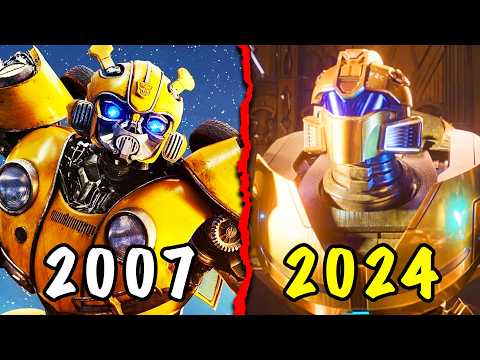
The franchise’s modern popularity grew in multiple waves, including the classic 1980s animation era and the big-budget live-action films starting in 2007. If you are approaching it fresh, the easiest path is to pick one continuity that matches your taste, then stay within that lane until the characters and rules feel familiar.
A good “beginner mindset” is to treat Transformers like a set of retellings rather than a single canon. Each era usually answers the same questions in a slightly different way: why did the war start, what does Cybertron mean to its people, and what kind of leader is Optimus Prime in this version? That flexibility is why the franchise lasts—fans can grow into a different lane over time, and creators can emphasize comedy, horror, tragedy, or straight-up adventure without breaking the premise.
You will also notice that Transformers stories tend to use small teams. Even when the war is huge, the narrative focus is often a handful of Autobots on the ground, a handful of Decepticons hunting them, and the fragile alliances that form under pressure. That structure keeps the franchise readable: you do not need to memorize every character, because the story repeatedly centers on a core group and then rotates supporting characters in and out.
If you are here because you want something specific, Transformers can deliver multiple “moods.” Some entries are pure spectacle with charismatic villains and big set pieces; others are slower and more reflective, focusing on what soldiers become when peace is no longer guaranteed. Picking the right entry point is mostly about choosing your preferred mood, not about catching up on every piece of lore.
It also helps to understand the franchise’s media identity. Transformers began in the 1980s as a toyline supported by animation and comics, so it was designed from the start to be modular. New designs can appear, characters can be reinterpreted, and the “same name” can mean different personalities across different eras. Instead of treating that as inconsistency, fans often treat it as a feature: you get multiple takes on the same myth.
If you like clean narrative arcs and character work, animated continuities are often the easiest place to settle in, because they have room to develop relationships and consequences. If you like big spectacle and rapid momentum, the live-action films can be a straightforward entry, especially if you watch them as a self-contained lane. Comics often go deeper on politics and long-term fallout, but they are usually best after you already know the basics (Autobots, Decepticons, Cybertron, and the idea of a “spark”).
A simple rule that helps most beginners: do not mix timelines mid-arc. If you pick a series or film run, finish a coherent chunk before switching to another era. Transformers becomes dramatically easier to enjoy when you let one continuity teach you its version of the cast, the war, and the stakes first—then you can compare versions later for fun. Once you have that foundation, the franchise’s huge catalogue starts to feel like options, not homework.
If you are not sure where you land, a good starting heuristic is: pick one entry that gives you clear Autobot-versus-Decepticon stakes, a recognizable Optimus Prime, and a small core team. If you enjoy that baseline, you can then explore a darker war-focused lane, a lighter comedic lane, or a lore-heavy comics lane, depending on what you want more of. Transformers is at its best when you treat it like a set of flavors, not a single required syllabus.
Transformers is best known for its central hook: alien robots from Cybertron can transform into vehicles, weapons, and everyday machines, turning battles into fast, kinetic set pieces. But the franchise’s long-term appeal is not only the gimmick—it is how that idea supports very different kinds of stories, from kid-friendly adventure to war drama to character-centered redemption arcs.
The core conflict usually revolves around the Autobots and Decepticons, two factions whose war spills onto Earth and other worlds. Some versions frame the Decepticons as conquest-driven tyrants and the Autobots as protectors; other versions push into gray areas, asking what “freedom,” “order,” and “survival” look like after a civilization collapses.
A helpful thing for newcomers to know is that Transformers is not a single linear saga. It is a franchise with multiple continuities across cartoons, films, comics, games, and toy lines. You can treat many entries as their own starting points, because they often reintroduce the premise, re-explain key characters, and remix the same archetypes in new ways.
The best Transformers stories tend to focus on more than explosions. They highlight character identity (what you choose to be when you can become anything), leadership and loyalty under pressure, and the tragedy of a war that creates monsters on both sides. When it clicks, Transformers feels like a “found family in a battlefield” story—robots with history, pride, and fear trying to decide whether they are more than weapons.
The franchise’s modern popularity grew in multiple waves, including the classic 1980s animation era and the big-budget live-action films starting in 2007. If you are approaching it fresh, the easiest path is to pick one continuity that matches your taste, then stay within that lane until the characters and rules feel familiar.
A good “beginner mindset” is to treat Transformers like a set of retellings rather than a single canon. Each era usually answers the same questions in a slightly different way: why did the war start, what does Cybertron mean to its people, and what kind of leader is Optimus Prime in this version? That flexibility is why the franchise lasts—fans can grow into a different lane over time, and creators can emphasize comedy, horror, tragedy, or straight-up adventure without breaking the premise.
You will also notice that Transformers stories tend to use small teams. Even when the war is huge, the narrative focus is often a handful of Autobots on the ground, a handful of Decepticons hunting them, and the fragile alliances that form under pressure. That structure keeps the franchise readable: you do not need to memorize every character, because the story repeatedly centers on a core group and then rotates supporting characters in and out.
If you are here because you want something specific, Transformers can deliver multiple “moods.” Some entries are pure spectacle with charismatic villains and big set pieces; others are slower and more reflective, focusing on what soldiers become when peace is no longer guaranteed. Picking the right entry point is mostly about choosing your preferred mood, not about catching up on every piece of lore.
It also helps to understand the franchise’s media identity. Transformers began in the 1980s as a toyline supported by animation and comics, so it was designed from the start to be modular. New designs can appear, characters can be reinterpreted, and the “same name” can mean different personalities across different eras. Instead of treating that as inconsistency, fans often treat it as a feature: you get multiple takes on the same myth.
If you like clean narrative arcs and character work, animated continuities are often the easiest place to settle in, because they have room to develop relationships and consequences. If you like big spectacle and rapid momentum, the live-action films can be a straightforward entry, especially if you watch them as a self-contained lane. Comics often go deeper on politics and long-term fallout, but they are usually best after you already know the basics (Autobots, Decepticons, Cybertron, and the idea of a “spark”).
A simple rule that helps most beginners: do not mix timelines mid-arc. If you pick a series or film run, finish a coherent chunk before switching to another era. Transformers becomes dramatically easier to enjoy when you let one continuity teach you its version of the cast, the war, and the stakes first—then you can compare versions later for fun. Once you have that foundation, the franchise’s huge catalogue starts to feel like options, not homework.
If you are not sure where you land, a good starting heuristic is: pick one entry that gives you clear Autobot-versus-Decepticon stakes, a recognizable Optimus Prime, and a small core team. If you enjoy that baseline, you can then explore a darker war-focused lane, a lighter comedic lane, or a lore-heavy comics lane, depending on what you want more of. Transformers is at its best when you treat it like a set of flavors, not a single required syllabus.
World
Setting, cultures, and distinctive elements.
Cybertron and the “Earth mirror”: a war between machine civilizations expressed through human-scale disguises.
Transformers worldbuilding usually starts with Cybertron, a planet of sentient machines with its own history, politics, and resource pressures. Many versions explore the aftermath of a long civil war: damaged cities, scarce energon, broken trust, and leaders who have to decide whether rebuilding is even possible.
The transformation mechanic is not just visual flair—it shapes how the world operates. Robots can move through human spaces unnoticed, hide in plain sight, and turn everyday technology into narrative tools. That is why Earth is such a natural stage: cars, planes, trucks, and machines become both camouflage and character expression.
Different continuities emphasize different “rules.” Some lean into mythology: artifacts, ancient primes, and a spiritual “spark” that functions like a soul. Others treat the world more like sci-fi military fiction: supply lines, scouting, espionage, and the tactics of guerrilla defense. Either way, the setting often balances two perspectives at once: the massive scale of an interstellar war and the intimate reality of a small team surviving day to day.
The factions themselves are part of the world’s logic. Autobots are often framed as defenders of freedom and coexistence, while Decepticons are framed as conquest-driven or authoritarian. But many stories complicate that binary by showing how propaganda, trauma, and survival needs shape ideology. This makes the best entries feel less like “good robots versus bad robots” and more like a society arguing about what it should become after collapse.
For newcomers, it helps to think of Transformers as a universe made of parallel lanes. Pick a lane—an animated continuity, a film continuity, or a comics line—learn its version of Cybertron and its cast, and you will naturally understand the wider franchise vocabulary.
Earth is often the most important “mirror” world because it forces the robots to live with scale and consequence. A tank or jet mode is not only a cool design—it signals what a character values (speed, intimidation, protection) and how they move through a human environment. Many stories also use Earth to test Autobot ideals: can you protect a world that fears you, misunderstands you, or wants to turn you into a weapon?
Another recurring worldbuilding idea is technology as culture. Cybertronian bodies are machines, but they are also identity: upgrades, damage, repairs, and “parts” can carry emotional meaning. That is why characters often feel defined by scars, missing pieces, and rebuilt forms—war shows up in their bodies as much as in their memories.
In the broader franchise, Cybertron can be portrayed as a shining capital, a rusting battlefield, or a sacred “home” that exists mostly as a dream. The emotional tension is often the same: Autobots want a future worth returning to, Decepticons want a future worth ruling, and everyone has to live with the fact that their world may never be the same again.
Many versions also use a small set of recurring worldbuilding “signals” to make the universe instantly recognizable: energon as fuel and lifeblood, relics or superweapons that could end the war, and travel technologies that let battles jump between planets. These elements exist to support the core fantasy of scale—this is not only a local conflict, but a civilization-level collapse spilling into human life.
When Earth governments or human organizations enter the story, they usually represent a third axis of power: the temptation to control alien technology. This creates tension even among the “good side,” because protecting humans can mean keeping secrets, limiting information, or making hard calls about what is too dangerous to share. It is also a practical reason the franchise stays fresh: you can tell the same Autobot-versus-Decepticon conflict as a superhero-style team story, a spy story, or a military thriller depending on how involved humans are.
For newcomers, the key worldbuilding concept to keep in mind is that Cybertronian society is often portrayed as old, proud, and wounded. Even when a story is loud and action-heavy, the emotional weight usually comes from this simple idea: these are refugees and soldiers who carry the ruins of their home inside them.
In practice, this means many Transformers stories are built around “bases” and “hunt patterns.” Autobots hide, repair, and protect; Decepticons search, infiltrate, and escalate. Earth locations—cities, deserts, industrial zones—become tactical spaces, while Cybertron flashbacks or off-world missions add mythic scale. The franchise can therefore swing between intimate scenes (a damaged character being repaired, a moral argument about collateral harm) and massive spectacle (invasion, superweapons, planet-scale stakes) without feeling inconsistent.
If you enjoy worldbuilding that is easy to read but still layered, Transformers is strong at giving you recognizable “rules” quickly: disguise, factions, limited resources, and the constant risk that war will spill into civilian life. Once those rules click, each continuity’s unique flavor becomes easier to appreciate, because you can focus on what is different—tone, character arcs, and the meaning of Cybertron—rather than re-learning the basics every time.
Transformers worldbuilding usually starts with Cybertron, a planet of sentient machines with its own history, politics, and resource pressures. Many versions explore the aftermath of a long civil war: damaged cities, scarce energon, broken trust, and leaders who have to decide whether rebuilding is even possible.
The transformation mechanic is not just visual flair—it shapes how the world operates. Robots can move through human spaces unnoticed, hide in plain sight, and turn everyday technology into narrative tools. That is why Earth is such a natural stage: cars, planes, trucks, and machines become both camouflage and character expression.
Different continuities emphasize different “rules.” Some lean into mythology: artifacts, ancient primes, and a spiritual “spark” that functions like a soul. Others treat the world more like sci-fi military fiction: supply lines, scouting, espionage, and the tactics of guerrilla defense. Either way, the setting often balances two perspectives at once: the massive scale of an interstellar war and the intimate reality of a small team surviving day to day.
The factions themselves are part of the world’s logic. Autobots are often framed as defenders of freedom and coexistence, while Decepticons are framed as conquest-driven or authoritarian. But many stories complicate that binary by showing how propaganda, trauma, and survival needs shape ideology. This makes the best entries feel less like “good robots versus bad robots” and more like a society arguing about what it should become after collapse.
For newcomers, it helps to think of Transformers as a universe made of parallel lanes. Pick a lane—an animated continuity, a film continuity, or a comics line—learn its version of Cybertron and its cast, and you will naturally understand the wider franchise vocabulary.
Earth is often the most important “mirror” world because it forces the robots to live with scale and consequence. A tank or jet mode is not only a cool design—it signals what a character values (speed, intimidation, protection) and how they move through a human environment. Many stories also use Earth to test Autobot ideals: can you protect a world that fears you, misunderstands you, or wants to turn you into a weapon?
Another recurring worldbuilding idea is technology as culture. Cybertronian bodies are machines, but they are also identity: upgrades, damage, repairs, and “parts” can carry emotional meaning. That is why characters often feel defined by scars, missing pieces, and rebuilt forms—war shows up in their bodies as much as in their memories.
In the broader franchise, Cybertron can be portrayed as a shining capital, a rusting battlefield, or a sacred “home” that exists mostly as a dream. The emotional tension is often the same: Autobots want a future worth returning to, Decepticons want a future worth ruling, and everyone has to live with the fact that their world may never be the same again.
Many versions also use a small set of recurring worldbuilding “signals” to make the universe instantly recognizable: energon as fuel and lifeblood, relics or superweapons that could end the war, and travel technologies that let battles jump between planets. These elements exist to support the core fantasy of scale—this is not only a local conflict, but a civilization-level collapse spilling into human life.
When Earth governments or human organizations enter the story, they usually represent a third axis of power: the temptation to control alien technology. This creates tension even among the “good side,” because protecting humans can mean keeping secrets, limiting information, or making hard calls about what is too dangerous to share. It is also a practical reason the franchise stays fresh: you can tell the same Autobot-versus-Decepticon conflict as a superhero-style team story, a spy story, or a military thriller depending on how involved humans are.
For newcomers, the key worldbuilding concept to keep in mind is that Cybertronian society is often portrayed as old, proud, and wounded. Even when a story is loud and action-heavy, the emotional weight usually comes from this simple idea: these are refugees and soldiers who carry the ruins of their home inside them.
In practice, this means many Transformers stories are built around “bases” and “hunt patterns.” Autobots hide, repair, and protect; Decepticons search, infiltrate, and escalate. Earth locations—cities, deserts, industrial zones—become tactical spaces, while Cybertron flashbacks or off-world missions add mythic scale. The franchise can therefore swing between intimate scenes (a damaged character being repaired, a moral argument about collateral harm) and massive spectacle (invasion, superweapons, planet-scale stakes) without feeling inconsistent.
If you enjoy worldbuilding that is easy to read but still layered, Transformers is strong at giving you recognizable “rules” quickly: disguise, factions, limited resources, and the constant risk that war will spill into civilian life. Once those rules click, each continuity’s unique flavor becomes easier to appreciate, because you can focus on what is different—tone, character arcs, and the meaning of Cybertron—rather than re-learning the basics every time.
Themes
Core ideas and recurring motifs.
Identity, choice, and what remains after a war turns people into weapons.
Identity and self-definition
“More than meets the eye” is not only a tagline. Transformers stories often ask what a person is when they can change shape: are you defined by your function, your faction, your past, or your choices? Many character arcs revolve around refusing to be reduced to a role—soldier, leader, traitor—and trying to become something else.
Leadership and moral burden
Autobot leadership is frequently portrayed as responsibility rather than glory. Optimus Prime–style figures are measured by restraint, empathy, and the ability to carry impossible choices without losing their core values. On the opposing side, Decepticon leadership is often framed as ambition, grievance, or ideology taken to extremes.
Freedom versus control
Across continuities, the conflict often becomes philosophical: freedom, equality, and coexistence versus order, dominance, and survival through strength. The stories get more interesting when they show how both sides justify themselves—and how war turns justification into permission.
War trauma and the cost of victory
Many entries treat the war as more than background noise. It leaves scars: mistrust, paranoia, collateral damage, and characters who do terrible things “for the greater good.” Even when the tone is popcorn action, the emotional weight often comes from the idea that peace is harder than fighting.
Humanity as a mirror
When humans are present, they are often used to reflect the robots’ morality. Protecting smaller lives forces Autobots to live up to their ideals, while Decepticons’ treatment of humans reveals what conquest looks like on the ground. In some versions, humans also complicate the story by being opportunistic—treating alien technology as power to exploit.
Myth-making and reinvention
Because Transformers is constantly rebooted, a recurring theme is reinvention itself. The same archetypes return with new meanings, and fans enjoy comparing how each era interprets the core myth: what is Cybertron, who is Prime, what does “peace” even mean?
Loyalty, betrayal, and the weight of choice
Many of the franchise’s most memorable conflicts are personal. Friends end up on opposite sides, mentors fail their students, and characters have to decide whether loyalty means obedience or accountability. This is where Transformers moves beyond “two armies fighting” and becomes a story about ethics under pressure.
Otherness, coexistence, and empathy
At its heart, Transformers often asks whether radically different beings can share a world without domination. Autobots usually represent the hope of coexistence, but the stories become sharper when they admit how hard that is: fear, misunderstanding, and opportunism can push everyone toward escalation.
Embodiment and change
Transformation is a literal mechanic, but it also functions as metaphor. Characters can become something else, yet still carry the same internal conflicts. The best entries use that idea to explore growth: changing your form is easy; changing your nature is the real battle.
Peace, rebuilding, and what comes after
A quieter throughline in many continuities is the question of “after.” What does peace mean for soldiers who only know war, and what does a society rebuild with when its culture has been shaped by conflict for generations? Some of the most satisfying Transformers arcs are not the ones with the biggest explosions, but the ones where characters try to negotiate, protect civilians, or choose restraint even when retaliation would be easier.
This theme also connects to why fans debate the franchise’s best eras. Some people want Transformers to be simple, heroic adventure; others want it to confront the tragedy of the war and the cost of victory. The franchise’s flexibility allows both readings, and the entry you enjoy most often depends on which version of that question you find more compelling.
One useful way to think about Transformers is that it is ultimately a story about meaning inside machinery. Characters are literally built for functions—warriors, medics, scouts, commanders—yet the best stories insist that identity is not the same as purpose. When a character chooses mercy, refuses an order, protects a weaker world, or rejects the “winning at any cost” mindset, the franchise becomes more than action: it becomes a moral story about what kind of civilization you want to be.
That is also why the Autobots and Decepticons remain such durable archetypes. They represent two answers to the same fear: one side tries to survive by protecting others and limiting harm, the other tries to survive by controlling the future through dominance. Different continuities tune that contrast up or down, but the emotional engine stays recognizable, which is why you can jump into a new reboot and still feel the franchise’s DNA quickly.
Identity and self-definition
“More than meets the eye” is not only a tagline. Transformers stories often ask what a person is when they can change shape: are you defined by your function, your faction, your past, or your choices? Many character arcs revolve around refusing to be reduced to a role—soldier, leader, traitor—and trying to become something else.
Leadership and moral burden
Autobot leadership is frequently portrayed as responsibility rather than glory. Optimus Prime–style figures are measured by restraint, empathy, and the ability to carry impossible choices without losing their core values. On the opposing side, Decepticon leadership is often framed as ambition, grievance, or ideology taken to extremes.
Freedom versus control
Across continuities, the conflict often becomes philosophical: freedom, equality, and coexistence versus order, dominance, and survival through strength. The stories get more interesting when they show how both sides justify themselves—and how war turns justification into permission.
War trauma and the cost of victory
Many entries treat the war as more than background noise. It leaves scars: mistrust, paranoia, collateral damage, and characters who do terrible things “for the greater good.” Even when the tone is popcorn action, the emotional weight often comes from the idea that peace is harder than fighting.
Humanity as a mirror
When humans are present, they are often used to reflect the robots’ morality. Protecting smaller lives forces Autobots to live up to their ideals, while Decepticons’ treatment of humans reveals what conquest looks like on the ground. In some versions, humans also complicate the story by being opportunistic—treating alien technology as power to exploit.
Myth-making and reinvention
Because Transformers is constantly rebooted, a recurring theme is reinvention itself. The same archetypes return with new meanings, and fans enjoy comparing how each era interprets the core myth: what is Cybertron, who is Prime, what does “peace” even mean?
Loyalty, betrayal, and the weight of choice
Many of the franchise’s most memorable conflicts are personal. Friends end up on opposite sides, mentors fail their students, and characters have to decide whether loyalty means obedience or accountability. This is where Transformers moves beyond “two armies fighting” and becomes a story about ethics under pressure.
Otherness, coexistence, and empathy
At its heart, Transformers often asks whether radically different beings can share a world without domination. Autobots usually represent the hope of coexistence, but the stories become sharper when they admit how hard that is: fear, misunderstanding, and opportunism can push everyone toward escalation.
Embodiment and change
Transformation is a literal mechanic, but it also functions as metaphor. Characters can become something else, yet still carry the same internal conflicts. The best entries use that idea to explore growth: changing your form is easy; changing your nature is the real battle.
Peace, rebuilding, and what comes after
A quieter throughline in many continuities is the question of “after.” What does peace mean for soldiers who only know war, and what does a society rebuild with when its culture has been shaped by conflict for generations? Some of the most satisfying Transformers arcs are not the ones with the biggest explosions, but the ones where characters try to negotiate, protect civilians, or choose restraint even when retaliation would be easier.
This theme also connects to why fans debate the franchise’s best eras. Some people want Transformers to be simple, heroic adventure; others want it to confront the tragedy of the war and the cost of victory. The franchise’s flexibility allows both readings, and the entry you enjoy most often depends on which version of that question you find more compelling.
One useful way to think about Transformers is that it is ultimately a story about meaning inside machinery. Characters are literally built for functions—warriors, medics, scouts, commanders—yet the best stories insist that identity is not the same as purpose. When a character chooses mercy, refuses an order, protects a weaker world, or rejects the “winning at any cost” mindset, the franchise becomes more than action: it becomes a moral story about what kind of civilization you want to be.
That is also why the Autobots and Decepticons remain such durable archetypes. They represent two answers to the same fear: one side tries to survive by protecting others and limiting harm, the other tries to survive by controlling the future through dominance. Different continuities tune that contrast up or down, but the emotional engine stays recognizable, which is why you can jump into a new reboot and still feel the franchise’s DNA quickly.
