Persona

Persona

A popular JRPG series that combines high school life simulation with supernatural dungeon crawling, where players summon mythological beings called Personas to battle shadows and explore psychological themes.

IP Overview & Key Facts

IP Key Facts

Essential information and quick stats.
Full Name
Persona
Format
game
Release Year
1996
Current Status
Unknown
Country of Origin
Japan
Creator
Atlus
Publisher
Atlus, Sega
Original Work
game
Genre
JRPG, supernatural, psychology, high school, mythology, turn-based combat, social simulation

Story, World & Core Themes

Explore the narrative, setting, and ideas that shape Persona.
Story
High-level synopsis and narrative focus.
A popular JRPG series that combines high school life simulation with supernatural dungeon crawling, where players summon mythological beings called Personas to battle shadows and explore psychological themes.
World
Setting, cultures, and distinctive elements.
is a blend of modern Japanese high school life and surreal, psychological alternate dimensions.

The Metaverse/Dark Hour/TV World: Each game features a hidden reality born from humanity's collective unconscious. Whether it's the Dark Hour (P3), the Midnight Channel (P4), or the Metaverse (P5), these realms are populated by Shadows—monsters born from suppressed human emotions.
Personas: A "Persona" is a manifestation of a user's personality and rebellion against the hardships of life. It is the "mask" one wears to face the world, summoned to fight Shadows.
The Velvet Room: A mysterious blue room that exists between dream and reality, mind and matter. Governed by Igor, it serves as a base for the protagonist to fuse and strengthen their Personas.
Social Links/Confidants: The power of a Persona user is directly tied to the bonds they forge with others. Strengthening relationships in the real world grants power in the supernatural one.
Themes
Core ideas and recurring motifs.
Self-discovery and identity, Power of friendship and bonds, Confronting inner demons, Growing up and responsibility

Cultural Impact Timeline

High-level milestones showing Persona's global influence.
Creation
1996 - First Persona game released
Evolution
From niche SMT spin-off to mainstream JRPG franchise
Key Milestones
1996: Revelations: Persona released,1999-2000: Persona 2 duology,2006: Persona 3 revolutionizes the series,2008: Persona 4 achieves mainstream success,2016: Persona 5 becomes global phenomenon,2019: Persona 5 Royal enhances the formula
Legacy
Defined modern JRPG conventions and social simulation gameplay
Revenue
Hundreds of millions in revenue

Key Characters

Meet representative characters from Persona.
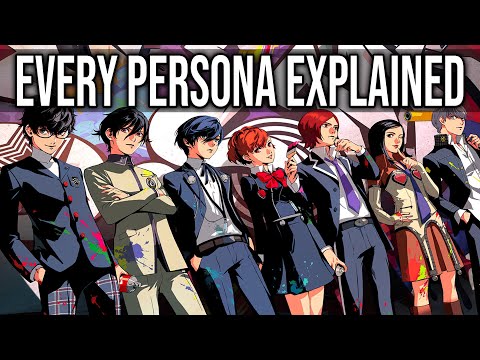
Joker
Show me your true form!
The leader of the Phantom Thieves of Hearts who seeks to reform society by stealing corrupt hearts.View Profile
Yu Narukami
Reach out to the truth.
A transfer student who leads the Investigation Team to solve a series of mysterious murders in Inaba.View Profile
Makoto Yuki
I don't care.
The leader of SEES who fights Shadows during the Dark Hour, carrying the burden of a dark destiny.View Profile
Aigis
I will protect you.
An anti-Shadow android who develops human emotions and a deep bond with the protagonist.View Profile
Morgana
A mysterious cat-like being who guides the Phantom Thieves and hates being called a cat.View Profile
Teddie
A bear-suit dweller of the TV World who seeks to discover his own identity.View Profile

Frequently Asked Questions

Do I need to play the Persona games in order?
No. Each numbered entry (Persona 3, 4, 5) features a completely new cast, story, and setting. While there are minor references or easter eggs for longtime fans, the plots are standalone. You can start with any of the modern titles, though Persona 5 Royal is often recommended for newcomers due to its polished mechanics.
What is the difference between Persona and Shin Megami Tensei?
Shin Megami Tensei (SMT) is the parent franchise, known for its dark, post-apocalyptic settings, high difficulty, and focus on ideological conflicts between Law and Chaos. Persona is a spin-off series that focuses more on character relationships, high school simulation (Social Links), and Jungian psychology, with a generally more stylish and 'pop' aesthetic.
What is the 'Velvet Room'?
The Velvet Room is a recurring location in the series that exists 'between mind and matter, dream and reality.' It is hosted by the mysterious Igor and his attendants. Here, the protagonist can manage, summon, and fuse Personas to create stronger allies. The room's appearance changes in each game to reflect the protagonist's state of mind (e.g., an elevator, a limousine, a prison cell).
What does 'Persona 5 Royal' add to the original game?
Persona 5 Royal is the definitive version of Persona 5. It adds a significant amount of new content, including a new party member (Kasumi Yoshizawa), a new school semester (the 'Third Semester'), new story events, gameplay improvements, and new areas to explore in Tokyo. It is widely considered the superior way to experience the game.
Why are the games so long?
Persona games are hybrid experiences that combine a full-length JRPG dungeon-crawler with a day-by-day life simulator. You play through a full calendar year of a student's life, managing time between studying, hanging out with friends, working jobs, and saving the world. This detailed day-to-day progression naturally leads to playtimes often exceeding 100 hours.

Official & Related Links

Find official resources and trusted references to learn more.
Official Website
Social Media
@AtlusUSA
Social Media
@PersonaOfficial
Streaming / Watch
Crunchyroll (anime)Funimation

Share the Joy and Fun!

Spread the word to your friends and community.