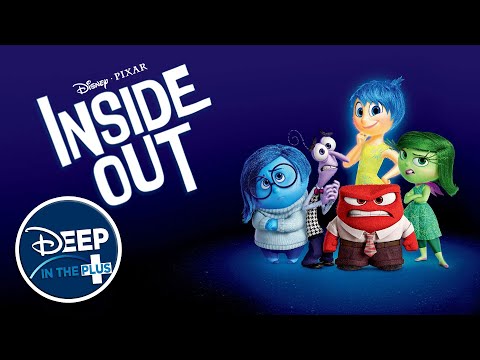
Inside Out

Inside Out

Pixar's groundbreaking animated film exploring the inner workings of an 11-year-old girl's mind through personified emotions.

IP Overview & Key Facts

IP Key Facts

Essential information and quick stats.
Full Name
Inside Out
Also Known As
Pixar's Inside Out, Del Revテゥs, Vice-Versa
Format
Animated Feature Film
Release Year
2015
Current Status
Complete (Sequel in development)
Country of Origin
United States
Region
United States
Creator
Pete Docter
Publisher
Walt Disney Pictures
Original Work
Original Pixar concept
Genre
Animation, Family, Comedy-Drama, Adventure, Psychology

Story, World & Core Themes

Explore the narrative, setting, and ideas that shape Inside Out.
Story
High-level synopsis and narrative focus.
When 11-year-old Riley moves to San Francisco, her emotions - Joy, Sadness, Anger, Fear, and Disgust - struggle to navigate her new life. The story explores how emotions work together to help us through life's challenges.
World
Setting, cultures, and distinctive elements.
Riley's mind (Headquarters), San Francisco, Minnesota memories, various mind locations
Themes
Core ideas and recurring motifs.
Emotional growth, importance of sadness, family relationships, growing up, memory and identity

Cultural Impact Timeline

High-level milestones showing Inside Out's global influence.
2009
Pete Docter begins developing concept based on his daughter's emotional changes
2011
Project officially greenlit by Pixar, research begins with psychologists
2013
Voice cast announced, animation production begins
2015
Inside Out premieres at Cannes Film Festival and releases worldwide
2016
Wins Academy Award for Best Animated Feature
2024
Inside Out 2 released, continuing Riley's emotional journey
Revenue
Over $850 million globally, major merchandising success
Awards
Academy Award for Best Animated Feature, Golden Globe, BAFTA, Annie Awards

Key Characters

Meet representative characters from Inside Out.
Joy
Do you ever look at someone and wonder what's going on inside their head?
The bright, energetic emotion who tries to keep Riley happy and positive, learning that all emotions have value.View Profile
Sadness
Crying helps me slow down and obsess over the weight of life's problems.
The blue emotion who initially seems to only cause problems but proves essential for emotional growth and empathy.View Profile
Anger
Congratulations San Francisco, you've ruined pizza!
The fiery red emotion who cares deeply about fairness and justice, literally bursting into flames when frustrated.View Profile
Fear
We're going to die!
The nervous purple emotion who keeps Riley safe by identifying potential dangers and risks.View Profile
Disgust
That is not brightly colored or shaped like a dinosaur. Hold on, guys. It's broccoli!
The green emotion who protects Riley from being poisoned physically and socially, maintaining her standards.View Profile
Riley Andersen
I know you don't want me to, but I miss home.
The 11-year-old girl whose mind serves as the setting for the story, navigating a major life change.View Profile

Frequently Asked Questions

What are the roles of the five main emotions?
Joy keeps Riley happy and optimistic. Sadness processes loss and signals the need for support. Fear keeps Riley safe from danger. Disgust protects her from physical and social poisoning (like broccoli or embarrassment). Anger ensures fairness and justice. Together, they guide Riley's reactions to the world.
Why is Sadness portrayed as a hero in the end?
The film challenges the idea that we must always be happy. Sadness is revealed to be essential because expressing vulnerability allows Riley to connect with her parents and receive the support she needs. The climax shows that mixed emotions (Joy and Sadness combining) create deeper, more mature core memories.
What are 'Core Memories' and 'Personality Islands'?
Core Memories are pivotal life moments that define Riley's personality. Each powers a 'Personality Island' like Hockey Island, Goofball Island, or Family Island. When these core memories are lost or tainted, the corresponding islands shut down, illustrating how depression or trauma can disconnect us from the things that define who we are.
What happens to Bing Bong and what does it represent?
Bing Bong, Riley's childhood imaginary friend, sacrifices himself in the Memory Dump so Joy can escape. His fading away represents the bittersweet necessity of growing up—leaving behind childhood innocence and imagination to make room for adult complexity. It is one of the film's most emotional moments.
How does the film depict the subconscious?
The subconscious is depicted as a dark, gated cave where Riley's deepest fears (like grandma's vacuum cleaner or a scary clown named Jangles) and unruly thoughts are locked away. It serves as a prison for things that shouldn't be in the conscious mind, guarded by two guards.
What is the 'Train of Thought'?
The Train of Thought is a literal train that delivers memories, daydreams, and ideas to Headquarters. It runs all over Riley's mind but stops when she is asleep. Its erratic schedule and derailment during the film symbolize Riley's turbulent mental state during her crisis.
What is the significance of the Control Console expanding?
At the end of the film, the control console in Headquarters is upgraded with more buttons and knobs. This visualizes Riley's emotional maturation as she enters puberty. Her emotions become more complex, no longer just single-note reactions, allowing for nuanced feelings like nostalgia or bittersweet happiness.
How accurate is the psychology in Inside Out?
Pixar consulted with psychologists Paul Ekman and Dacher Keltner. While scientifically simplified (we have more than 5 emotions), the film accurately depicts how emotions organize thinking, how memory consolidation works during sleep, and the vital social function of emotions like sadness. It is widely praised by therapists.
What are the new emotions in Inside Out 2?
The sequel introduces Anxiety (orange), Envy (teal), Ennui (indigo/boredom), and Embarrassment (pink). These arrive during puberty, reflecting the socially-driven, self-conscious, and complex emotional landscape of adolescence, shaking up the dynamic established by the original five.
What is 'Abstract Thought' in the movie?
The Abstract Thought processing center is a dangerous room where characters are deconstructed into non-objective fragments, 2D shapes, and finally single lines. It's a clever visual pun on the cognitive development stage where children begin to understand abstract concepts, moving beyond concrete thinking.

Official & Related Links

Find official resources and trusted references to learn more.
Official Website
Twitter
@DisneyPixar
Facebook
Disney Pixar Inside Out
Instagram
@pixar
Youtube
Pixar official channel
Streaming / Watch
Disney+, various digital rental platforms
Where to Buy
Disney Store, digital movie stores, retail outlets

Share the Joy and Fun!

Spread the word to your friends and community.