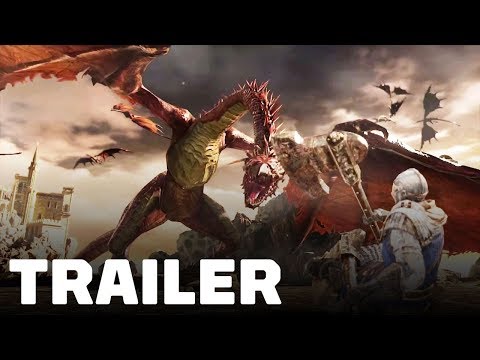
Dark Souls

Dark Souls

A critically acclaimed action RPG series known for its challenging gameplay, intricate world design, and deep lore. Players navigate a dark fantasy world filled with formidable enemies and environmental storytelling.

IP Overview & Key Facts

IP Key Facts

Essential information and quick stats.
Full Name
Dark Souls
Also Known As
Souls Series, Dark Souls I
Format
Action RPG Video Game Series
Release Year
2011
Current Status
Active
Country of Origin
Japan
Region
Japan
Creator
Hidetaka Miyazaki
Publisher
Bandai Namco Entertainment
Original Work
Video Game
Genre
Action RPG, Dark Fantasy, Souls-like

Story, World & Core Themes

Explore the narrative, setting, and ideas that shape Dark Souls.
Story
High-level synopsis and narrative focus.
An action RPG set in the kingdom of Lordran, where players take on the role of an undead warrior seeking to ring the Bells of Awakening and uncover the truth behind the curse of the undead.
World
Setting, cultures, and distinctive elements.
Kingdom of Lordran, a decaying medieval fantasy world


Western medieval fantasy, Gothic architecture, existentialist philosophy, cyclical history, and difficulty as a narrative device.
Themes
Core ideas and recurring motifs.
Death, rebirth, perseverance, sacrifice, the cycle of light and dark

Cultural Impact Timeline

High-level milestones showing Dark Souls's global influence.
2009
Demon's Souls released as spiritual predecessor
2011
Dark Souls released, establishing the series
2012
Artorias of the Abyss DLC released
2014
Dark Souls II released with new director
2015
Scholar of the First Sin edition released
2016
Dark Souls III released, concluding the trilogy
2017
The Ringed City DLC completes the series
2018
Dark Souls Remastered released for modern platforms
Sales
Over 27 million copies sold across the series
Awards
Multiple Game of the Year awards, BAFTA Games Awards

Key Characters

Meet representative characters from Dark Souls.
The Chosen Undead
[Silent Protagonist - No Dialogue]
The player-controlled protagonist cursed with undeath, seeking to ring the Bells of Awakening.View Profile
Gwyn Lord of Cinder
The Lord of Sunlight who sacrificed himself to link the First Flame and prolong the Age of Fire.
Solaire of Astora
Praise the Sun!
A jolly knight who seeks his own sun and offers cooperation to other undead.View Profile

Frequently Asked Questions

Why is Dark Souls considered so difficult?
Dark Souls is famous for its difficulty because it refuses to handhold the player. It features punishing combat where mistakes are fatal, a lack of traditional map or quest markers, and complex level design full of traps. However, the difficulty is generally considered 'fair'—it rewards observation, patience, and learning enemy patterns. The sense of accomplishment gained from overcoming these challenges is the core appeal of the series.
What is the story of Dark Souls?
The story is not told through traditional cutscenes but through 'environmental storytelling'—item descriptions, NPC dialogue, and world design. The core lore revolves around the First Flame, which brought disparity (life/death, light/dark) to a gray world of dragons. As the flame fades, the Curse of the Undead spreads, causing humans to lose their minds and go 'Hollow.' The player, a Chosen Undead, must journey to Lordran to ring the Bells of Awakening and decide the fate of the First Flame.
What is a 'Soulslike' game?
A 'Soulslike' is a sub-genre of action RPGs defined by mechanics popularized by Dark Souls. Key features include: high difficulty; a stamina-based combat system; checkpoints (Bonfires) that respawn enemies and heal the player; a currency (Souls) that acts as both XP and money, which is dropped upon death and must be retrieved; and interconnected, shortcut-filled level design.
How does multiplayer work in Dark Souls?
Multiplayer is integrated seamlessly into the single-player experience. Players can leave messages on the ground for others to read (offering help or trickery). They can also see 'bloodstains' showing how other players died. More directly, players can use items to 'Summon' others for help with bosses (Jolly Cooperation) or 'Invade' other players' worlds to hunt them down (PvP). Being in 'Human' form is required to summon or be invaded.
What happens when you go 'Hollow'?
When a player dies, they lose their human form and become 'Hollow.' In this state, they look like a decaying corpse. While Hollow, you cannot summon other players for help and cannot be invaded by other players. To reverse Hollowing and become Human again, you must consume a resource (Humanity or Effigy) at a Bonfire. In some games (like Dark Souls 2), Hollowing also reduces your maximum health.
Can I play Dark Souls 3 without playing the first two?
Yes, you can. While Dark Souls 3 contains many callbacks, references, and lore connections to the first game, each title functions as a standalone experience with its own self-contained plot. Many players started with Dark Souls 3 (which has faster, more modern combat and polish) and then went back to play the predecessors to appreciate the origins.
What is the best starting class for beginners?
For beginners, the 'Knight' class is often recommended. It starts with good armor (high defense), a shield with 100% physical block (essential for learning enemy attacks safely), and decent health/vitality stats. The 'Pyromancer' is also a good choice in Dark Souls 1, as pyromancy is powerful and doesn't require heavy stat investment early on.
What are Bonfires?
Bonfires serve as checkpoints in the Dark Souls world. Resting at a Bonfire restores your health and refills your healing items (Estus Flasks), but it also respawns all non-boss enemies in the area. Bonfires are also used to level up, repair equipment, attune magic spells, and eventually fast travel (warp) to other locations.
Does Dark Souls have a pause button?
No, Dark Souls does not have a traditional pause button. Opening the inventory or menu does not stop the game world, meaning you can be attacked and killed while equipping items or checking settings. This design choice maintains tension and immersion, forcing players to find safe zones (like Bonfires) before managing their character.
What is the recommended order to play the series?
Most fans recommend playing in release order: Dark Souls 1 (Remastered) -> Dark Souls 2 (Scholar of the First Sin) -> Dark Souls 3. This allows you to appreciate the evolution of mechanics and lore. However, if Dark Souls 1 feels too clunky, starting with Dark Souls 3 is acceptable as it is the most accessible. Bloodborne and Elden Ring are also excellent entry points into the FromSoftware catalog.

Official & Related Links

Find official resources and trusted references to learn more.

Share the Joy and Fun!

Spread the word to your friends and community.