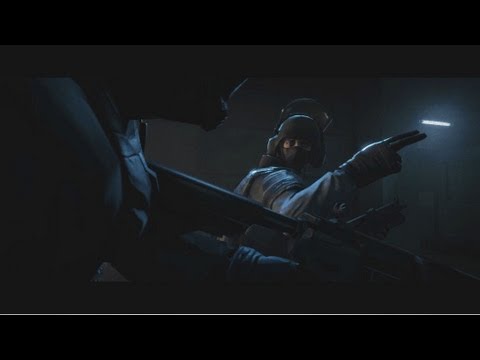
Counter-Strike

Counter-Strike

A tactical first-person shooter game series that pits teams of terrorists against counter-terrorists in objective-based rounds. Originally a mod for Half-Life, Counter-Strike became one of the most influential and enduring competitive FPS games in esports history.

IP Overview & Key Facts

IP Key Facts

Essential information and quick stats.
Full Name
Counter-Strike
Also Known As
CS, Counter-Strike, CS:GO, CS2
Format
Video Game
Release Year
1999
Current Status
Active
Country of Origin
United States
Region
Global
Original Work
Video Game
Genre
FPS, Tactical Shooter, Competitive, Esports, Team-based, Multiplayer, Strategy

Story, World & Core Themes

Explore the narrative, setting, and ideas that shape Counter-Strike.
Story
High-level synopsis and narrative focus.
A tactical first-person shooter game series that pits teams of terrorists against counter-terrorists in objective-based rounds. Originally a mod for Half-Life, Counter-Strike became one of the most influential and enduring competitive FPS games in esports history.
World
Setting, cultures, and distinctive elements.
Esports ecosystem, tactical team-based warfare, counter-terrorism scenarios, defusal and hostage rescue missions, competitive ranking systems, and a player-driven virtual economy (skins).
Themes
Core ideas and recurring motifs.
FPS, Tactical Shooter, Competitive, Esports, Team-based, Multiplayer, Strategy

Cultural Impact Timeline

High-level milestones showing Counter-Strike's global influence.
Development
Started as a Half-Life mod by Minh Le and Jess Cliffe in 1999, acquired by Valve Corporation
Evolution
Evolved through multiple versions: Beta, 1.6, Condition Zero, Source, Global Offensive, Counter-Strike 2
Legacy
Established the foundation for modern competitive gaming and esports industry
Milestones
1999: Initial mod release,2000: Retail version,2012: CS:GO launch,2023: Counter-Strike 2 release
Sales
40+ Million copies (CS:GO alone)
Revenue
$1+ Billion (Estimated from sales and microtransactions)
Awards
Game of the Year (Multiple),Esports Game of the Year,Best Competitive Game

Key Characters

Meet representative characters from Counter-Strike.
Counter-Terrorist Forces
Counter-terrorists win!
Elite tactical units from around the world tasked with preventing terrorist acts.View Profile
Terrorist Forces
Counter-terrorists win!
Various opposing factions attempting to plant bombs or hold hostages.View Profile

Frequently Asked Questions

What is the core gameplay of Counter-Strike?
Counter-Strike is a tactical first-person shooter played in rounds. Two teams, Terrorists (T) and Counter-Terrorists (CT), compete to complete objectives or eliminate the opposing team. The most common mode involves the Terrorists attempting to plant a C4 bomb at one of two designated sites (A or B), while the Counter-Terrorists must prevent the plant or defuse the bomb. Rounds are short, and there is no respawning until the next round.
What is the difference between CS:GO and CS2?
Counter-Strike 2 (CS2) is the successor to CS:GO, built on the Source 2 engine. It features significant graphical upgrades, dynamic smoke grenades that interact with the environment (volumetric smoke), a 'sub-tick' server architecture for more precise movement and shooting, and revamped maps with better lighting and textures. CS2 replaced CS:GO as a free update on Steam.
How does the economy system work in Counter-Strike?
The economy is a strategic pillar of Counter-Strike. Players earn in-game money by winning rounds, eliminating enemies, planting/defusing the bomb, or rescuing hostages. This money is used to buy weapons, armor, and utility (grenades) at the start of each round. Managing team economy—knowing when to 'save' (spend little) or 'buy' (spend fully)—is crucial for competitive success.
How does the ranking system work in CS2?
CS2 introduced 'Premier Mode' with a numerical CS Rating that ranks players on a global and regional leaderboard. There is also a traditional Skill Group system (Silver to Global Elite) for individual maps in Competitive mode. Wins increase your rating, while losses decrease it. The system considers match outcomes and individual performance to match players of similar skill levels.
Are Counter-Strike skins worth real money?
Yes, Counter-Strike features a robust virtual economy where weapon skins can be bought and sold on the Steam Community Market and third-party sites. Skins are purely cosmetic and offer no gameplay advantage. However, due to scarcity, wear levels (float value), and rare patterns, some skins can be worth thousands or even hundreds of thousands of dollars, making it one of the largest digital markets in gaming.
Is Counter-Strike free to play?
Yes, Counter-Strike 2 is free to play. Players can download and play the full game without cost. However, there is a 'Prime Status' upgrade available for purchase. Prime users are matched with other Prime users (reducing the likelihood of encountering cheaters) and are eligible to receive weekly item drops, weapon cases, and a visible skill rating.
What are the most iconic maps in Counter-Strike?
The most iconic map is undoubtedly 'Dust II', known for its perfectly balanced four-square layout. Other legendary maps include 'Mirage' (a staple of competitive play), 'Inferno' (famous for its banana lane), and 'Nuke' (known for its verticality). Maps like 'Train', 'Overpass', and 'Vertigo' are also staples of the active duty pool used in tournaments.
What makes Counter-Strike a top eSport?
Counter-Strike's longevity as a top eSport is due to its high skill ceiling, simple-to-understand but hard-to-master mechanics, and tactical depth. The 5v5 round-based format creates intense, watchable moments (clutches). Major tournaments (Majors) draw millions of viewers globally, supported by a massive legacy community dating back to 1999.
What is the history of Counter-Strike?
Counter-Strike began in 1999 as a fan-made mod for the game Half-Life, created by Minh 'Gooseman' Le and Jess Cliffe. Its popularity exploded, leading Valve to acquire the rights and hire the creators. It has since evolved through several iterations: Counter-Strike (1.6), Condition Zero, Source, Global Offensive (CS:GO), and now Counter-Strike 2, remaining the definitive tactical shooter for over two decades.
How does the anti-cheat system work?
Valve uses VAC (Valve Anti-Cheat) and the newer 'VAC Live' system to detect and ban cheaters. VAC Live aims to cancel matches in real-time if a cheater is detected. Additionally, the game relies on 'Trust Factor,' a system that matches players based on their likelihood of being legitimate, considering factors like account age, playtime, and reports.

Share the Joy and Fun!

Spread the word to your friends and community.