Story, World & Core Themes
Explore the narrative, setting, and ideas that shape Black Myth: Wukong.
Story
High-level synopsis and narrative focus.
A dark action RPG reimagining of Journey to the West, built around boss-driven mythic encounters.
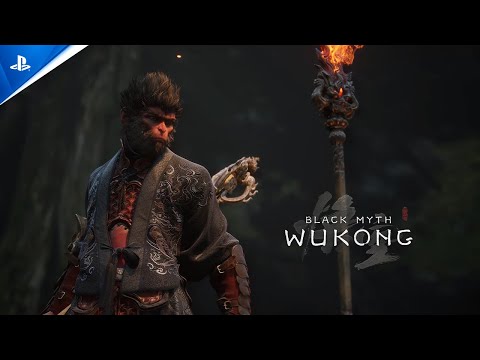
Black Myth: Wukong follows the âDestined One,â a silent monkey warrior walking through a fractured, haunted version of Chinese legend. Instead of retelling the original novel scene-by-scene, the game treats the classic myth as a foundationâthen asks what is left behind when heroes, gods, and monsters become history, rumor, and unresolved consequence.
The narrative is delivered through an action-forward structure: you move from region to region, uncover local tragedies, and confront Yaoguai and divine figures whose stories are often larger than a single fight. Many of the most memorable âplot beatsâ are embedded in boss introductions, environmental clues, and journal-style lore entries that turn enemies into character studies rather than disposable obstacles.
Without getting into spoilers, the story leans into ambiguity and reinterpretation. Familiar names and motifs (the Monkey Kingâs legacy, Buddhist and Taoist imagery, and pilgrimage-era folklore) are used to build tension: what is destiny, what is choice, and what does it mean to inherit a myth that was never as simple as âhero versus demonâ?
If you enjoy games where combat mastery and atmosphere carry the main momentum, this is a strong fit. If you also like digging into lore, Black Myth rewards reading: the best context for many characters is found in short, vivid text that frames each creature as part of a larger moral and cultural tapestry.
Black Myth: Wukong follows the âDestined One,â a silent monkey warrior walking through a fractured, haunted version of Chinese legend. Instead of retelling the original novel scene-by-scene, the game treats the classic myth as a foundationâthen asks what is left behind when heroes, gods, and monsters become history, rumor, and unresolved consequence.
The narrative is delivered through an action-forward structure: you move from region to region, uncover local tragedies, and confront Yaoguai and divine figures whose stories are often larger than a single fight. Many of the most memorable âplot beatsâ are embedded in boss introductions, environmental clues, and journal-style lore entries that turn enemies into character studies rather than disposable obstacles.
Without getting into spoilers, the story leans into ambiguity and reinterpretation. Familiar names and motifs (the Monkey Kingâs legacy, Buddhist and Taoist imagery, and pilgrimage-era folklore) are used to build tension: what is destiny, what is choice, and what does it mean to inherit a myth that was never as simple as âhero versus demonâ?
If you enjoy games where combat mastery and atmosphere carry the main momentum, this is a strong fit. If you also like digging into lore, Black Myth rewards reading: the best context for many characters is found in short, vivid text that frames each creature as part of a larger moral and cultural tapestry.
World
Setting, cultures, and distinctive elements.
A âmyth landscapeâ inspired by real Chinese temples and mountains, where folklore creatures feel grounded in place.
Black Mythâs world is built like a pilgrimage route through distinct regionsâancient courtyards, cliffside shrines, ruined monasteries, dense forests, and cold mountain paths. Many locations draw inspiration from real architecture and historical sites (especially in Shanxi), so the setting feels materially specific: carved stone, weathered wood, incense halls, murals, and statues that hint at older beliefs.
The fantasy layer is not just decorative. Yaoguai, spirits, and divine figures are presented as part of the ecosystem, and the gameâs environmental storytelling often frames âmonstersâ as the result of history, desire, or unresolved karma rather than purely evil invaders. That approach makes exploration feel like archaeology: you are piecing together what happened here before you arrived.
Worldbuilding also shows up in sound and rhythm. The tone mixes solemn religious imagery with sudden violence, and the pacing frequently alternates between quiet traversal and high-intensity boss arenas. It creates a setting that feels sacred and dangerous at the same timeâlike legend has settled into the soil, and you are disturbing it.
If you come from Western fantasy RPGs, one useful mindset is to treat this as âmyth-firstâ worldbuilding: symbolism, ritual objects, and place-based folklore often matter as much as political maps or faction charts.
Black Mythâs world is built like a pilgrimage route through distinct regionsâancient courtyards, cliffside shrines, ruined monasteries, dense forests, and cold mountain paths. Many locations draw inspiration from real architecture and historical sites (especially in Shanxi), so the setting feels materially specific: carved stone, weathered wood, incense halls, murals, and statues that hint at older beliefs.
The fantasy layer is not just decorative. Yaoguai, spirits, and divine figures are presented as part of the ecosystem, and the gameâs environmental storytelling often frames âmonstersâ as the result of history, desire, or unresolved karma rather than purely evil invaders. That approach makes exploration feel like archaeology: you are piecing together what happened here before you arrived.
Worldbuilding also shows up in sound and rhythm. The tone mixes solemn religious imagery with sudden violence, and the pacing frequently alternates between quiet traversal and high-intensity boss arenas. It creates a setting that feels sacred and dangerous at the same timeâlike legend has settled into the soil, and you are disturbing it.
If you come from Western fantasy RPGs, one useful mindset is to treat this as âmyth-firstâ worldbuilding: symbolism, ritual objects, and place-based folklore often matter as much as political maps or faction charts.
Themes
Core ideas and recurring motifs.
Destiny, rebellion, and the tension between sacred myth and human consequence.
Destiny versus agency
The game repeatedly frames the protagonist as âdestined,â then challenges what that label means. Are you fulfilling an inherited script, or carving a new identity out of someone elseâs legend?
Myth as reinterpretation
Black Myth treats Journey to the West as a living tradition, not a fixed canon. Familiar figures can appear in unexpected forms, and âwhat people believe happenedâ can matter as much as what actually happened.
Karma, faith, and moral residue
Buddhist and Taoist imagery is used to explore consequence: deeds echo forward, vows bind people, and the boundary between human and monster is often shaped by suffering and desire.
Power with a cost
Transformations and supernatural techniques are not just gameplay flair. They reflect the settingâs core question: what do you become when you borrow the strength of a mythic world?
Memory, legacy, and cultural texture
A big part of the appeal is how the game embeds Chinese cultural detailsâarchitecture, instruments, ritual objects, poetic phrasingâinto the experience. Even when you are focused on combat, the world keeps reminding you that this is a story about inheritance: of places, of beliefs, and of legends.
Destiny versus agency
The game repeatedly frames the protagonist as âdestined,â then challenges what that label means. Are you fulfilling an inherited script, or carving a new identity out of someone elseâs legend?
Myth as reinterpretation
Black Myth treats Journey to the West as a living tradition, not a fixed canon. Familiar figures can appear in unexpected forms, and âwhat people believe happenedâ can matter as much as what actually happened.
Karma, faith, and moral residue
Buddhist and Taoist imagery is used to explore consequence: deeds echo forward, vows bind people, and the boundary between human and monster is often shaped by suffering and desire.
Power with a cost
Transformations and supernatural techniques are not just gameplay flair. They reflect the settingâs core question: what do you become when you borrow the strength of a mythic world?
Memory, legacy, and cultural texture
A big part of the appeal is how the game embeds Chinese cultural detailsâarchitecture, instruments, ritual objects, poetic phrasingâinto the experience. Even when you are focused on combat, the world keeps reminding you that this is a story about inheritance: of places, of beliefs, and of legends.
