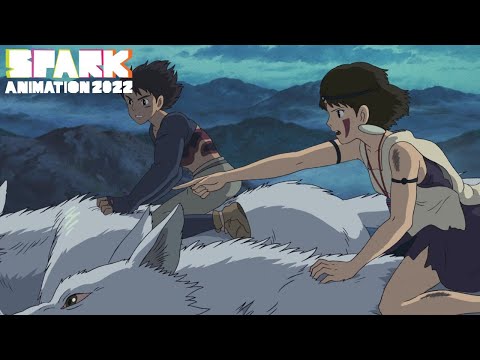
Princess Mononoke

Princess Mononoke

A masterpiece animated film by Hayao Miyazaki and Studio Ghibli, exploring the conflict between industrialization and nature through the story of Ashitaka, a young warrior caught between the human world and the forest spirits.

IP Overview & Key Facts

IP Key Facts

Essential information and quick stats.
Full Name
Princess Mononoke
Format
anime
Release Year
1997
Current Status
Unknown
Country of Origin
Japan
Creator
Hayao Miyazaki
Publisher
Studio Ghibli, Toho
Original Work
anime
Genre
fantasy, adventure, environmental, Studio Ghibli, Miyazaki, nature, spirits, epic

Story, World & Core Themes

Explore the narrative, setting, and ideas that shape Princess Mononoke.
Story
High-level synopsis and narrative focus.
A masterpiece animated film by Hayao Miyazaki and Studio Ghibli, exploring the conflict between industrialization and nature through the story of Ashitaka, a young warrior caught between the human world and the forest spirits.
World
Setting, cultures, and distinctive elements.
A mystical forest struggling against the encroachment of industrialization during the Muromachi period of Japan.


is set in a fantasy version of Muromachi period Japan (approx. 1336–1573), characterized by a stark contrast between ancient mysticism and emerging industrial technology.

The Cedar Forest: A vast, primeval forest protected by the Forest Spirit (Shishigami). It is inhabited by giant animal gods (wolves, boars, apes) who can speak and possess divine power. It represents nature in its rawest, most untamed form.
Iron Town (Tatara-ba): A fortress-settlement led by Lady Eboshi. It produces iron from iron sand, destroying the forest in the process. However, it is also a refuge for social outcasts (lepers, former prostitutes) whom Eboshi treats with dignity. It represents human progress and industry.
The Curse: Hatred and rage can physically manifest as a black, worm-like corruption (Demon) that consumes the host's body and soul, giving them immense strength but eventually killing them.
The Emishi Village: Ashitaka's home, a hidden village of the Emishi people, an indigenous tribe driven to the northeast, representing a dying tradition.
Themes
Core ideas and recurring motifs.
Environmental destruction, Coexistence, The cost of progress, Spiritual connection to nature, Redemption and healing

Cultural Impact Timeline

High-level milestones showing Princess Mononoke's global influence.
Creation
1997 - Film premieres in Japan
Evolution
From Japanese cultural phenomenon to international animated classic
Key Milestones
1995-1997: Production at Studio Ghibli,1997: Japanese theatrical release, becomes highest-grossing film,1999: International releases begin,2000s: Home video releases worldwide,2010s: Digital restoration and re-releases,2020s: Streaming platform availability
Legacy
Considered one of the greatest animated films ever made

Key Characters

Meet representative characters from Princess Mononoke.
Ashitaka
I was hoping you'd cry out in pain.
A young warrior prince from the Emishi tribe who becomes cursed and must find a way to lift it while mediating between humans and forest spiritsView Profile
San
The humans are everywhere! They're like a plague!
A human girl raised by the wolf goddess Moro, who fights to protect the forest from human destructionView Profile
Lady Eboshi
The leader of Iron Town who seeks to destroy the forest spirits to protect her people and expand her industrial settlementView Profile
Moro
The ancient wolf goddess who adopted and raised San, leader of the wolf packView Profile
Jigo
A mysterious monk working for the Emperor who seeks to kill the Forest Spirit and claim its headView Profile
Forest Spirit
I am Forest Spirit/Deer God.
The ancient deity of the forest who has the power to give and take lifeView Profile

Frequently Asked Questions

Who is the real villain in Princess Mononoke?
One of the film's masterpieces is that there is no clear villain. Lady Eboshi destroys the forest, but she does it to feed the poor and protect the outcasts she saved. The Forest Gods kill humans, but only to defend their home. The conflict is not Good vs. Evil, but Human vs. Nature, and the tragedy of their inability to coexist peacefully.
Do Ashitaka and San end up together?
Not in the traditional sense. In the end, they admit their love for each other, but they choose to live apart. San cannot forgive humans and returns to the forest. Ashitaka chooses to live in Iron Town to help rebuild it, but promises to visit San. This ending reflects the film's theme: they find a way to coexist without forcing one to assimilate into the other's world.
What are the little white spirits?
They are called Kodama. They are tree spirits that signify a healthy forest. Their clicking heads and playful behavior indicate that the forest is alive. At the end of the film, a single Kodama appearing suggests that the forest will eventually recover.
Is the film historically accurate?
It is a fantasy set in the Muromachi period. While elements like the Emishi people, iron smelting (Tatara), and samurai warfare are based on history, Miyazaki blended various eras and added supernatural elements. The Emishi had largely assimilated by this time, but Miyazaki used them to give Ashitaka an 'outsider' perspective.
Why is Ashitaka's arm cursed?
He was touched by a Demon God (Nago the Boar God, corrupted by an iron ball). The curse is a physical manifestation of hatred. It feeds on Ashitaka's anger, giving him superhuman strength in battle (like cutting off heads with an arrow) but spreading faster each time he uses violence, slowly consuming his life.

Official & Related Links

Find official resources and trusted references to learn more.

Share the Joy and Fun!

Spread the word to your friends and community.