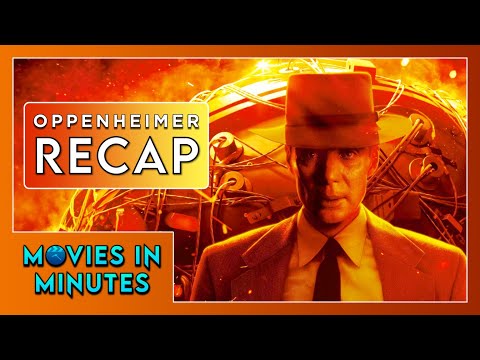
Oppenheimer

Oppenheimer

Christopher Nolan's biographical thriller about J. Robert Oppenheimer, the theoretical physicist who led the Manhattan Project and developed the atomic bomb during World War II.

IP Overview & Key Facts

IP Key Facts

Essential information and quick stats.
Full Name
Oppenheimer
Also Known As
The Father of the Atomic Bomb
Format
Film
Release Year
2023
Current Status
Unknown
Country of Origin
United States
Creator
Christopher Nolan (Director/Writer)
Original Work
Film
Genre
Biographical, Historical Drama, Thriller, War, Science, Christopher Nolan, WWII

Story, World & Core Themes

Explore the narrative, setting, and ideas that shape Oppenheimer.
Story
High-level synopsis and narrative focus.
The story of J. Robert Oppenheimer's role in developing the atomic bomb during WWII and the subsequent moral and political consequences he faced during the Cold War era.
World
Setting, cultures, and distinctive elements.
The film spans several key historical periods and locations, primarily during World War II and the Cold War era.

Los Alamos, New Mexico: The isolated mesa where the secret laboratory was built to develop the atomic bomb.
University of California, Berkeley: Where Oppenheimer taught and began his political awakening.
Washington D.C.: The center of political power where Oppenheimer's security clearance hearings took place.
Institute for Advanced Study, Princeton: Oppenheimer's post-war academic refuge.

The world is depicted through Oppenheimer's subjective perspective (color) and Lewis Strauss's objective perspective (black and white).
Themes
Core ideas and recurring motifs.
Scientific Responsibility, Moral Ambiguity, Political Persecution, Legacy, Power of Knowledge, Consequences of Innovation

Cultural Impact Timeline

High-level milestones showing Oppenheimer's global influence.
2021
Christopher Nolan announces Oppenheimer project
2022
Principal photography begins with ensemble cast
2023
Film premieres and becomes cultural phenomenon
2024
Wins 7 Academy Awards including Best Picture
Present
Considered one of Nolan's masterpieces and important historical cinema
Sales
Over $950 million worldwide box office
Awards
7 Academy Awards including Best Picture and Best Director

Key Characters

Meet representative characters from Oppenheimer.
J. Robert Oppenheimer
Now I am become Death, destroyer of worlds.
The theoretical physicist who led the Manhattan Project and became known as the 'father of the atomic bomb'.View Profile
Kitty Oppenheimer
You don't get to commit the sin and then ask us all to feel sorry for you that it had consequences.
Robert Oppenheimer's wife, a strong-willed woman who supported him through his career and persecution.View Profile
Lewis Strauss
When you can kill ten million people with the press of a button, you have to ask yourself: what is the value of one man's life?
The former AEC chairman who orchestrated the campaign to revoke Oppenheimer's security clearance.View Profile
Leslie Groves
You're the man who gets things done.
The U.S.View Profile

Frequently Asked Questions

Is the movie historically accurate?
Yes, it is widely considered highly accurate.

The film is based on the Pulitzer Prize-winning biography American Prometheus. While some timelines were condensed and dialogue dramatized for cinematic effect, the major events, political machinations, and character portrayals closely adhere to historical records.
Why are some parts in black and white?
Director Christopher Nolan used color to represent Oppenheimer's subjective perspective (his personal experiences, visions, and emotions) and black-and-white to represent Lewis Strauss's objective perspective (the external, political view of events and the confirmation hearings).
Did they really detonate an atomic bomb for the movie?
No, but they didn't use CGI either.

Nolan recreated the Trinity Test using practical effects, including a combination of gasoline, propane, aluminum powder, and magnesium flares to simulate the mushroom cloud and the intense brightness of a nuclear explosion without using actual nuclear material or computer-generated imagery.
What is the meaning of the Einstein conversation?
The final conversation reveals that Oppenheimer wasn't confessing to Einstein about starting a chain reaction that would destroy the atmosphere physically, but rather metaphorically.

He realized that by creating the bomb, they had started a political and military chain reaction (the nuclear arms race) that could eventually destroy the world—a fear that haunts the film's ending.
Who is Lewis Strauss?
Lewis Strauss was a founding commissioner of the Atomic Energy Commission and a major political figure.

He held a personal grudge against Oppenheimer due to perceived slights and ideological differences. He orchestrated the 1954 security hearing that stripped Oppenheimer of his clearance, effectively ending his government career.

Official & Related Links

Find official resources and trusted references to learn more.
Official Website
Social Media
Official Universal Pictures and Christopher Nolan accounts
Fan Communities
Film analysis sites, historical accuracy discussions, Nolan fan communities

Share the Joy and Fun!

Spread the word to your friends and community.