5 Centimeters Per Second Pilgrimage

秒速5センチメートル

Follow Takaki's Journey Across Japan Through the Real-World Locations of 5 Centimeters Per Second

Updated: 2026-07-27

About

Released in 2007 and directed by Makoto Shinkai, 5 Centimeters Per Second (秒速5センチメートル) is a quiet and deeply emotional story about distance, time, and the people who slowly drift apart despite their best intentions.

The film follows Takaki Tono through three stages of his life, taking viewers from suburban Tokyo to snow-covered Tochigi and the wide-open landscapes of Kagoshima. Along the way, ordinary train stations, residential streets, railway crossings, and coastlines become unforgettable settings that perfectly reflect the film's themes.

Unlike many anime pilgrimages focused on famous landmarks, this journey celebrates everyday places, locations that thousands of commuters pass each day, yet which Makoto Shinkai transformed into some of anime's most iconic scenery.

Whether you are a longtime fan of the film or simply want to experience a quieter side of Japan, this pilgrimage offers a memorable route through landscapes shaped by memory rather than adventure.

5 Centimeters Per Second Pilgrimage Trailer

Journey Snapshot

Everything you need before following Takaki's journey.

Main DestinationsTokyo, Tochigi, and Kagoshima
Suggested Duration2-4 days
Best ForMakoto Shinkai fans, railway enthusiasts, and photography
Travel StyleTrain and walking
DifficultyModerate
Best SeasonWinter and spring
Walking DistanceApproximately 8-12 km depending on route

Why This Journey Is Unique

Travel Through Three Different Stages of Life

Rather than focusing on a single city, 5 Centimeters Per Second follows Takaki across different regions of Japan as he grows from childhood into adulthood.

Each location represents a different chapter of the story: childhood friendship, first love, separation, growing up, and looking back.

The changing scenery becomes part of the storytelling, making this one of Makoto Shinkai's most emotionally grounded pilgrimage experiences.
Why Fans Love This Journey

Experience Makoto Shinkai's Early Masterpiece

Many visual techniques later perfected in Your Name and Weathering With You first appeared here.

Visit Authentic Everyday Japan

From local stations to quiet neighborhoods, most locations remain grounded in ordinary scenery rather than major tourist landmarks.

Explore by Train

Rail travel is central to the film, making the pilgrimage itself part of the emotional experience.

Recreate Iconic Railway Scenes

Snow-covered platforms, level crossings, and suburban streets remain legendary among anime fans.

Journey Highlights

Don't Miss

  • Visit Sangenjaya Railway Crossing, one of Makoto Shinkai's most iconic anime locations.
  • Stand on the snowy platform of Iwafune Station, where Takaki's delayed journey becomes one of anime's most memorable train scenes.
  • Explore Shinjuku Station and the surrounding business district featured in Episode 3.
  • Visit Tanegashima, whose expansive coastlines inspired Kanae's story.
  • Ride the local trains that connect many of the film's real-world locations.
  • Compare the anime's breathtaking backgrounds with today's scenery.

Before You Start

Many locations featured in 5 Centimeters Per Second are active railway stations and residential neighborhoods.

Please avoid standing too close to railway crossings, remain behind safety barriers, and never enter restricted railway property for photographs.

If visiting during winter to experience the snowy atmosphere shown in the film, prepare for cold weather and possible transportation delays.

Respect local residents when photographing quiet neighborhoods that continue to serve as everyday communities.

Explore the Real-Life World of 5 Centimeters Per Second

Sangenjaya Railway CrossingShinjuku StationShinjuku Southern TerraceIwafune StationTanegashimaTanegashima Space Center Area

Plan Your 5 Centimeters Per Second Pilgrimage

Half day

Option 1 - Tokyo Highlights

Perfect for travelers staying in Tokyo who want the best-known urban locations.

  • Sangenjaya Railway Crossing
  • Shinjuku Station
  • Shinjuku Southern Terrace

Full day

Option 2 - Complete Tokyo Route

A fuller Tokyo walk built around crossings, station atmosphere, and evening photography.

  • Sangenjaya
  • Shinjuku
  • Southern Terrace
  • Evening railway crossing photography

3-4 days

Option 3 - Complete Makoto Shinkai Journey

The long-form route linking Tokyo, Tochigi, and Tanegashima into one emotionally complete pilgrimage.

  • Tokyo locations
  • Iwafune Station (Tochigi)
  • Tanegashima (Kagoshima)

Spotlight Location Guide

Sangenjaya Railway Crossing (三軒茶屋の踏切)

One of the film's most iconic Tokyo railway views and a classic starting point for fans following Takaki's urban scenes.

Sangenjaya Railway Crossing Video

Trip Facts

Visit Time

20-30 minutes

Travel Snapshot

Key planning details for this stop, organized like a quick on-the-go pilgrimage guide.

For Photographers

Photography

The crossing is best photographed from the public sidewalks on either side of the tracks.

Stand at One of Anime's Most Iconic Railway Crossings in 5 Centimeters Per Second

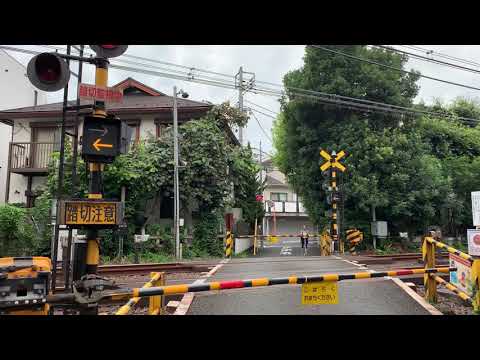
Located in Tokyo's Setagaya Ward, the Sangenjaya Railway Crossing (三軒茶屋の踏切) is one of the most recognizable locations in Makoto Shinkai's 5 Centimeters Per Second (秒速5センチメートル). Though modest in appearance, this ordinary railway crossing became one of the defining images of the film, symbolizing distance, missed opportunities, and the passage of time.

The crossing appears during the film's unforgettable final sequence, where Takaki Tono and Akari Shinohara unexpectedly pass each other after years apart. As a train rushes between them, the brief possibility of reconnecting disappears, a quiet yet heartbreaking moment that has become one of the most discussed endings in anime.

Today, fans from around the world visit this crossing not because of its size or architecture, but because of the powerful emotions attached to it. Standing here, it is easy to recognize the same streets, railway tracks, and neighborhood scenery that Makoto Shinkai recreated with extraordinary realism.

Why It Matters in 5 Centimeters Per Second

Few anime locations carry as much emotional significance as the Sangenjaya Railway Crossing.

It serves as the setting for the film's emotional climax, a symbol of missed connections and lives moving in different directions, the final place where Takaki and Akari almost meet again, and one of Makoto Shinkai's most iconic uses of an ordinary urban landscape.

Unlike dramatic landmarks or spectacular scenery, the crossing reflects one of the film's central ideas: that life's most important moments often happen in the most ordinary places.

The passing train becomes more than transportation. It represents time itself, constantly moving forward without waiting.

Anime Connection

What to See

  • The railway crossing itself, including the gates, warning lights, overhead wires, and surrounding streets seen in the film's closing sequence.
  • The railway tracks, where passing Tokyu trains provide the strongest emotional connection to the final scene, always from a safe public position.
  • The surrounding residential streets, which preserve the ordinary neighborhood atmosphere that Makoto Shinkai captured so faithfully.
  • Scene-comparison angles where the alignment of the tracks, utility poles, road markings, and nearby buildings remains remarkably recognizable.

Photography Tips

The crossing is best photographed from the public sidewalks on either side of the tracks.

  • Include both the crossing gates and the railway tracks in your composition.
  • Try perspectives looking along the tracks rather than only directly across them.
  • Wait for trains to pass naturally instead of standing close to the barriers.
  • Late afternoon and sunset often provide warm lighting similar to the film's emotional finale.
  • Always prioritize safety and avoid blocking pedestrians or cyclists using the crossing.

Travel Tips

  • The crossing is about a 5-minute walk from Sangenjaya Station.
  • Allow 20-30 minutes for photography and exploring the surrounding neighborhood.
  • Because this is an active railway crossing in a residential area, remain clear of the tracks and never enter restricted railway property.
  • Early mornings generally offer fewer pedestrians, while evenings provide lighting similar to the film's closing scenes.

Beyond the Anime

Everyday Tokyo Atmosphere

Sangenjaya is one of Tokyo's most vibrant residential neighborhoods, known for its independent cafes, bookstores, small restaurants, and relaxed atmosphere.

Why Shinkai Chose Places Like This

Unlike the busier commercial districts of nearby Shibuya and Shinjuku, Sangenjaya offers a glimpse of everyday Tokyo life, exactly the kind of environment Makoto Shinkai often chooses as the backdrop for his stories.

A Better Way to Visit

After photographing the crossing, take time to wander the surrounding streets. The neighborhood's quiet charm helps explain why this ordinary location became such a memorable setting for one of anime's most emotional endings.

EnjoyIP Insight

The Sangenjaya Railway Crossing perfectly captures what makes 5 Centimeters Per Second so enduring. There are no spectacular landmarks or dramatic vistas, just a quiet intersection where two lives briefly cross paths before moving on. Through Makoto Shinkai's storytelling, this ordinary crossing became one of the most iconic anime pilgrimage destinations in Japan, reminding us that sometimes the simplest places carry the deepest emotions.

Shinjuku Station (新宿駅)

A major Tokyo transport hub that anchors the film's adult-city atmosphere and the feeling of people moving past one another.

Shinjuku Station Video

Trip Facts

Visit Time

30-60 minutes

Travel Snapshot

Key planning details for this stop, organized like a quick on-the-go pilgrimage guide.

For Photographers

Photography

The strongest images here often focus on the relationship between people and the city rather than exact frame recreation.

Visit the World's Busiest Railway Station Featured in 5 Centimeters Per Second

At the heart of modern Tokyo, Shinjuku Station (新宿駅) is one of the most recognizable transportation hubs in Japan, and the busiest railway station in the world, serving millions of passengers each day. In Makoto Shinkai's 5 Centimeters Per Second (秒速5センチメートル), the station and its surrounding streets become the backdrop to Takaki Tono's adult life, illustrating the routine, isolation, and relentless pace of the city.

Unlike the snowy stations of Takaki's childhood or the quiet neighborhoods where his memories linger, Shinjuku represents a different chapter of the story. Surrounded by towering office buildings, endless streams of commuters, and flashing city lights, it reflects how life has moved forward while emotions remain unresolved.

For fans, visiting Shinjuku Station offers the opportunity to step into the final chapter of Takaki's journey and experience the urban landscape that Makoto Shinkai recreated with remarkable realism.

Why It Matters in 5 Centimeters Per Second

Shinjuku Station represents Takaki's life as an adult.

Years after his childhood promise with Akari, Takaki has become another office worker commuting through one of Tokyo's busiest districts. The crowded platforms, endless walkways, and constant movement emphasize one of the film's central themes: life continues moving forward, even when memories remain behind.

Throughout Episode 3, the station and surrounding business district symbolize the transition from youth to adulthood, the loneliness that can exist even in the middle of a crowded city, the contrast between Tokyo's fast pace and Takaki's lingering memories, and the passage of time that quietly separates people.

Anime Connection

What to See

  • East and South exit areas, where pedestrian flows, modern buildings, and overhead rail structures closely resemble the film's atmosphere.
  • The station concourse, platforms, and underground passageways, which still convey the overwhelming scale of daily Tokyo life even after later renovations.
  • The surrounding business district, where office towers and commercial streets frame Takaki's adult routine.
  • Evening city lights, including illuminated buildings, passing trains, and glowing signage that match Makoto Shinkai's urban visual language.

Photography Tips

The strongest images here often focus on the relationship between people and the city rather than exact frame recreation.

  • Capture streams of commuters crossing station plazas and walkways.
  • Look for trains arriving or departing from elevated rail sections where possible from public viewpoints.
  • Reflections in glass office buildings after rain often fit the film's mood very well.
  • Evening lights in the surrounding streets help convey movement, routine, and quiet solitude.

Travel Tips

  • Shinjuku Station is served by JR East, Odakyu, Keio, Tokyo Metro, Toei Subway, and several private railway lines.
  • Because of its size, allow extra time to navigate the station, especially during rush hours.
  • Weekday mornings and evenings are extremely busy.
  • For a more relaxed experience, visit during mid-morning or early afternoon.

Beyond the Anime

World-Record Scale

Shinjuku Station handles more than three million passengers daily and has been recognized by Guinness World Records as the busiest railway station in the world.

More Than a Transit Hub

The surrounding district includes department stores, restaurants, observation decks, entertainment areas, and some of Tokyo's best-known shopping streets.

Why It Works in the Film

Whether you are following Takaki's footsteps or simply exploring Tokyo, Shinjuku makes modern city life tangible in exactly the way the film needs.

EnjoyIP Insight

Unlike the quiet railway stations of Takaki's childhood, Shinjuku Station represents adulthood in all its complexity: crowded platforms, endless routines, and fleeting encounters among millions of strangers. Makoto Shinkai transformed this everyday transportation hub into a powerful symbol of how time moves relentlessly forward, even as cherished memories remain just out of reach.

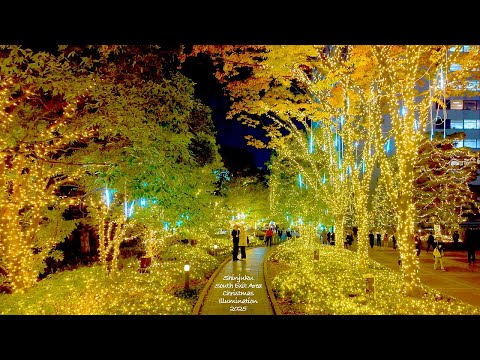
Shinjuku Southern Terrace (新宿サザンテラス)

An easily recognizable Shinjuku walking area tied to the film's later Tokyo scenes and urban sense of separation.

Shinjuku Southern Terrace Video

Trip Facts

Visit Time

20-30 minutes

Travel Snapshot

Key planning details for this stop, organized like a quick on-the-go pilgrimage guide.

For Photographers

Photography

Southern Terrace is particularly photogenic when changing light and city movement work together.

Walk Through the Promenade Featured in the Emotional Finale of 5 Centimeters Per Second

Just south of Shinjuku Station, Shinjuku Southern Terrace (新宿サザンテラス) is a modern pedestrian promenade lined with cafes, restaurants, seasonal illuminations, and office buildings. Connecting Shinjuku Station with the surrounding commercial district, it offers a quieter atmosphere than the station itself while remaining one of the busiest pedestrian areas in Tokyo.

For fans of Makoto Shinkai's 5 Centimeters Per Second (秒速5センチメートル), Southern Terrace is one of the film's most recognizable urban locations. During the final chapter, Takaki Tono walks through this area as part of his everyday commute, surrounded by crowds yet emotionally isolated. The realistic portrayal of its tree-lined walkways, glass buildings, and elevated pedestrian spaces has made Southern Terrace one of the most visited pilgrimage sites from the film.

Today, visitors can walk the same paths that inspired Makoto Shinkai's beautifully detailed backgrounds while experiencing the ever-changing rhythm of modern Tokyo.

Why It Matters in 5 Centimeters Per Second

Southern Terrace represents the final stage of Takaki's journey.

Unlike the quiet railway stations and snowy landscapes of his youth, this location is filled with commuters, office workers, and constant movement. Here, Takaki has become part of Tokyo's daily routine, yet his memories of Akari continue to accompany him.

The area symbolizes the contrast between a crowded city and personal loneliness, the routine of adult life, the passage of time and changing relationships, and the emotional distance that grows despite physical proximity.

Many of the film's final Tokyo scenes unfold around Southern Terrace, making it one of the story's most meaningful real-world settings.

Anime Connection

What to See

  • The Southern Terrace promenade itself, where the wide pedestrian walkway and modern architecture immediately evoke the film.
  • Tree-lined walkways that soften the urban scenery and change dramatically with the seasons.
  • Pedestrian bridges and elevated walkways that provide city perspectives similar to the film's sweeping Tokyo shots.
  • The evening cityscape, where illuminated buildings, passing trains, and glowing light create a distinctly Makoto Shinkai atmosphere.

Photography Tips

Southern Terrace is particularly photogenic when changing light and city movement work together.

  • Golden hour creates warm reflections on the surrounding glass buildings.
  • Blue hour works especially well as the promenade lights begin to come on.
  • Winter seasonal illuminations can make the area even more visually striking after dark.
  • For anime comparison photos, focus on the tree-lined walkway, modern buildings, and pedestrian bridges rather than on individual storefronts, since businesses and signage change over time.

Travel Tips

  • Southern Terrace is directly connected to JR Shinjuku Station's South Exit.
  • The area can be explored comfortably in 20-30 minutes.
  • Visit on weekday mornings to experience the commuter atmosphere portrayed in the film.
  • If you prefer quieter photography, early afternoons generally have fewer pedestrians.

Beyond the Anime

A Major Shinjuku Public Space

Southern Terrace attracts office workers, shoppers, and travelers throughout the day, making it one of the district's most active pedestrian spaces.

Seasonal Illuminations

During winter, the promenade becomes especially popular for decorative lighting events that add a festive mood to evening photography.

A Good Pause in the Route

The surrounding cafes and restaurants make this an easy place to slow down before continuing the wider Tokyo pilgrimage.

EnjoyIP Insight

Shinjuku Southern Terrace beautifully illustrates one of 5 Centimeters Per Second's central ideas: that even in a city filled with millions of people, it is possible to feel profoundly alone. By transforming this ordinary pedestrian promenade into a place of quiet reflection, Makoto Shinkai reminds us that life's most significant journeys often take place not across great distances, but within our own memories.

Iwafune Station (岩舟駅)

The snow-covered station atmosphere associated with one of the most memorable train sequences in the film.

Iwafune Station Video

Trip Facts

Visit Time

30-45 minutes

Travel Snapshot

Key planning details for this stop, organized like a quick on-the-go pilgrimage guide.

For Photographers

Photography

Iwafune Station is especially photogenic when the quiet platform and wider landscape are allowed to carry the mood.

Visit the Snow-Covered Station That Became One of Anime's Most Emotional Railway Scenes

Located in Tochigi Prefecture, Iwafune Station (岩舟駅) is a quiet local station on the JR Ryomo Line. While modest in size, it holds a special place in anime history as one of the real-world inspirations for the unforgettable railway scenes in the first episode of Makoto Shinkai's 5 Centimeters Per Second (秒速5センチメートル).

During Takaki Tono's long winter journey to meet Akari Shinohara, heavy snowfall repeatedly delays his train. As the hours pass and anxiety grows, small rural stations become symbols of both hope and uncertainty. Iwafune Station's isolated platform, simple station buildings, and snow-covered surroundings closely resemble the atmosphere portrayed in the film, making it one of the most meaningful pilgrimage destinations for fans.

Unlike Tokyo's crowded stations, Iwafune offers visitors a chance to experience the quiet countryside that defines one of the most memorable chapters in the story.

Why It Matters in 5 Centimeters Per Second

The first chapter of 5 Centimeters Per Second, Cherry Blossom, revolves around a single train journey.

As Takaki travels from Tokyo toward Tochigi to keep a promise to Akari, severe snowfall causes repeated delays. Each station where the train stops increases the uncertainty of whether he will arrive before the last train home.

Although the anime combines elements from multiple real railway locations for dramatic effect, Iwafune Station is widely recognized by fans as one of the principal real-world inspirations for these rural station scenes.

The station represents Takaki's determination to keep his promise, the emotional weight of waiting, the uncertainty of long-distance relationships, and the quiet beauty of rural Japan in winter.

Anime Connection

What to See

  • The rural station platform, whose simple and peaceful layout strongly echoes the film's winter railway atmosphere.
  • The JR Ryomo Line arriving and departing across an otherwise quiet platform, which is one of the closest real-life experiences to the movie's train sequences.
  • The surrounding countryside landscape, including open fields, distant hills, and a slower rhythm that contrasts sharply with Tokyo.
  • Winter scenery, which most closely matches the emotional tone of the first chapter even in years without heavy snowfall.

Photography Tips

Iwafune Station is especially photogenic when the quiet platform and wider landscape are allowed to carry the mood.

  • Winter mornings often provide frost, snow, or the cold stillness that best matches the film.
  • Late afternoon light can create a warm contrast against the calm station setting.
  • Cloudy or snowy weather usually fits the film's mood more closely than bright midday sun.
  • For anime comparison photos, frame the platform with tracks extending into the distance and include station signage or overhead lines where helpful.
  • Always remain behind safety barriers and never enter the tracks.

Travel Tips

  • Iwafune Station is served by the JR Ryomo Line.
  • Travel time from Tokyo Station is approximately 2 to 2.5 hours depending on transfers.
  • Local train services are relatively infrequent, so check the timetable before visiting.
  • Allow 30-45 minutes to explore the station and surrounding area.
  • If visiting in winter, wear warm clothing and prepare for colder temperatures than Tokyo.

Beyond the Anime

A Quiet Rural Community

Iwafune is a quiet community that receives relatively few international visitors, making it ideal for travelers who want a calmer side of Japan.

Why the Atmosphere Still Works

Unlike pilgrimage sites that have become crowded attractions, the station still retains much of the peaceful mood that originally inspired Makoto Shinkai.

What Visitors Often Remember Most

The silence of the platform, interrupted only by the arrival of an occasional local train, mirrors the emotional tone of 5 Centimeters Per Second with unusual clarity.

EnjoyIP Insight

Iwafune Station captures the quiet tension at the heart of 5 Centimeters Per Second. It is not a place of dramatic reunions or spectacular scenery. Instead, it represents the long hours spent waiting, hoping, and wondering whether it is already too late. Standing on the platform as a local train slowly approaches, it becomes easy to understand why Makoto Shinkai used the stillness of rural railway stations to tell one of anime's most heartfelt stories about distance and time.

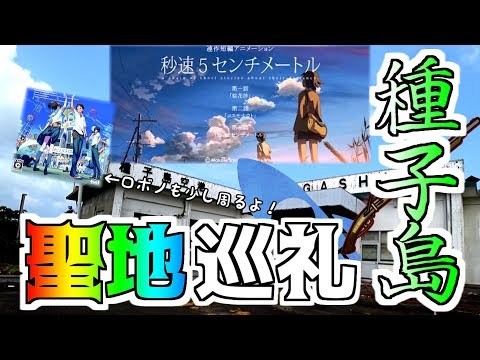
Tanegashima (種子島)

The island setting linked to Kanae's chapter, where open skies, coastlines, and distance take on a different emotional scale.

Tanegashima Video

Trip Facts

Visit Time

1-2 days

Travel Snapshot

Key planning details for this stop, organized like a quick on-the-go pilgrimage guide.

For Photographers

Photography

Tanegashima is one of the strongest landscape photography stops in the entire pilgrimage.

Discover the Island That Inspired Kanae's World in 5 Centimeters Per Second

Located about 40 km south of Kyushu in Kagoshima Prefecture, Tanegashima (種子島) is a subtropical island known for its beautiful coastline, surfing beaches, lush forests, and the Tanegashima Space Center. In Makoto Shinkai's 5 Centimeters Per Second (秒速5センチメートル), the island serves as the primary setting of Episode 2: Cosmonaut, where the story shifts from Takaki's perspective to that of Kanae Sumida.

Unlike the crowded streets of Tokyo or the snow-covered railway stations of Episode 1, Tanegashima offers expansive skies, endless ocean views, and a slower rhythm of life. These landscapes beautifully reflect Kanae's quiet admiration for Takaki and her realization that some feelings, like distant stars, can never quite be reached.

For many fans, Tanegashima is one of the most rewarding destinations in the pilgrimage, not because of a single famous landmark, but because the island itself captures the emotional atmosphere of the film.

Why It Matters in 5 Centimeters Per Second

Episode 2 marks a major change in the story.

Takaki has moved to Tanegashima during high school, where he befriends Kanae, a local girl who gradually falls in love with him. However, Kanae comes to understand that Takaki's heart remains tied to someone far away.

The island becomes a powerful metaphor for emotional distance through vast oceans separating people, endless skies reflecting dreams and uncertainty, quiet roads that emphasize solitude, and the contrast between moving forward and holding on to the past.

Rather than focusing on dramatic events, Makoto Shinkai uses Tanegashima's natural beauty to tell a deeply personal story about unspoken feelings.

Anime Connection

What to See

  • Coastal roads that inspired many of the film's cycling and commuting scenes.
  • Pacific Ocean views that appear throughout Episode 2 as a backdrop for Kanae's reflections.
  • Residential neighborhoods and smaller towns whose relaxed atmosphere still feels close to the film.
  • Open skies, changing weather, and sunsets that play a major role in the visual storytelling.

Photography Tips

Tanegashima is one of the strongest landscape photography stops in the entire pilgrimage.

  • Visit during sunrise or sunset to capture the warm colors that define Episode 2.
  • Photograph long stretches of coastal road with the ocean in the background.
  • Use wide-angle compositions that emphasize the island's vast sky.
  • Include bicycles, utility poles, and quiet roads to recreate the everyday atmosphere seen in the anime.
  • Here, the beauty comes from the landscape as a whole rather than from one exact landmark.

Travel Tips

  • Tanegashima can be reached by domestic flight from Kagoshima Airport or by high-speed ferry from Kagoshima Port.
  • Renting a car is the most convenient way to explore the island, as public transportation is limited.
  • Cycling is another excellent option for visitors who want to experience the quiet coastal roads featured in the film.
  • Plan to spend at least one full day, though two days is ideal for exploring the island at a relaxed pace.

Beyond the Anime

Historic Island of Firsts

Tanegashima is famous as the place where Portuguese traders introduced firearms to Japan in 1543, an event that had a major impact on Japanese history.

Home of Japan's Space Program

Today, the island is equally well known for the Tanegashima Space Center, Japan's largest rocket launch facility.

Why the Island Feels Special

This mix of history, technology, and untouched natural scenery makes Tanegashima unlike anywhere else in Japan, even beyond the anime connection.

EnjoyIP Insight

Tanegashima is more than just the setting of Episode 2. The island's endless horizon, quiet roads, and expansive skies reflect the emotional distance between the characters just as powerfully as any dialogue. Walking along its coastline, it becomes easy to understand why Makoto Shinkai chose this peaceful island to tell a story about dreams that feel close enough to see, yet impossibly far away.

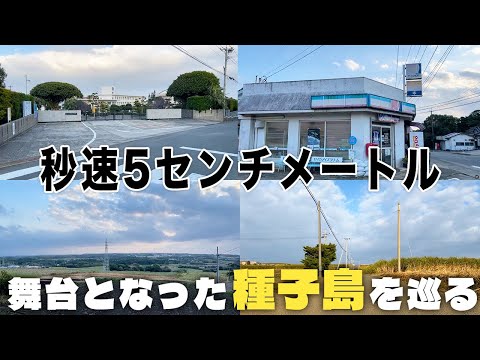
Tanegashima Space Center Area (種子島宇宙センター周辺)

A broader island-area stop that adds context to Kanae's world through Tanegashima's mix of coastline, scale, and futuristic association.

Tanegashima Space Center Area Video

Trip Facts

Visit Time

30-60 minutes

Travel Snapshot

Key planning details for this stop, organized like a quick on-the-go pilgrimage guide.

Where

Location

Tanegashima, Kagoshima Prefecture

Season

Best Time to Visit

Summer and shoulder-season clear days

For Photographers

Photography

For this pilgrimage, atmosphere matters as much as exact frame matching.

Tanegashima Space Center Area is one of the key real-world stops in the world of 5 Centimeters Per Second.

Tanegashima Space Center Area helps visitors experience the film's themes of distance, railway travel, changing seasons, and memory through an everyday Japanese setting.

It adds scale to Kanae's island chapter and helps connect the film's emotional distance with the physical openness of Tanegashima.

A fuller scene-by-scene comparison, route details, and more precise photography notes can be added here once the detailed Spot write-up is ready.

Anime Connection

Why This Stop Matters

  • It supports the film's emotional tone through ordinary scenery rather than a grand sightseeing landmark.
  • It works especially well for fans who want to understand how Makoto Shinkai turned commuter spaces and landscapes into memorable cinematic images.
  • This stop is best experienced slowly, with time for observation, photography, and train-based route planning.

Photography Tips

For this pilgrimage, atmosphere matters as much as exact frame matching.

  • Look for railway lines, weather changes, evening light, and quiet urban or rural details when composing photos.
  • Cloudy skies, winter light, and empty commuter moments often fit the film especially well.
  • Be respectful around active stations, crossings, and residential streets while taking pictures.

Visitor Notes

  • Follow railway safety rules and remain behind barriers at all crossings and platforms.
  • If you are combining multiple regions, leave extra time for transfers because the long-distance travel is part of this pilgrimage.

EnjoyIP Insight

Even in basic form, this stop already shows why 5 Centimeters Per Second remains one of Makoto Shinkai's most grounded pilgrimage experiences: ordinary places carry extraordinary emotional weight.

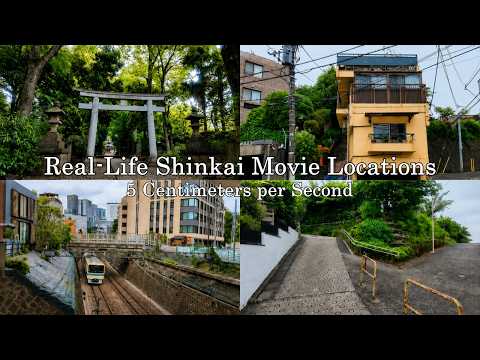
Anime vs Real Life

Makoto Shinkai's extraordinary realism makes many 5 Centimeters Per Second locations instantly recognizable, especially railway scenes, station approaches, and ordinary streets.

Sangenjaya Railway Crossing
Shinjuku Southern Terrace
Shinjuku Station
Iwafune Station
Tanegashima coastline

Nearby Experiences

Explore Setagaya

After visiting the famous railway crossing, discover the cafes, bookstores, and local neighborhoods around Sangenjaya, one of Tokyo's most livable districts.

Experience Japan by Train

Rail travel is central to 5 Centimeters Per Second, and riding local and regional trains between locations deepens the emotional logic of the route.

Visit Tanegashima Space Center

While on Tanegashima, explore Japan's largest space launch facility and the island's unique mix of nature and technology.

Continue Your Makoto Shinkai Journey

Many fans combine this pilgrimage with The Garden of Words, Your Name, and Weathering With You for a broader multi-day Shinkai route.

Transportation Guide

Starting Point: Most visitors begin in Tokyo, where the film's best-known locations are concentrated.

JR trains, the Tokyu Den-en-toshi Line, and local subway services provide convenient access to the major Tokyo pilgrimage spots.

Visitors continuing to Tochigi or Kagoshima should plan additional travel time, as these destinations are significantly farther from Tokyo and work best as part of a longer route.

Best Time to Visit

Winter

The snowy atmosphere around Iwafune Station most closely matches Episode One.

Spring

Cherry blossoms and softer light beautifully complement many Tokyo scenes.

Summer

Ideal for visiting Tanegashima's coastline and open southern landscapes.

Autumn

Comfortable temperatures make walking between Tokyo locations especially enjoyable.

Share the Joy and Fun!

Spread the word to your friends and community.