Experience Multiple Civilizations
Travel across Asia and Europe while discovering the cultures that shaped Teyvat.
Teyvat combines fictional nations with architectural, cultural, environmental, and historical references from multiple parts of the real world. Rather than a one-to-one mapping between a Teyvat nation and a single real country, HoYoverse blends landscapes, architecture, mythology, and local traditions into original fantasy settings.
Examples of real-world influences include Chinese, Japanese, Central European, French, South Asian, Middle Eastern, and Mesoamerican cultural references — from Zhangjiajie's sandstone pillars behind Liyue's mountains to Kyoto's shrines that inform Inazuma's sacred atmosphere.
This guide explores those real-world connections without claiming direct correspondences, helping you discover the places, cultures, and architectural traditions behind one of the world's most beloved RPGs.
Everything you need before exploring Teyvat's inspirations.
| Main Regions | China • Japan • Germany • France • India • Egypt • Mexico |
|---|---|
| Suggested Duration | 7–21 Days (depending on destinations) |
| Best For | Genshin Players • Travelers • Photographers • Culture Enthusiasts |
| Travel Style | Multi-country Inspiration Journey |
| Difficulty | Easy to Moderate |
| Best Season | Spring & Autumn |
| Photography | Scenic Landscapes • Historic Architecture • Cultural Heritage |
Most game-inspired trips focus on visiting exact locations recreated in-game.
Genshin Impact offers something different.
Rather than copying individual landmarks, HoYoverse blends landscapes, architecture, mythology, and local traditions into original fantasy nations.
Each destination helps visitors understand not only where the artists found inspiration, but also why each nation feels culturally distinct.
Travel across Asia and Europe while discovering the cultures that shaped Teyvat.
See how mountains, temples, castles, and cities evolved into fantasy environments.
Instead of recreating game scenes, explore the history, cuisine, architecture, and traditions behind every nation.
Natural wonders and historic cities provide incredible opportunities to compare reality with fantasy.
Every destination tells a story about geography, mythology, architecture, and cultural heritage.
Don't Miss
Unlike traditional anime pilgrimages, there isn't a single correct route.
Teyvat combines fictional nations with architectural, cultural, environmental, and historical references from multiple parts of the real world. Examples of real-world influences include Chinese, Japanese, Central European, French, South Asian, Middle Eastern, and Mesoamerican cultural references.
Think of this journey as traveling through the cultures behind Teyvat rather than searching for one-to-one correspondences between a Teyvat nation and a single real country.
Instead of chasing exact in-game replicas, this guide maps the cultural and visual ideas behind Teyvat.
Each section is organized by nation so you can understand how landscapes, architecture, and heritage from the real world were reimagined into Genshin Impact's fantasy geography.
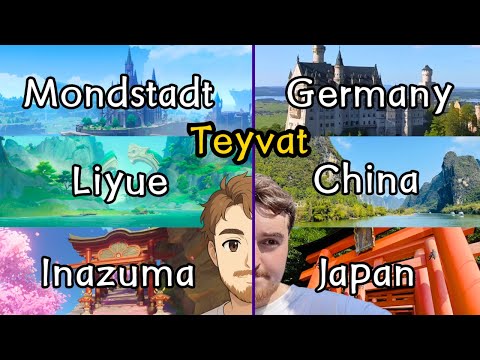
A strong overview video for comparing Mondstadt, Liyue, and Inazuma with their real-world inspirations.
Towering Stone Pillars That Shaped Liyue's Legendary Mountains
Trip Facts
Visit Time
1–2 Days
Difficulty
Easy to Moderate
Travel Snapshot
Key planning details for this stop, organized like a quick on-the-go pilgrimage guide.
Getting There
Shuttle buses connect the major attractions throughout the park.
Season
April–June, September–November
For Photographers
Early morning fog creates the iconic "floating mountains" effect that resembles Liyue's mystical atmosphere.
Towering Stone Pillars That Shaped Liyue's Legendary Mountains
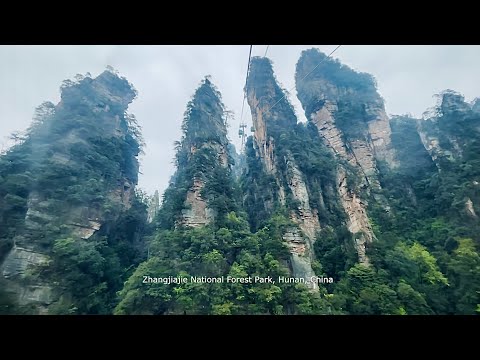
Rising dramatically above mist-filled valleys in China's Hunan Province, Zhangjiajie National Forest Park is one of the world's most recognizable landscapes. Its thousands of towering quartz-sandstone pillars create a surreal environment that has inspired countless artists, filmmakers, and game designers.
For Genshin Impact players, the resemblance to Liyue's towering peaks is immediately familiar. While HoYoverse has never claimed that any single mountain became a direct in-game location, the development team has acknowledged drawing inspiration from China's spectacular mountain scenery, with Zhangjiajie widely recognized as one of the strongest visual influences behind regions such as Jueyun Karst and other iconic landscapes across Liyue.
Rather than recreating the park exactly, the artists transformed its dramatic vertical cliffs, floating mist, and layered mountain ranges into the mythical world of Teyvat, giving players a fantasy landscape rooted in real natural beauty.
Zhangjiajie's defining feature is its extraordinary sandstone pillars, many rising more than 200 meters (650 feet) above the forest floor. The narrow peaks, often surrounded by drifting clouds, create an almost otherworldly atmosphere that closely matches the visual language of Liyue's mountain regions.
The park's dramatic elevation changes, hidden valleys, winding stone paths, and panoramic viewpoints all echo the sense of exploration found throughout Genshin Impact. Instead of copying individual landmarks, HoYoverse captured the feeling of standing among towering mountains that seem to reach into the sky.
Early morning fog creates the iconic "floating mountains" effect that resembles Liyue's mystical atmosphere.
The park's most famous section features towering stone columns connected by scenic walkways and observation platforms. Many visitors consider this area the closest real-world equivalent to the majestic atmosphere of Liyue.
Known for its sweeping views above a sea of clouds, Tianzi Mountain offers breathtaking panoramas that showcase the layered mountain landscape believed to have inspired many of Liyue's distant horizons.
The world's tallest outdoor glass elevator carries visitors directly up the cliffs, providing spectacular views of the towering pillars during the ascent.
A peaceful hiking trail winding beneath the sandstone formations, offering a completely different perspective from the elevated viewpoints.
A dramatic mountain park known for high-altitude views and one of the region’s most iconic landscapes.
A spectacular natural arch carved into the mountain, famous for its scale and cinematic setting.
A scenic canyon destination that adds cliffs, forest views, and broader regional hiking experiences to your route.
A high, transparent bridge spanning the canyon, offering striking aerial perspectives and a different kind of adrenaline-filled viewpoint.
A calmer nearby stop where lake scenery and steep surrounding peaks provide a softer contrast to Zhangjiajie's dramatic vertical pillars.
Zhangjiajie isn't a one-to-one recreation of any location in Genshin Impact, but its towering sandstone pillars and ethereal mountain scenery are among the most widely recognized real-world inspirations behind Liyue's legendary landscapes.
Discover the Colorful Mineral Pools That Inspired Liyue's Dreamlike Landscapes
Trip Facts
Visit Time
Half Day to Full Day
Difficulty
Easy to Moderate
Travel Snapshot
Key planning details for this stop, organized like a quick on-the-go pilgrimage guide.
Season
May–October (Autumn for colorful foliage)
For Photographers
The pools appear most vibrant on clear days when sunlight penetrates the water.
Discover the Colorful Mineral Pools That Inspired Liyue's Dreamlike Landscapes
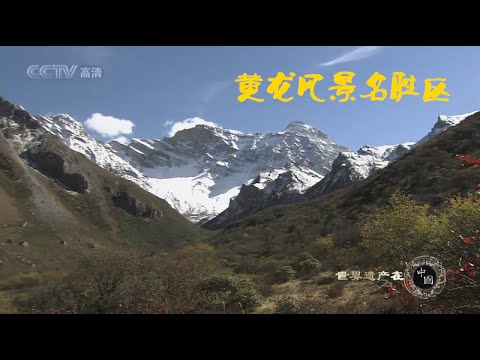
Located in the mountains of northern Sichuan Province, Huanglong Scenic and Historic Interest Area is one of China's most extraordinary natural wonders. A UNESCO World Heritage Site, it is best known for thousands of colorful travertine pools that cascade down the mountainside, creating a landscape unlike anywhere else in the world.
For Genshin Impact players, Huanglong is often associated with Luhua Pool, one of Liyue's most memorable locations. While Luhua Pool is an original creation rather than a direct copy, HoYoverse has publicly discussed drawing inspiration from famous Chinese landscapes during Liyue's development, and Huanglong's distinctive mineral terraces are widely recognized as one of those influences.
Visiting Huanglong offers more than a comparison with the game. It provides an opportunity to experience one of China's most remarkable geological sites, where nature has been shaping vibrant limestone pools over thousands of years.
Unlike ordinary lakes, Huanglong's pools are formed by travertine, a type of limestone deposited by mineral-rich spring water. Over centuries, this process has created thousands of shallow terraces filled with crystal-clear water that changes color depending on the season, sunlight, algae, and mineral content.
This combination of turquoise pools, surrounding forests, and high-altitude scenery closely matches the peaceful atmosphere that players associate with Luhua Pool. Rather than recreating Huanglong exactly, Genshin Impact captures its sense of serenity and transforms it into a fantasy landscape where history, nature, and exploration come together.
The pools appear most vibrant on clear days when sunlight penetrates the water.
The park's most iconic attraction, these shallow pools display brilliant shades of blue, green, yellow, and turquoise. Their colors shift throughout the day depending on the angle of sunlight, making every visit slightly different.
A scenic boardwalk follows the valley through forests, streams, waterfalls, and hundreds of mineral pools, offering constantly changing views as you climb toward the upper sections of the park.
One of the world's largest exposed travertine formations, this gently sloping terrace resembles a flowing golden river when viewed from above.
Near the upper end of the valley sits Huanglong Ancient Temple, reflecting the area's long history as both a cultural and religious destination.
Famous for its turquoise lakes, waterfalls, and alpine forests.
A historic frontier town with well-preserved city walls and traditional Tibetan and Han cultural influences.
Known for limestone terraces, waterfalls, and quieter hiking trails.
A strong pairing for a multi-day western Sichuan nature route.
Huanglong is best appreciated as a natural inspiration rather than a one-to-one game location. If Luhua Pool made you stop and admire Genshin Impact's scenery, Huanglong shows how extraordinary real-world landscapes can be and why they inspired the artists behind Liyue.
Cruise Through the Karst Landscape That Helped Shape Liyue's Rivers and Peaks

Trip Facts
Visit Time
2–3 Days
Difficulty
Easy
Travel Snapshot
Key planning details for this stop, organized like a quick on-the-go pilgrimage guide.
Season
April–May, September–November
For Photographers
Morning mist often creates the dreamlike atmosphere most associated with traditional Chinese landscape paintings.
Cruise Through the Karst Landscape That Helped Shape Liyue's Rivers and Peaks
Stretching through China's Guangxi Zhuang Autonomous Region, the Li River is one of the country's most celebrated natural landscapes. Towering limestone karst hills rise from the water, bamboo forests line the riverbanks, and traditional fishing villages preserve a slower pace of life that has inspired Chinese painters and poets for centuries.
For Genshin Impact players, the scenery feels instantly familiar. While there is no exact in-game counterpart, the Li River's combination of dramatic karst peaks, winding waterways, and rural villages closely reflects the atmosphere of Dihua Marsh, Wangshu Inn's surroundings, and many of Liyue's river valleys.
Unlike Zhangjiajie, which inspires Liyue's towering mountains, Guilin captures the softer side of the region: its rivers, wetlands, and harmonious relationship between people and nature.
The landscape around Guilin was formed over millions of years as limestone gradually eroded into steep, isolated hills known as tower karst. Combined with winding rivers and fertile plains, the result is one of the world's most distinctive natural environments.
Rather than reproducing specific landmarks, Genshin Impact borrows the visual rhythm of this landscape: solitary peaks rising from flat valleys, rivers weaving between mountains, and villages nestled beside the water. This balance between dramatic geology and peaceful countryside is a defining characteristic of Liyue's exploration experience.
The Li River also reflects traditional Chinese landscape aesthetics, where mountains and water are viewed together as a harmonious whole, a concept that strongly influences Liyue's artistic direction.
Morning mist often creates the dreamlike atmosphere most associated with traditional Chinese landscape paintings.
The classic river cruise is the best way to experience the scenery. Lasting around four hours, it passes countless limestone peaks, quiet fishing villages, bamboo groves, and water buffalo grazing along the riverbanks.
With a history of more than 1,700 years, Xingping is one of the best-preserved riverside towns along the Li River. Its traditional streets and surrounding mountains are among the most photographed scenes in Guilin.
According to local legend, the cliff face resembles nine horses hidden within the rock formations. It is one of the Li River's most famous natural landmarks.
This stretch of the river features one of China's most iconic views and is depicted on the reverse side of the 20 RMB banknote.
A popular base for cycling, rock climbing, and countryside exploration.
One of the best sunrise viewpoints over the Li River.
A limestone cave illuminated with colorful formations.
A quieter tributary ideal for bamboo rafting and scenic cycling.
Guilin's most famous city landmark, located just minutes from downtown.
If Zhangjiajie represents Liyue's towering mountains, Guilin and the Li River embody its tranquil heart. The flowing rivers, limestone peaks, and timeless villages reveal how real landscapes can inspire a fantasy world without being copied directly.
Guilin's Most Famous Landmark and a Symbol of Liyue's Natural Aesthetics

Trip Facts
Visit Time
1–2 Hours
Difficulty
Easy
Travel Snapshot
Key planning details for this stop, organized like a quick on-the-go pilgrimage guide.
Season
March–May, September–November
For Photographers
The classic viewpoint is from across the Li River, where the entire elephant silhouette is clearly visible.
Guilin's Most Famous Landmark and a Symbol of Liyue's Natural Aesthetics
Standing at the point where the Li River meets the Peach Blossom River in downtown Guilin, Elephant Trunk Hill (Xiangbishan) is one of China's most recognizable natural landmarks. Its distinctive shape resembles an elephant lowering its trunk to drink from the river, making it a symbol of Guilin for centuries.
Although no location in Genshin Impact directly recreates Elephant Trunk Hill, many players recognize its influence in Liyue's rounded karst formations and riverside scenery. More importantly, the landmark represents the artistic style that inspired much of Liyue: a landscape where unique rock formations, flowing water, and traditional Chinese aesthetics exist in harmony.
For travelers exploring Guilin, Elephant Trunk Hill is often the first stop before continuing deeper into the Li River region.
Unlike Zhangjiajie or Huanglong, Elephant Trunk Hill is less about dramatic scale and more about iconic natural form.
Chinese landscape art often celebrates mountains and rivers not only for their beauty but also for the stories and symbolism they inspire. Elephant Trunk Hill has appeared in paintings, poems, and travel literature for hundreds of years, embodying the close relationship between nature and culture that also defines Liyue.
Its isolated limestone formation rising beside calm water reflects the visual language found throughout Genshin Impact: recognizable geological features placed within peaceful, carefully composed landscapes rather than copied one-to-one.
The classic viewpoint is from across the Li River, where the entire elephant silhouette is clearly visible.
The main attraction is the hill itself. From the riverside paths, visitors can clearly see the natural arch beneath the trunk, creating the illusion of an elephant drinking from the Li River.
The circular opening beneath the hill forms one of Guilin's most famous views. When reflected on calm water, the arch and its reflection create a full moon, giving the cave its poetic name.
Standing atop the hill is a small Ming Dynasty pagoda. Although modest in size, it provides historical context and a different perspective over the surrounding rivers.
Well-maintained paths around the park offer multiple viewing angles, making it easy to appreciate the hill from different perspectives throughout the day.
Two illuminated pagodas beside Shan Lake, particularly beautiful after dark.
A network of waterways that can be explored by sightseeing boat.
A well-preserved Ming Dynasty royal complex at the foot of Solitary Beauty Peak.
One of Guilin's best-known limestone cave systems.
Elephant Trunk Hill may not correspond to a specific location in Genshin Impact, but it represents the timeless Chinese landscape aesthetics that helped define Liyue. Its graceful limestone silhouette, tranquil riverside setting, and centuries of cultural significance make it an excellent stop for players interested in the artistic inspirations behind the game, rather than searching for an exact in-game match.
Walk Through Kyoto's Iconic Torii Gates That Inspired Inazuma's Sacred Atmosphere
Trip Facts
Visit Time
2–4 Hours (Half Day for Full Hike)
Difficulty
Easy to Moderate
Admission
Free
Travel Snapshot
Key planning details for this stop, organized like a quick on-the-go pilgrimage guide.
For Photographers
Early morning provides the softest light and the quietest conditions for photographing the torii tunnels.
Walk Through Kyoto's Iconic Torii Gates That Inspired Inazuma's Sacred Atmosphere
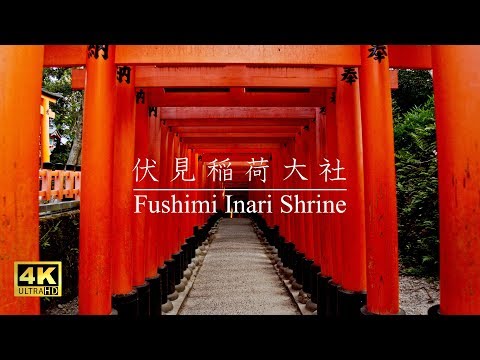
Located in southern Kyoto, Fushimi Inari Taisha is one of Japan's most visited and recognizable Shinto shrines. Founded over 1,300 years ago, it is dedicated to Inari, the Shinto deity associated with agriculture, prosperity, and business. The shrine is best known for its thousands of vermilion torii gates, which form winding tunnels leading up the forested slopes of Mount Inari.
For Genshin Impact players, the atmosphere feels strikingly familiar. While Narukami Shrine is not a direct recreation of Fushimi Inari, the shrine's mountain setting, traditional architecture, stone lanterns, and endless torii gates closely resemble the spiritual aesthetic that defines Inazuma.
Rather than copying a single shrine, HoYoverse blended elements from Kyoto's religious architecture with Japanese mythology and historical design to create a fantasy nation that feels authentic while remaining uniquely its own.
Fushimi Inari is one of Japan's most iconic examples of Shinto shrine architecture and sacred mountain worship.
The most recognizable feature is its network of more than 10,000 vermilion torii gates, each donated by individuals or businesses as offerings of gratitude or prayers for prosperity. Walking through these gates creates a rhythmic progression between the everyday world and the sacred mountain, an experience that strongly resembles the spiritual atmosphere surrounding Narukami Shrine.
Beyond the gates themselves, the shrine's wooded paths, stone fox statues, traditional lanterns, and elevated mountain setting all reflect visual themes that appear throughout Inazuma. Instead of recreating specific locations, Genshin Impact captures the feeling of exploring a sacred place where nature, architecture, and spirituality are inseparable.
Early morning provides the softest light and the quietest conditions for photographing the torii tunnels.
The shrine's most famous attraction is the seemingly endless corridor of bright red torii gates climbing the mountainside. This section is often considered one of Japan's most iconic walking routes.
The impressive main gate marks the entrance to the shrine complex and showcases traditional Japanese shrine architecture dating back to the late 16th century.
The shrine's principal worship hall remains an active place of prayer and offers visitors an opportunity to observe modern Shinto practices in a historic setting.
The complete pilgrimage route circles Mount Inari and takes approximately 2–3 hours. Along the way are smaller shrines, quiet forest paths, scenic viewpoints, and numerous fox statues.
One of Kyoto's leading Zen temples, especially popular during autumn foliage season.
UNESCO World Heritage Site with panoramic views over Kyoto.
Traditional streets lined with wooden machiya houses, tea shops, and local crafts.
Kyoto's historic geisha district, known for preserved architecture and evening atmosphere.
Fushimi Inari Taisha is not the real-world Narukami Shrine, but it beautifully illustrates the architectural style, sacred mountain setting, and spiritual atmosphere that helped shape Inazuma. Visiting the shrine offers insight into the cultural traditions behind one of Genshin Impact's most beloved regions, making it an essential stop for players exploring the game's real-world inspirations.
Explore Japan's Finest Samurai Castle and the Architectural Inspiration Behind Inazuma
Trip Facts
Visit Time
Half Day
Difficulty
Easy to Moderate
Travel Snapshot
Key planning details for this stop, organized like a quick on-the-go pilgrimage guide.
For Photographers
The classic viewpoint is from Otemae Street, where the castle rises dramatically at the end of the broad avenue.
Explore Japan's Finest Samurai Castle and the Architectural Inspiration Behind Inazuma
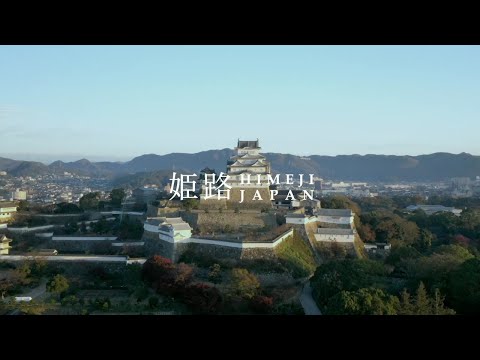
Standing atop Himeyama Hill in Hyogo Prefecture, Himeji Castle is Japan's best-preserved feudal castle and one of the country's first UNESCO World Heritage Sites. Known as the "White Heron Castle" for its elegant white plaster walls and graceful silhouette, it represents the pinnacle of Japanese castle architecture.
For Genshin Impact players, Himeji Castle offers a glimpse into the architectural traditions that helped shape Inazuma City and the Tenshukaku, the residence of the Raiden Shogun. While no single building in the game directly reproduces Himeji Castle, its layered rooftops, defensive walls, wooden interiors, and commanding hilltop position reflect many of the design principles seen throughout Inazuma.
Rather than searching for an exact in-game location, visitors can appreciate how centuries of Japanese military architecture influenced one of Teyvat's most memorable capitals.
Unlike European castles, Japanese castles were designed as both military fortresses and political centers. Their layered roofs, elevated keeps, maze-like gates, and stone foundations created strong defensive positions while also projecting the authority of the ruling lord.
These characteristics are echoed throughout Inazuma. The Tenshukaku dominates the city's skyline in much the same way that Himeji Castle overlooks its surrounding landscape. The combination of white walls, dark tiled roofs, timber construction, and carefully planned courtyards reflects architectural traditions that have defined Japanese castles for hundreds of years.
Although Genshin Impact blends elements from multiple castles and historical periods, Himeji Castle remains one of the clearest examples of the aesthetic language behind Inazuma's governmental and military architecture.
The classic viewpoint is from Otemae Street, where the castle rises dramatically at the end of the broad avenue.
The six-story main keep is the centerpiece of the castle complex. Visitors can climb to the top through its original wooden interior for panoramic views over Himeji City.
Himeji Castle is famous for its intricate network of gates, walls, and winding paths designed to slow invading armies. Walking these routes reveals the sophisticated defensive planning of Japan's feudal era.
Located on the western side of the castle, this quieter section offers one of the best panoramic views of the main keep and includes the historic residence associated with Princess Sen.
Surrounded by broad moats, stone walls, and seasonal gardens, the castle grounds are ideal for leisurely walks and provide excellent perspectives for photography throughout the year.
A beautifully restored Japanese garden featuring nine distinct landscape styles.
Housed in a historic red-brick building overlooking the castle grounds.
A mountaintop temple complex featured in The Last Samurai, offering a peaceful contrast to the castle.
Lined with cafes, restaurants, and shops leading directly to the castle entrance.
Himeji Castle is not the real-world Tenshukaku, but it represents the architectural heritage that defines Inazuma's ruling capital. Its elegant white keep, layered rooftops, and sophisticated defensive design reveal how Japan's feudal castles inspired the grandeur and authority of the Raiden Shogun's domain.
Wander Kyoto's Historic Streets That Capture the Everyday Charm of Inazuma City

Trip Facts
Visit Time
Half Day
Difficulty
Easy
Travel Snapshot
Key planning details for this stop, organized like a quick on-the-go pilgrimage guide.
Season
March–May, October–November
For Photographers
Early morning provides the cleanest street scenes with minimal crowds.
Wander Kyoto's Historic Streets That Capture the Everyday Charm of Inazuma City
Nestled on the eastern slopes of Kyoto, the Higashiyama District is one of Japan's best-preserved historic neighborhoods. Narrow stone lanes, traditional wooden townhouses (machiya), teahouses, temples, and small local shops create an atmosphere that has changed remarkably little over the centuries.
For Genshin Impact players, strolling through Higashiyama evokes the quiet elegance of Inazuma City. While the game does not recreate any specific street, the district's human-scale architecture, gently sloping roads, tiled roofs, and lantern-lit evenings closely resemble the everyday environment that surrounds the Tenshukaku and Narukami Shrine.
Unlike famous landmarks such as Fushimi Inari Taisha or Himeji Castle, Higashiyama offers something equally important: an opportunity to experience the living streets and traditional urban design that give Inazuma its authentic sense of place.
When creating Inazuma, HoYoverse drew inspiration not only from Japan's iconic monuments but also from its historic urban landscapes.
Higashiyama demonstrates many of the architectural characteristics reflected throughout Inazuma: wooden machiya townhouses with tiled roofs, narrow pedestrian streets that naturally follow the hillside, stone staircases connecting shrines and residential neighborhoods, paper lanterns, wooden shopfronts, seasonal decorations, and a close relationship between temples, homes, gardens, and nature.
Rather than designing an exact replica of Kyoto, Genshin Impact captures these recurring visual elements to create a fantasy city that feels distinctly Japanese while remaining original.
Early morning provides the cleanest street scenes with minimal crowds.
One of Kyoto's most picturesque preserved streets, Ninenzaka features traditional wooden buildings, local cafes, souvenir shops, and beautiful stone paving. The gentle slope and historic architecture closely resemble many residential areas of Inazuma City.
Connecting directly with Ninenzaka, Sannenzaka offers another beautifully preserved walking street lined with tea houses, craft shops, and seasonal decorations.
Rising above the surrounding rooftops, the five-story pagoda has become one of Kyoto's defining landmarks and creates one of Japan's most photographed historic streetscapes.
The streets leading toward Kiyomizu-dera Temple are filled with traditional storefronts, local snacks, and cultural experiences, offering visitors a glimpse of Kyoto's historic commercial district.
UNESCO World Heritage Site with panoramic views over Kyoto.
One of Kyoto's most important Shinto shrines.
Kyoto's historic geisha quarter, known for preserved wooden architecture.
Popular for cherry blossoms in spring.
A Zen temple celebrated for its gardens and seasonal illuminations.
While Fushimi Inari Taisha and Himeji Castle showcase the grand architecture behind Inazuma, Higashiyama reveals something equally important: the everyday streets where traditional Japanese design comes to life. Its preserved neighborhoods, wooden townhouses, and peaceful atmosphere help explain why Inazuma feels believable as a living city rather than simply a fantasy setting.
Explore Germany's Best-Preserved Medieval Town and the Spirit Behind Mondstadt
Trip Facts
Visit Time
Full Day
Difficulty
Easy
Travel Snapshot
Key planning details for this stop, organized like a quick on-the-go pilgrimage guide.
Season
May–October, December (Christmas Market)
For Photographers
Early morning is the best time to photograph the empty streets before tour groups arrive.
Explore Germany's Best-Preserved Medieval Town and the Spirit Behind Mondstadt
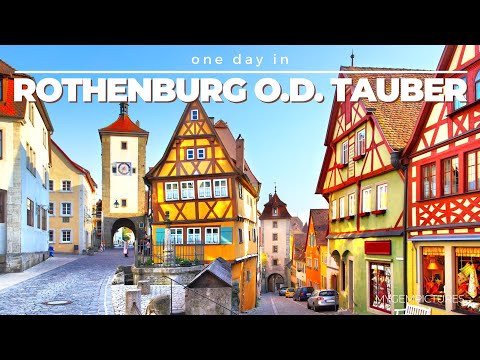
Perched above the Tauber River in northern Bavaria, Rothenburg ob der Tauber is one of Germany's most beautiful and best-preserved medieval towns. Encircled by historic stone walls and lined with half-timbered houses, cobbled streets, church towers, and flower-filled squares, the town has retained much of its medieval appearance despite the passage of centuries.
For Genshin Impact players, Rothenburg immediately evokes the atmosphere of Mondstadt. While HoYoverse has never identified a single town as the direct model, Rothenburg's architecture, open plazas, defensive walls, and welcoming streets closely reflect the European aesthetic that defines the City of Freedom.
Rather than recreating Rothenburg building by building, Genshin Impact combines architectural elements from several Central European regions. Rothenburg, however, offers one of the clearest examples of the historical character that inspired Mondstadt's timeless charm.
Mondstadt draws heavily from the architectural traditions of medieval Germany and neighboring Central European regions.
Rothenburg embodies many of these defining characteristics: colorful half-timbered houses, red clay roof tiles, medieval stone fortifications, narrow cobblestone streets, church spires rising above the skyline, and public market squares surrounded by historic buildings.
Together, these features create a town that feels both defensive and inviting, a balance reflected throughout Mondstadt, where imposing city walls coexist with lively cafes, guild headquarters, and bustling public spaces.
Unlike many historic towns that have modernized extensively, Rothenburg has preserved its original urban layout, making it one of the best places to experience the architectural atmosphere that inspired Mondstadt.
Early morning is the best time to photograph the empty streets before tour groups arrive.
The heart of Rothenburg has served as the town's gathering place for centuries. Surrounded by historic civic buildings and cafes, it reflects the kind of lively public square that forms the social center of Mondstadt.
The Town Hall combines Gothic and Renaissance architecture and offers an observation tower with panoramic views across the medieval rooftops.
One of Rothenburg's greatest treasures is its nearly complete system of defensive walls. Visitors can walk along sections of the wall and enjoy elevated views over both the old town and the surrounding countryside.
Often considered Germany's most photographed street corner, Plonlein features a charming half-timbered house standing between two medieval towers. Although small, it perfectly captures Rothenburg's fairy-tale atmosphere.
Dating back to the 14th century, this Gothic church houses the famous Holy Blood Altarpiece carved by Tilman Riemenschneider and remains one of the town's most significant historic landmarks.
Another exceptionally well-preserved medieval town with colorful half-timbered architecture.
A UNESCO World Heritage Site renowned for its Baroque palace and gardens.
One of Germany's oldest and best-preserved hilltop castles.
Scenic vineyards, cycling routes, and riverside villages surrounding Rothenburg.
Rothenburg ob der Tauber isn't the real Mondstadt, but it captures the same welcoming spirit through its medieval streets, timber-framed houses, and centuries-old city walls. If you have ever wondered what it would feel like to step into Mondstadt without leaving the real world, Rothenburg is one of the closest experiences Europe has to offer.
Visit Germany's Fairy-Tale Castle That Reflects Mondstadt's Romantic Spirit

Trip Facts
Visit Time
Half Day
Difficulty
Easy to Moderate
Travel Snapshot
Key planning details for this stop, organized like a quick on-the-go pilgrimage guide.
For Photographers
The most famous viewpoint is Marienbrucke, where the castle appears dramatically above the gorge.
Visit Germany's Fairy-Tale Castle That Reflects Mondstadt's Romantic Spirit
Rising above the forests and alpine lakes of southern Bavaria, Neuschwanstein Castle is one of the world's most recognizable castles. Commissioned by King Ludwig II of Bavaria in the 19th century, it was designed as an idealized medieval palace rather than a military fortress. Its soaring towers, white limestone walls, and dramatic mountain setting have inspired artists, filmmakers, and fantasy creators for generations.
For Genshin Impact players, Neuschwanstein captures the same sense of wonder found throughout Mondstadt. Although the castle does not appear directly in the game, its romantic architecture and breathtaking surroundings closely match the European fantasy atmosphere that defines the City of Freedom.
Instead of serving as a blueprint for a single building, Neuschwanstein represents the imaginative spirit that influenced Mondstadt's visual identity.
Unlike genuine medieval castles such as Himeji Castle or Rothenburg's fortifications, Neuschwanstein was built during the Romantic era, when architects sought to recreate an idealized vision of the Middle Ages.
This blend of history and fantasy mirrors HoYoverse's approach to Mondstadt.
The castle's slender towers, steep roofs, decorative facades, and dramatic hilltop location emphasize beauty and imagination over military function. Combined with the surrounding forests, alpine scenery, and open skies, the result is remarkably similar to the peaceful yet adventurous feeling players experience while exploring Mondstadt.
Rather than copying Neuschwanstein itself, Genshin Impact draws upon the broader tradition of romantic European castles to create a world that feels both historical and fantastical.
The most famous viewpoint is Marienbrucke, where the castle appears dramatically above the gorge.
The castle's exterior is its greatest attraction. From every angle, the white towers rise above the surrounding forest, creating one of Germany's most iconic landscapes.
Suspended above the Pollat Gorge, this bridge offers the classic panoramic view of the castle framed by mountains and forests. It is the most popular photography location.
Although only a fraction of King Ludwig II's original vision was completed, the richly decorated halls feature murals inspired by medieval legends, operas by Richard Wagner, and Germanic mythology.
Located at the foot of the castle, Alpsee is a peaceful alpine lake surrounded by forested mountains, providing beautiful reflections of the Bavarian landscape.
King Ludwig II's childhood residence, located just below Neuschwanstein.
Ideal for lakeside walks and landscape photography.
Explores the history of the Wittelsbach dynasty and the construction of the castle.
A charming Alpine town with colorful buildings, cafes, and historic streets.
Neuschwanstein Castle doesn't appear in Genshin Impact, but it embodies the romantic imagination behind Mondstadt. Surrounded by forests, mountains, and open skies, its graceful towers and dreamlike setting demonstrate how real European architecture can inspire a fantasy world that feels both magical and believable.
Plan Your Journey
Rather than following a story, choose your itinerary based on the nation that interests you most.
Duration
3–5 Days
Highlights
Best For
Duration
2–4 Days
Highlights
Best For
Duration
5–8 Days
Includes
Best For
Duration
2–3 Weeks
Real-World Influences
Rather than detailing trains by city, organize your route by country and choose the most efficient long-distance backbone first.
High-Speed Rail
JR Pass
Deutsche Bahn
SNCF
Domestic Flights + Rail
Domestic Flights + Rental Car
Cherry blossoms in Japan. Comfortable weather across Europe.
Best for mountain scenery in China.
Ideal for photography in Germany and France.
Snow-covered landscapes provide a unique perspective on Mondstadt-inspired regions.
Spread the word to your friends and community.